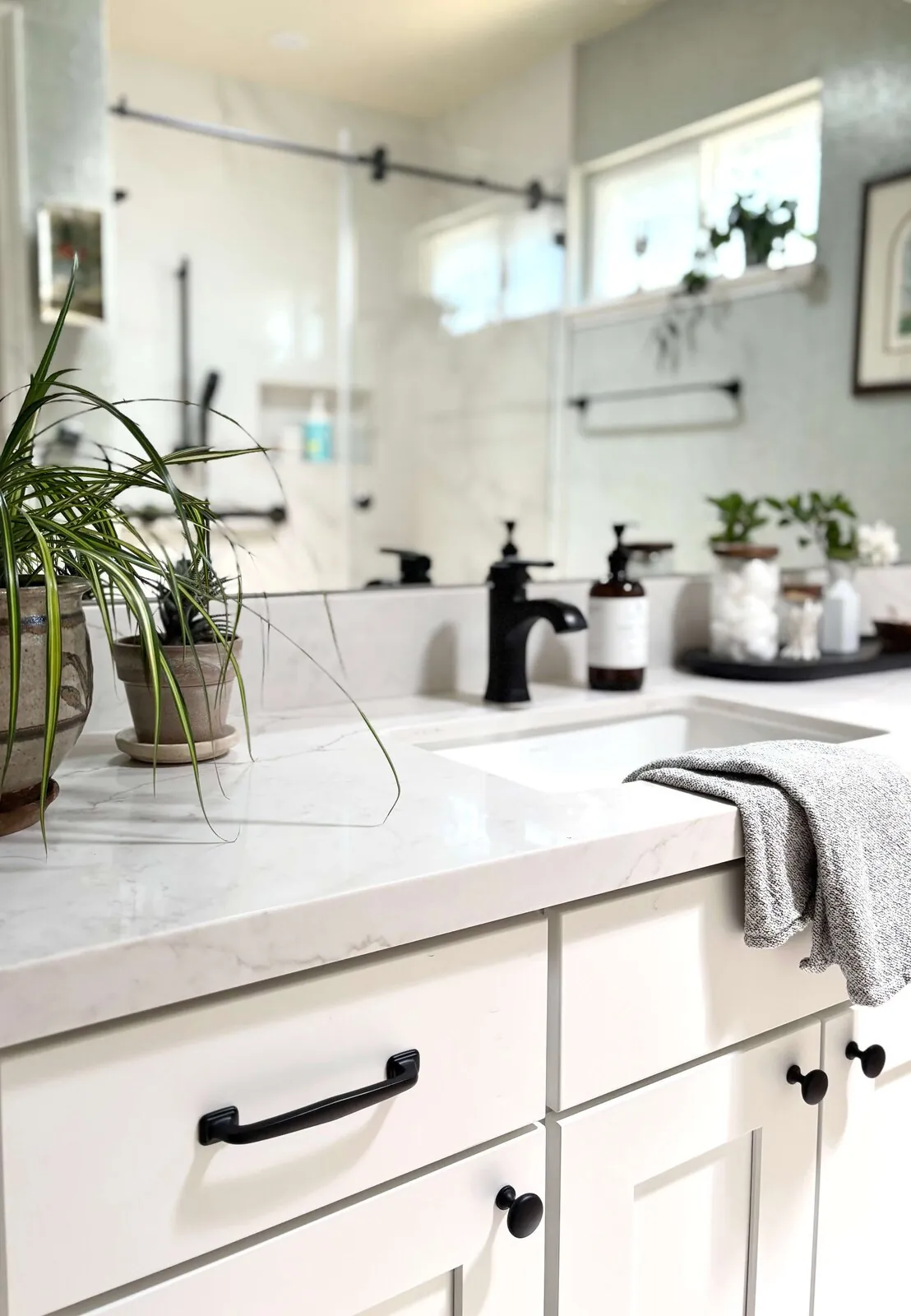
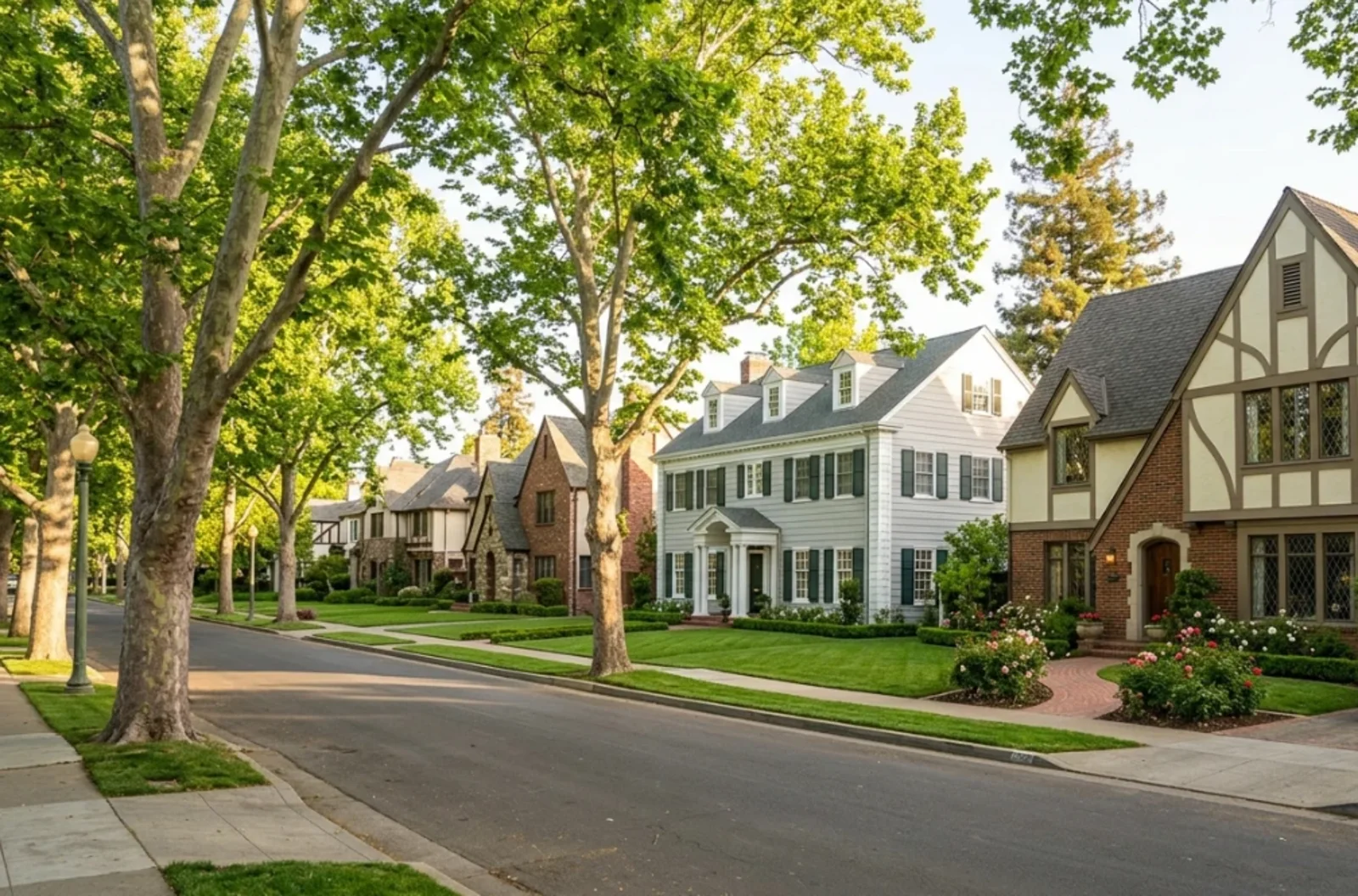
An East Sacramento designer who knows how to mix heritage architecture with modern comforts. That’s who you need. Good designers make historical elements feel fresh by pairing them with modern finishes or furniture.
Quick Answer — Can you modernize an East Sacramento heritage home without losing its character?
Yes, and it is the city's signature look. The move is to keep the heritage envelope (leaded and arched windows, plaster crown, the carved hearth, the original proportions) and modernize behind it: open the rear to the garden with steel-framed glass and drop in a clean walnut-and-marble kitchen.
- Keep: leaded and arched windows, plaster detail, the original fireplace, room proportions.
- Modernize: kitchen, systems, lighting, and a wall of glass to the garden.
- Permits: many East Sacramento blocks carry historic sensitivities, confirm before altering the street-facing facade.
The best East Sacramento interiors read as heritage from the street and modern from the garden.
Built from our active project files, this post explores how local designers in East Sacramento are achieving this delicate balance. We’ll go through examples of merging old and new designs, cost ranges, and choosing a designer who gets this style. We're here to help you make smart choices that mirror history and the comforts we expect now.
Common Questions
| What should I look for in interior designers in East Sacramento who blend heritage with modern living? | Get someone who knows rift-sawn oak. Reclaimed brick too. I see Craftsman or Colonial Revival designs all the time. |
| How do interior designers in East Sacramento incorporate heritage elements into modern interiors? | Combine something vintage with a sharp modern detail. It has to balance out. |
| What are some common techniques used by East Sacramento interior designers to blend heritage with modern design? | Integrate different textures. Use real, quality materials. Balance vintage with modern pieces. |
| When should I consider remodeling versus rebuilding my heritage home in East Sacramento? | If the old bones are solid, keep them. Try remodeling. Skip the big overhaul. |
Embracing Heritage with a Modern Twist
One of the first major design moves in blending heritage with modern living is selecting authentic materials that honor local history while providing contemporary durability. Across our active project specifications, we see the increasing use of rift-sawn white oak for flooring and slat details because of its calmer grain, which complements vintage architecture without feeling heavy. In addition, designers incorporate reclaimed brick for accent walls, juxtaposed with sleek, high-gloss cabinetry from brands like Moderno or custom-crafted millwork. Mix a few textures. It prevents rooms from feeling outdated or overly modern.
Balancing pieces is key. Avoid crowding the space. Pair brass fixtures with something modern on the hardware side. Keeps it fresh. Get materials wrong, and the space feels thrown together instead of thought through. Choose furniture that balances historical proportions with the comfort you expect.
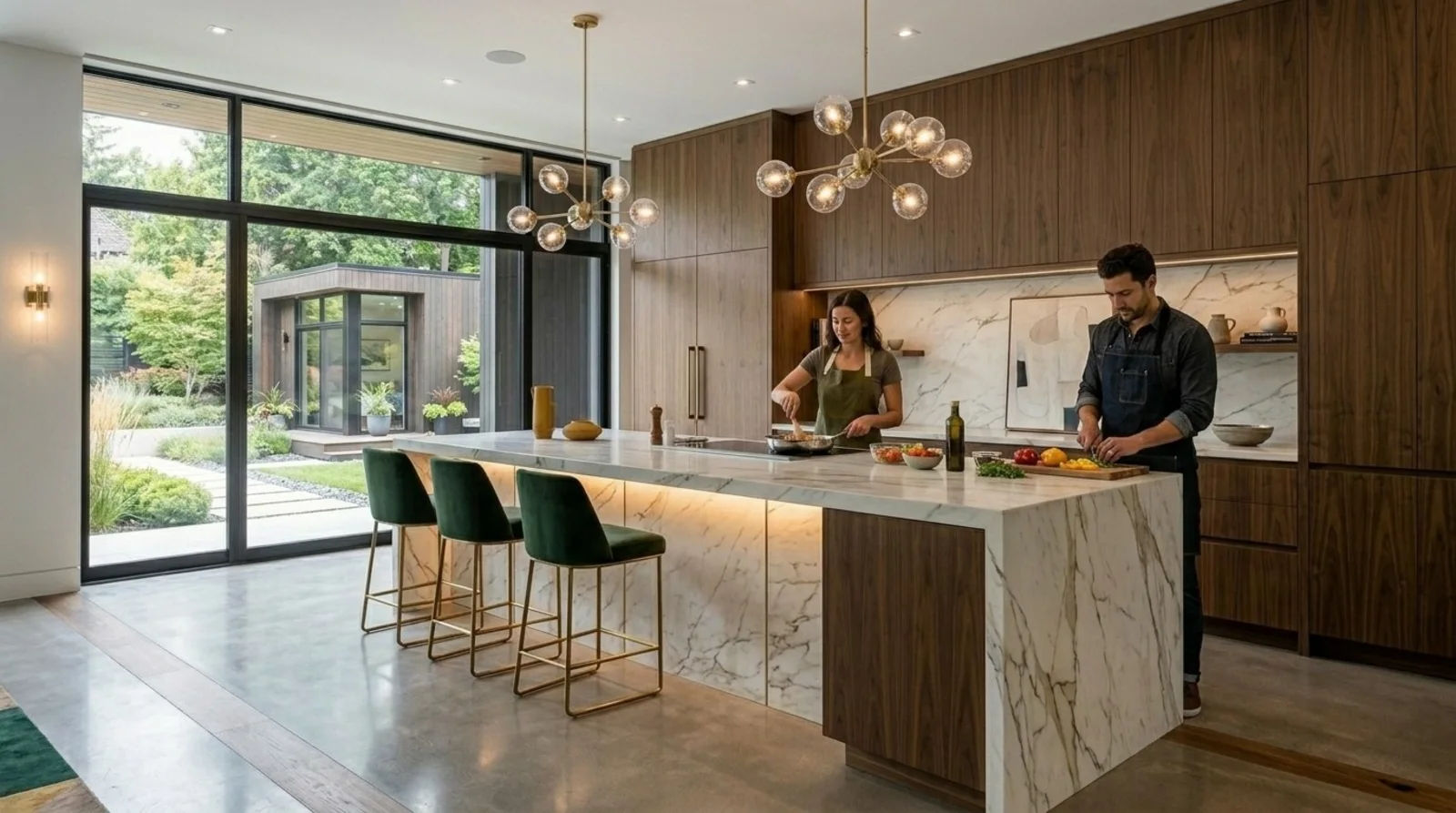
Material Specificity for Heritage-Modern Interiors
Authenticity-grade materials
- White oak (rift-sawn), for floors and slat detail; calmer grain than plain-sawn
- Reclaimed brick, adds texture and historical context
- Brass fixtures, warm metal that ages well and complements vintage styles
- Limestone or travertine, for flooring or accents, blending durability and authenticity
- Handwoven textiles, for upholstery and window treatments, adding warmth
- Custom wood millwork, to replicate or restore original architectural details
- Vintage-inspired hardware, to tie modern fixtures to heritage aesthetics
- Matte black accents, for contrast and contemporary edge
Generic-grade tells we refuse to spec
- Standard MDF or plywood, less durable and less authentic
- Vinyl or laminate finishes, lack character and authenticity
- Mass-produced hardware, generic and impersonal
- Synthetic textiles, less tactile warmth
- Plastic fixtures, cheap and non-ageing
- Unfinished or low-quality finishes, do not age well
Sacramento’s Heritage Meets Modern Design
Sacramento has more early-20th-century Craftsman and Colonial Revival housing stock than most California cities its size, which is exactly why heritage-modern works here better than almost anywhere else in the state. The summers get genuinely hot and most lots already have mature gardens in place, both of which shape material and window choices before a single finish gets picked. Our Sacramento-based interior designers work within what’s already there instead of gutting it, keeping the original room proportions and window openings and rebuilding everything behind them.
Keeping some of the old tends to hold value better than going fully modern. Buyers want character but with functionality. Kitchens updated, systems modern, but keep the charm.
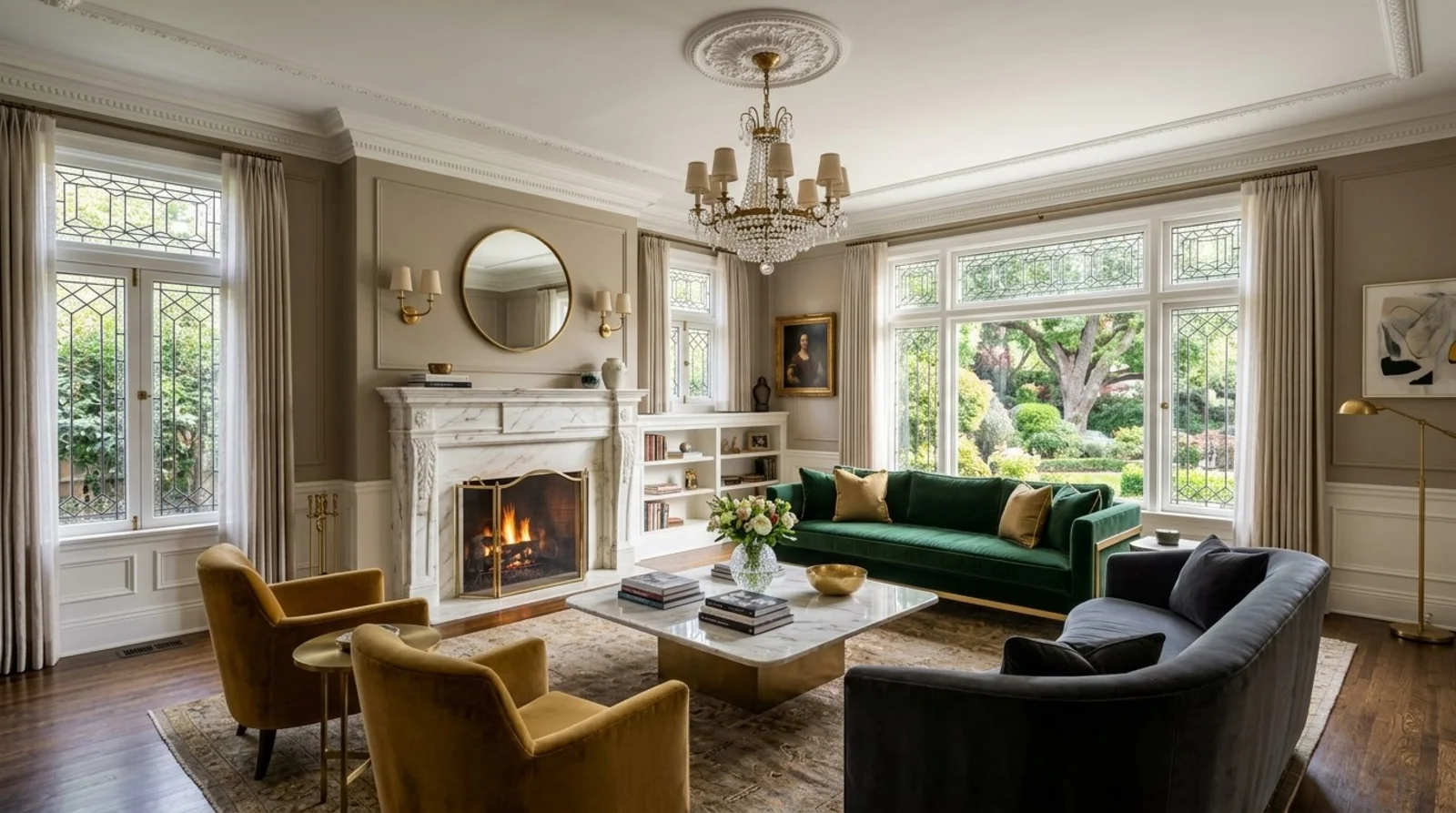
Should You Remodel or Rebuild in East Sacramento?
The question we actually ask first isn’t remodel-or-rebuild, it’s whether the house’s bones are worth keeping. If it’s just materials and finishes, remodel. Stick to options that preserve charm but don't bust your budget. Bad layout? Dark rooms? Or major kitchen issues? That's another level.
Cost tracks the same line. A remodel is usually less disruptive and cheaper, but you’re working around what exists. Reworking a structure means starting fresh but involves higher costs and longer permit times, especially on historically sensitive blocks. We pull the actual permit history from Sacramento’s Building Division before recommending either direction, guessing at what’s allowed on a specific lot wastes everyone’s time.
What This Costs in 2026
| Scope | Sacramento | Bay Area / Marin |
|---|---|---|
| Basic refresh with minor updates | $15K-$40K | $25K-$50K |
| Mid-tier renovation with custom finishes | $50K-$150K | $75K-$200K |
| Full rebuild or extensive remodel preserving heritage | $200K-$600K | $300K-$1M |
Local permits & planning
Working Notes
What We Have Learned Doing This: Interior Designers East Sacramento CA, Where Heritage Meets Modern Living
“A finish you cannot maintain is a finish you cannot afford.”
Old houses lie, and so do new ones. Framing often surprises you, even in a decade-old house. Old drawings and past contractor work? We stopped assuming they're accurate. Set aside 15-20% of your budget for unknowns when walls come down.
Think long-term in design, not just for immediate photos. The best work isn’t flashy. It’s quiet and solid, even a bit dull when first installed.
Money gets lost when solving the wrong issue with too much confidence. A homeowner wants more space, contractors plan an addition, but often the real issue is light or a poor sightline. We make the room tell us the problem before anyone signs a demolition contract.
These notes come from our own project debriefs. Most were learned the expensive way the first time.
Sources & Professional References
This guide's positions on structure are grounded in published building-code, standards, and recognized design-authority sources, alongside Designed | Curated Interiors' verified credentials and active project files:
- International Code Council (ICC): Chapter 23 Wood
- International Code Council (ICC): Chapter 93 Mandatory Earthquake Hazard Reduction In Existing Woo
- Community Development (Building Division), Sacramento (Sacramento County) building permit portal
- NKBA, Amy Kunst Member Profile (verified credential, NKBA Committee Member)
- Featured in: Homes & Gardens (design expert quote, May 2026) · Sacramento Love (guest author, 2024)
Frequently Asked
What should I look for in interior designers in East Sacramento who blend heritage with modern living?
How do interior designers in East Sacramento incorporate heritage elements into modern interiors?
What are some common techniques used by East Sacramento interior designers to blend heritage with modern design?
When should I consider remodeling versus rebuilding my heritage home in East Sacramento?
Are there any local permits or codes I should be aware of when designing heritage-modern interiors in Sacramento?
What costs are typically associated with blending heritage and modern design in East Sacramento?
How can I ensure my heritage-modern interior design aligns with Sacramento’s architectural history?
From Principle to a Real Room
A trend piece is the briefing document, not the deliverable. The pages below show how we translate these principles into finished rooms across Sacramento and the rest of Northern California.
- Sacramento & Bay Area Interior Design Services How we scope, source, and deliver work end to end.
- Interior Designer Hub, Sacramento Where most of our Sacramento work lives, the regional fit explained.
- East Sacramento Interior Design | Fab 40s, Historic + Heritage Renovations 2026 Related cluster piece referenced from the East Sacramento Interior Design | Fab 40s, Historic + Heritage Renovations 2026 build files.
- Interior Designers East Sacramento Primary key entity (dictionary precision): “Interior Designers East Sacramento” refers to residential interior design professionals working
- Sacramento Interior Design Permits Sequencing Living Through Remodel Related cluster piece referenced from the Sacramento Interior Design Permits Sequencing Living Through Remodel build files.