Sacramento + Marin Interior Designer · Amy Kunst, NKBA 📞 916-756-5977 Get Free Quote

Interior Design Process: A Designer's Guide to the 2026 Look

An illustrated infographic detailing the seven-step interior design process from programming
Reference image for Interior Design Process: A Designer's Guide to the 2026 Look, drawn from the Designed Curated project ledger.

By 2026 the interior design process will be more integrated with advanced technology, enabling faster, more sustainable, and highly collaborative workflows. Designers and clients will work together seamlessly through AI-driven insights, VR visualization, and real-time project adjustments. This shift means the traditional linear approach will evolve into a dynamic, data-informed process that prioritizes flexibility and sustainability.

Built from our active project files, this guide explores the anticipated trends shaping the interior design process in 2026, including technological innovations, new collaboration models, sustainability practices, and the skills designers will need to succeed in this future landscape. As Sacramento-based designers, we see these changes as essential to maintaining relevance and delivering exceptional value in our regional market, especially given our unique architectural stock and landscape.

Direct Answers (Interior Design Process 2026)

What is the expected interior design process in 2026?In 2026, the interior design process will be more integrated with advanced technology like AI and VR, enabling faster, more sustainable, and collaborative workflows.
How will technology influence interior design in Sacramento by 2026?Technologies such as AI-driven tools and VR visualization will streamline decision-making, material selection, and client presentations, making the process more precise and client-centered.
What regional factors will shape Sacramento's interior design in 2026?Sacramento's climate, historic architecture, and landscape will influence material choices, layout decisions, and the importance of sustainability and light optimization.
When should homeowners consider early procurement in the 2026 design process?Early procurement is recommended due to variable lead times for specialty and custom materials, especially in Sacramento's regional supply chain.

The Rise of AI and VR in the Interior Design Process

In 2026, interior design will be dominated by AI-driven tools that streamline decision-making and material selection across our active project specifications. These tools will analyze client preferences, spatial constraints, and sustainability goals to generate optimized design options almost instantly. Virtual reality will become a standard part of client presentations, allowing homeowners to walk through fully rendered spaces before any physical work begins. This not only improves client satisfaction but also reduces costly revisions during construction.

For example, brands like Modsy and Houzz Pro are evolving to incorporate AI and VR seamlessly into our workflows. These innovations enable designers to test different layouts, finishes, and lighting scenarios on the fly. As Sacramento continues to develop its diverse architectural landscape, these tools will help us adapt quickly, ensuring that each project aligns with regional climate, light conditions, and material availability. The result is a more precise, sustainable, and client-centered process that responds to regional needs and expectations.

Two people pointing at a floor plan blueprint of an existing retail space on a wooden table
The Documentation and Specifications step (4 of 7) is where good design becomes buildable. The plan in this shot is doing three things at once: confirming home as it was actually built with the client, marking walls TO BE REMOVED so the contractor can scope demolition, and committing the scale (1:50) so every subsequent shop drawing references the same dimensional spine. Calipers and a sharpened pencil on the table are the giveaway that this is a working session, not a presentation.

Material Specificity in 2026: Authentic vs. Generic

Authenticity-grade materials

  • White oak (rift-sawn), for floors and slat detail; calmer grain than plain-sawn
  • Reclaimed wood, emphasizing sustainability and character
  • Terrazzo, durable, customizable, and trend-forward for surfaces
  • Limestone, natural, timeless, and regionally suitable
  • Matte black hardware, sleek, modern contrast with warm finishes
  • Low-VOC paints, prioritizing indoor air quality and eco-friendliness
  • Sustainable textiles, organic cotton, hemp, and linen for upholstery
  • Recycled glass countertops, combining aesthetics with eco-consciousness

Generic-grade tells we refuse to spec

  • Standard MDF, low-cost, less durable
  • Veneer laminates, synthetic, less authentic look
  • Polyester fabrics, less breathable, lower quality
  • Ceramic tiles, basic, mass-produced options
  • Chrome hardware, common, less distinctive
  • Acrylic paints, standard, higher VOC content
  • Synthetic upholstery foam, less eco-friendly
  • Non-recycled glass surfaces, standard materials without sustainability focus
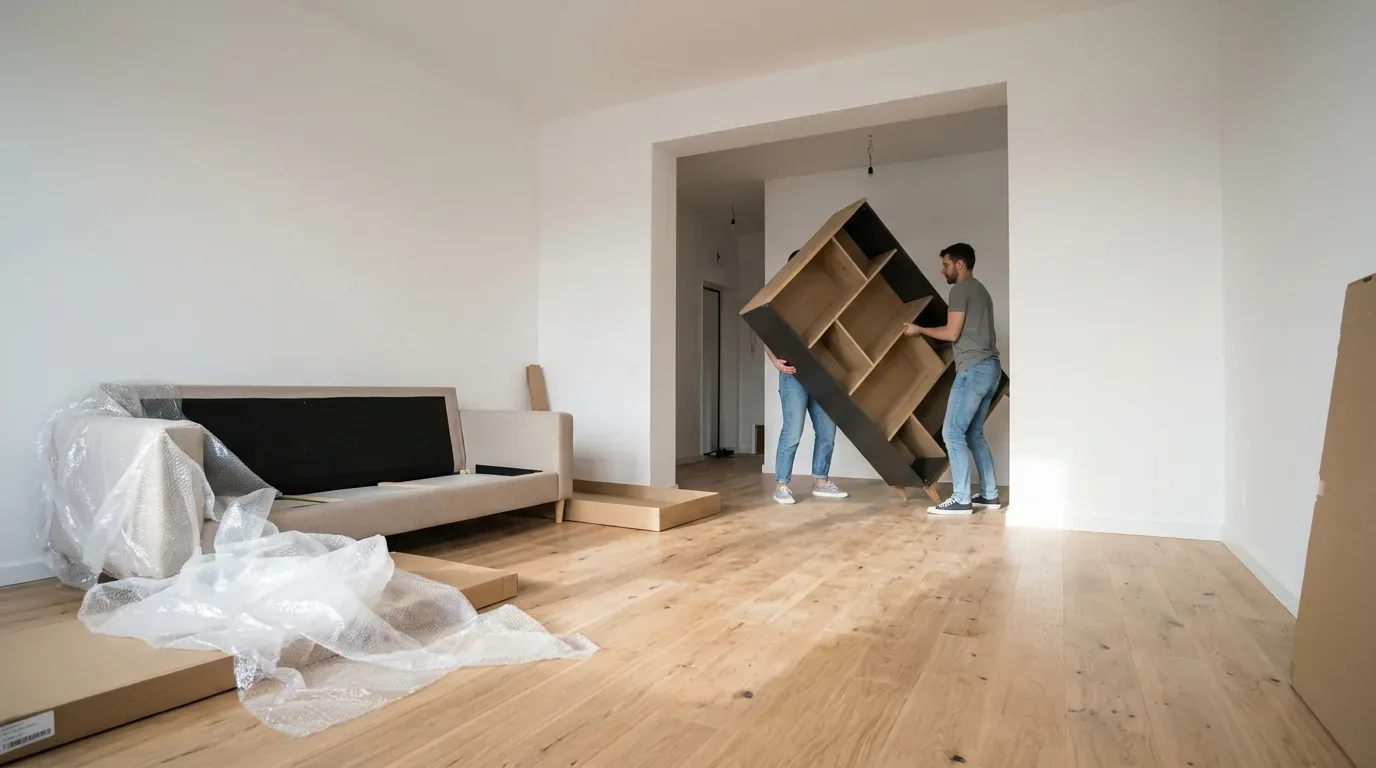
Two men are moving a large wooden shelving unit in a mostly empty living room with light wood flooring and a partially
Installation day (step 6 transitioning into step 7) is where every prior decision becomes physical. Two things matter most on this day: the right people doing the work (movers for heavy pieces, the designer or assistant on site for placement decisions) and floor protection until the last piece is in. The bubble wrap on the sofa in this shot stays on until installation is complete; pulling it early is how new upholstery gets torn moving the next item past it.

How Will Project Timelines Evolve in 2026?

The first question homeowners ask is often about project duration. Will the adoption of AI, VR, and faster procurement processes shorten overall timelines? Across our active project specifications, the answer is yes, but with nuances. Advanced software and real-time collaboration platforms enable faster decision-making and fewer revisions, reducing delays. However, supply chain disruptions, especially for eco-friendly or custom materials, still pose risks. In Sacramento, specialty materials can have lead times that swing dramatically, making early procurement research essential. The traditional project timeline of several months may compress into shorter, more predictable phases, assuming proactive planning and clear communication. This evolution allows homeowners to experience their spaces sooner without sacrificing quality or sustainability.

What Skills Will Interior Designers Need in 2026?

Designers must develop a new set of skills to thrive in 2026. Proficiency with AI-driven design tools, VR visualization, and data analysis will be essential. The American Society of Interior Designers emphasizes that digital literacy and sustainability expertise will be differentiators. Our regional market in Sacramento values eco-conscious practices, so understanding regional materials, LEED standards, and local code nuances will remain critical. Additionally, soft skills like remote collaboration, client education, and managing complex supply chains will be vital. Continuous learning through specialized training, such as courses in smart home integration and sustainable design, will keep designers competitive. Adapting early to these technological and environmental shifts ensures we meet evolving client expectations while maintaining our regional character.

How Will Client-Designer Collaboration Change?

In 2026, collaboration will be more transparent and instantaneous. Cloud-based platforms and VR walkthroughs will enable clients to provide real-time feedback during design iterations, reducing misunderstandings and revisions. The first question we ask homeowners is about their preferred level of involvement, as virtual collaboration can be more intensive but also more satisfying. These tools foster a more democratic process, where clients see immediate visualizations and can suggest adjustments on the spot. This collaborative approach is especially well-suited to our Sacramento market, where homeowners value participation and transparency. The result is a more engaged client experience, faster consensus, and a design that truly aligns with personal and regional values.

Observed Failure Modes, How Interior Design Process 2026 Goes Wrong

From our project debriefs and post-occupancy reviews, 2023-2026.

Overreliance on Technology without Grounding

Relying solely on AI and VR without proper on-site validation can lead to costly errors. For example, a recent project involved digital renderings that showed perfect window placement, but site measurements revealed structural constraints that the software did not account for. This oversight resulted in a redesign late in the process, adding expense and delay. The cure is to always combine digital tools with physical checks like measuring tapes and site photos. Confirming real-world conditions prevents surprises and keeps projects on budget, especially in Sacramento where older homes may have hidden structural quirks.

Ignoring Local Material Availability

Designs that specify unavailable or long-lead-time materials cause project delays and budget overruns. During the East Arques Project, a homeowner insisted on imported Italian tiles for a kitchen backsplash. Procurement logs showed a fourteen-week lead time, but the supplier claimed availability. It was only after physically verifying stock with a walk-through that I realized the tiles were backordered. This mistake cost nearly $900 and six weeks. The lesson is to verify lead times with regional suppliers early and consider regional alternatives to ensure timely delivery and cost efficiency.

Overlooking Regional Climate in Material Selection

Choosing materials that do not suit Sacramento’s dry, variable climate can lead to premature wear or maintenance issues. For example, using high-VOC paints in a home with poor ventilation caused indoor air quality concerns. The American Society of Interior Designers recommends selecting low-VOC, regionally suitable finishes to promote healthier indoor environments. Early regional climate assessment, combined with sustainable material choices, ensures longevity and regional appropriateness. Avoiding these pitfalls saves homeowners money and enhances satisfaction over time.

What's Going Out for 2026

  • Manual design processes without digital integration
  • Long, unpredictable project timelines
  • Limited collaboration tools
  • Standard materials ignoring sustainability
  • Rigid design workflows
  • Overlooking regional supply chain nuances
  • Ignoring client input during early phases
  • Traditional 2D drawings without VR visualization
  • Ignoring regional climate in material choices
  • Delaying procurement due to assumptions

What Interior Design Process 2026 Costs in 2026

ScopeTypical range
Refresh scope: new paint, minor updates$20K-$50K
Mid-tier scope: full room renovation, new fixtures$70K-$200K
Estate-scale: complete rebuild, custom features$300K-$1.2M

Working Notes

What We Have Learned Doing This: Interior Design Process: A Designer's Guide to the 2026 Look

“Sequence beats speed. Every time.”

A renovation is a dependency chain, not a list of tasks. A two-day cabinet delay quietly becomes a two-week slip by week sixteen because every trade downstream is holding a calendar. The least glamorous part of this work, and the most valuable, is keeping that chain from cascading.

Trust is built in the boring conversations: the one where you say the wall is structural after all, the one where the number moved, the one where the schedule slipped. Clients forgive reality. They do not forgive being surprised by it.

The cheapest tool on any project is a sample board and an afternoon. We have watched five-figure mistakes get caught by a fifteen-dollar paint sample lived with for a week in the actual light of the actual room. Decisions made under showroom lighting do not survive contact with a real house.

These notes come from our own interior design process: a designer's guide to the 2026 look project debriefs. Most were learned the expensive way the first time.

Sources & Professional References

This guide's positions on materials are grounded in published building-code, standards, and recognized design-authority sources, alongside Designed | Curated Interiors' verified credentials and active project files:

Frequently Asked

What is the expected interior design process in 2026?
In 2026, the interior design process will be more integrated with advanced technology like AI and VR, enabling faster, more sustainable, and collaborative workflows.
How will technology influence interior design in Sacramento by 2026?
Technologies such as AI-driven tools and VR visualization will streamline decision-making, material selection, and client presentations, making the process more precise and client-centered.
What regional factors will shape Sacramento's interior design in 2026?
Sacramento's climate, historic architecture, and landscape will influence material choices, layout decisions, and the importance of sustainability and light optimization.
When should homeowners consider early procurement in the 2026 design process?
Early procurement is recommended due to variable lead times for specialty and custom materials, especially in Sacramento's regional supply chain.
Who needs to develop new skills for interior design in 2026?
Interior designers will need proficiency with AI-driven design tools, VR visualization, and data analysis to succeed in the evolving landscape.
Why are sustainability practices important in Sacramento's 2026 interior design?
Sustainability is prioritized due to regional values, with a focus on eco-friendly materials, smart home features, and energy efficiency that respect Sacramento’s historic character.
How can Sacramento designers ensure project timelines are shortened in 2026?
By leveraging advanced software, real-time collaboration, and proactive planning, designers can reduce delays despite supply chain disruptions.

From Interior Design Process 2026 to a Real Room

A trend piece is the briefing document, not the deliverable. The pages below show how we translate these principles into finished rooms across Sacramento and the rest of Northern California.

Start a Project Conversation →

Call (916) 756-5977Book a Consultation