Sacramento + Marin Interior Designer · Amy Kunst, NKBA 📞 916-756-5977 Get Free Quote

Kitchen Design Trends 2026: A Designer's Guide to the 2026 Look

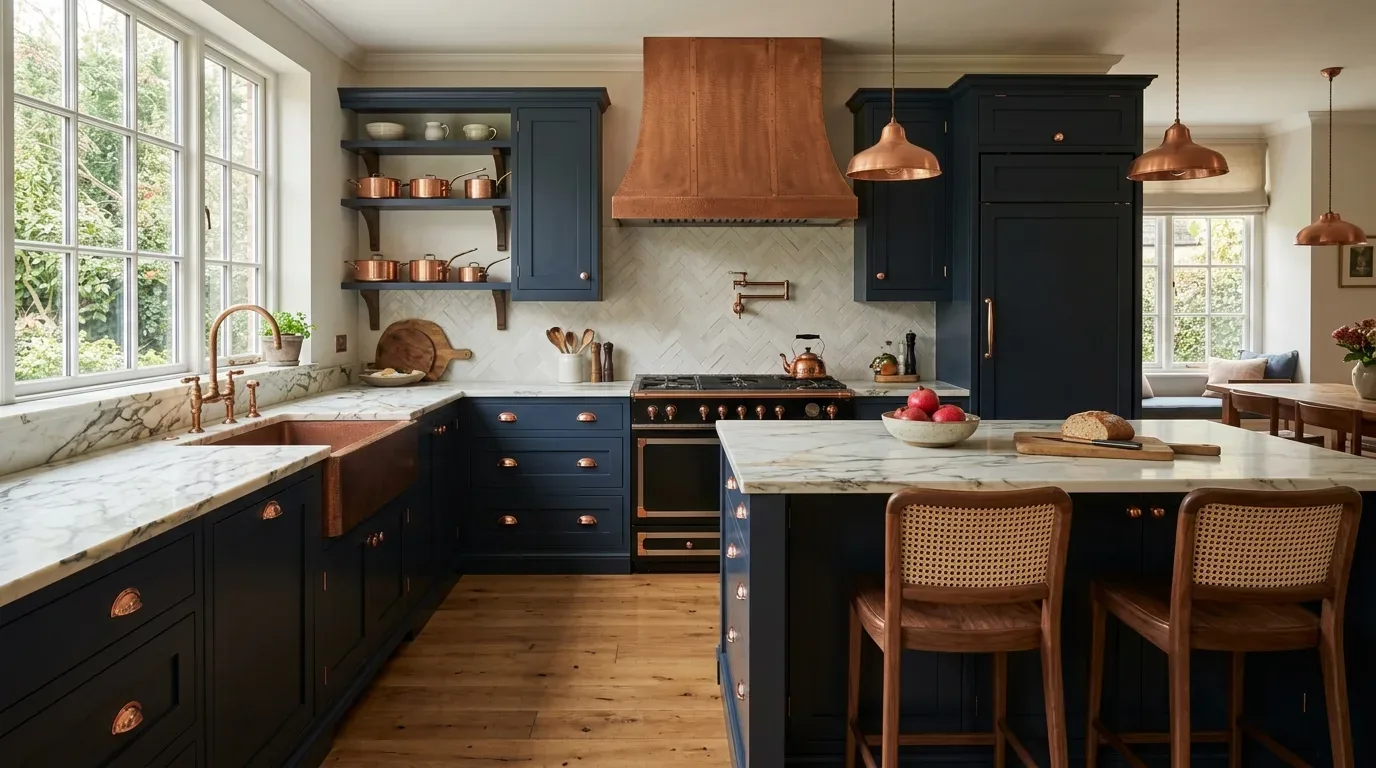
A modern kitchen with navy blue cabinetry, copper fixtures, marble countertops, and wooden flooring
A modern kitchen with navy blue cabinetry, copper fixtures, marble countertops, and wooden flooring.

In 2026, kitchen design is trending toward a balanced mix of sophisticated color palettes, innovative technology, and sustainable practices that prioritize both style and function. If you are planning a renovation or want to stay ahead of industry shifts, understanding these upcoming trends can help you make smarter choices. Bold, eco-conscious, and technology-integrated kitchens will define 2026.

Built from our active project files, this guide explores the key color schemes, materials, smart appliances, layout styles, and lighting trends shaping kitchens this year. We’ll also discuss how cultural and lifestyle shifts influence design decisions, all from a Sacramento perspective with a secondary tie to Mill Valley. As experienced designers, our focus remains on warm restraint and timeless elegance, ensuring you avoid fleeting fads and invest in lasting value.

Direct Answers (Kitchen Design Trends 2026)

What are the expected kitchen design trends for 2026 in Sacramento?In 2026, Sacramento kitchens will feature sustainable materials, innovative technology, and timeless layouts emphasizing eco-conscious finishes, layered lighting, and integrated smart appliances.
How can I incorporate eco-friendly materials into my Sacramento kitchen renovation in 2026?Choose recycled glass countertops, FSC-certified hardwood cabinets, and finishes like matte lacquer and PVD coatings, which emphasize sustainability and tactile appeal.
What budget range should I expect for a kitchen remodel incorporating 2026 trends in Sacramento?Cosmetic refreshes start at $35k, mid-range remodels range from $55k to $90k, and high-end projects with layout changes can exceed $90k, depending on scope and materials.
Are there specific permits I need to consider for a kitchen remodel in Sacramento in 2026?Yes, structural wall removal requires stamped plans and a building permit; electrical upgrades need an electrical permit; plumbing changes need a plumbing permit; and window or exterior wall modifications may require additional permits.

The Rise of Eco-Conscious Materials and Finishes

In 2026, sustainability continues to drive material choices across our active project specifications. Expect to see more kitchens featuring recycled glass countertops that offer durability and a chic aesthetic, and FSC-certified hardwood cabinets that balance beauty with responsible sourcing. Matte and brushed finishes are replacing high-gloss surfaces, providing a softer, more understated look that also reduces glare and fingerprints. Brands like Caesarstone and NatureStone are leading the way with their eco-friendly engineered surfaces, while local fabricators are increasingly offering custom solutions using reclaimed woods and sustainable composites.

This shift is not just about materials but also about finishes that emphasize tactility and subtlety. The American Society of Interior Designers emphasizes that tactile finishes foster a sense of calm and connection to the environment. Across several recent projects, we see homeowners gravitating toward finishes with PVD coatings for hardware and matte lacquer on cabinetry, which help hide fingerprints and scratches. These choices reflect a thoughtful move away from flashy, high-maintenance surfaces toward understated, durable options that support eco-conscious living without sacrificing style.

A bright, modern kitchen and dining area with light wood cabinetry, a kitchen island, and a woman preparing food
A bright, modern kitchen and dining area with light wood cabinetry, a kitchen island, and a woman preparing food.

Material Specificity for 2026 Kitchens

Authenticity-grade materials

  • Recycled glass countertops, durable, eco-friendly, and customizable in color and pattern
  • FSC-certified oak or maple cabinetry, sustainable, with warm, understated grain
  • Matte and brushed metal hardware, minimizes fingerprints and offers a modern look
  • Engineered quartz slabs (~90% quartz content), consistent, low-maintenance, and non-porous
  • Natural stone (granite/quartzite), durable, with periodic sealing, adds natural texture
  • Vapor-permeable, low-VOC paints and finishes, improve indoor air quality
  • Undermount stainless steel sinks (16-gauge), sound-dampened and corrosion-resistant
  • Solid brass faucets with PVD finishes, long-lasting and resistant to pitting

Generic-grade tells we refuse to spec

  • Laminate countertops, inexpensive but less durable
  • Particleboard cabinetry, prone to warping and less sustainable
  • High-gloss finishes, show fingerprints and scratches more easily
  • Thin veneer stones, prone to chipping and cracking
  • Plastic hardware, less durable and less eco-friendly
  • Non-certified woods, may come from unsustainable sources
  • Paints with high VOC content, impact indoor air quality
  • Builder-grade stainless sinks, thinner gauge and less soundproofed
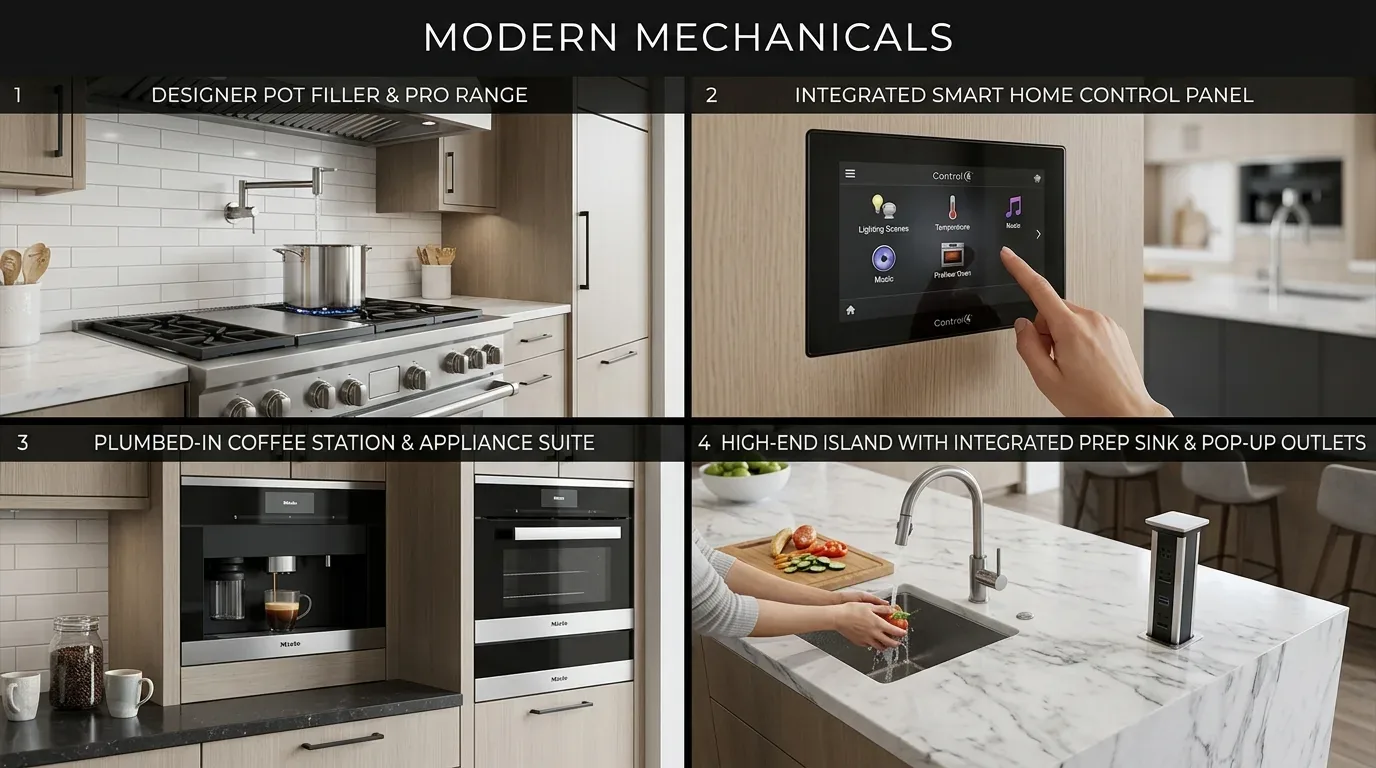
A modern kitchen showcasing a designer pot filler and pro range, integrated smart home control panel, plumbed-in coffee station and appliance suite, and a high-end island with integrated prep sink and pop-up outlets
A modern kitchen showcasing a designer pot filler and pro range, integrated smart home control panel, plumbed-in coffee station and appliance suite, and a high-end island with integrated prep sink and pop-up outlets.

Should You Remodel or Rebuild Your Sacramento Kitchen in 2026?

Deciding whether to remodel or rebuild your Sacramento kitchen hinges on multiple factors such as the age of your home, structural integrity, and your long-term goals. The first question we ask is: what is the main issue you want to solve? Is it outdated layout, insufficient storage, or poor lighting? Many homeowners assume a full rebuild is necessary for significant upgrades, but often a well-planned remodel can achieve the same results with less disruption and cost.

For example, on the Natalie Project, a homeowner wanted to open up her cramped 1980s kitchen with a large island and new cabinets. The contractor proposed knocking down a load-bearing wall and installing a steel beam, which would require a permit, structural engineer’s plans, and a budget over $100,000. Using a permit research from the Sacramento Community Development department, I suggested instead a strategic reconfiguration that kept the existing footprint but added a pocket door for better flow and integrated vertical storage. This approach saved nearly $70,000 and avoided unnecessary structural work. The key lesson is that understanding the true limitations of your space and the value of local permits can prevent costly mistakes and preserve character. In Sacramento’s older neighborhoods, a careful balance of preservation and innovation often yields the best ROI.

Lighting remains a critical element in defining the ambiance and functionality of a kitchen. In 2026, layered lighting combining task, ambient, and accent sources will be the norm. The first question homeowners often ask is: what lighting should I install for both style and practicality? The trend is toward integrated LED fixtures with dimming controls that blend into cabinetry or ceiling planes, minimizing visual clutter. Brands like Lutron and WAC Lighting are popular choices for smart, customizable solutions.

In several projects, we’ve paired warm-tone LED strips under cabinets with statement pendant fixtures over islands, creating a balanced glow that enhances natural light and highlights textures. In Sacramento, where many homes have traditional or mid-century styles, incorporating vintage-inspired fixtures with modern LED technology offers a timeless look with energy efficiency. The American Institute of Architects emphasizes that good lighting design significantly impacts daily comfort and energy use. The key is to choose fixtures that complement your overall aesthetic while providing flexibility to adjust brightness as needed, ensuring your kitchen remains inviting and functional for years to come.

How Will Cultural Changes Influence Kitchen Design in 2026?

Cultural and lifestyle shifts are shaping kitchen design by emphasizing health, wellness, and multi-use spaces. The primary question homeowners ask is: how can my kitchen reflect my evolving needs? In 2026, kitchens are becoming more than just cooking areas, they function as social hubs, workspaces, and wellness zones. Incorporating features like integrated coffee stations, wellness refrigerators, and flexible seating arrangements aligns with the broader move toward multifunctional living.

In our Sacramento projects, we see a rise in designs that blend cooking, socializing, and working areas seamlessly. For example, a recent remodel integrated a dedicated space for yoga and meditation alongside the cooking zone, with natural materials and soft lighting to promote calm. The Bay Area’s influence encourages a minimalist, clutter-free aesthetic, but Sacramento homeowners often favor tactile, warm finishes that foster comfort and authenticity. As the American Society of Interior Designers notes, these cultural shifts demand flexible, resilient, and personalized spaces that support a balanced lifestyle, making thoughtful design choices essential to meet future needs.

From our project debriefs and post-occupancy reviews, 2023-2026.

Choosing Inappropriate Materials

Selecting materials that do not suit the climate or lifestyle can lead to costly repairs and dissatisfaction. For example, using marble in a high-humidity kitchen without proper sealing can cause etching and staining, resulting in premature replacement. To avoid this, always specify durable, low-maintenance surfaces like engineered quartz or sealed granite, especially in Sacramento's varying climate. Proper material selection based on actual use and environment prevents costly and time-consuming replacements later.

Many clients fall into the trap of chasing fleeting trends such as ultra-glossy finishes or ornate hardware that quickly look dated. The key is to focus on timeless elements with a subtle modern twist. For instance, opting for matte finishes and minimal hardware ensures longevity and ease of maintenance. Avoiding over-customization or overly ornate details preserves resale value and reduces the risk of your kitchen feeling outdated within a few years.

Ignoring Permit Requirements

Overlooking local permit triggers can lead to significant delays and fines, especially when structural or electrical work is involved. Sacramento’s Building Division requires stamped plans for load-bearing wall removal or electrical upgrades, which can be costly if ignored. Always consult with a licensed professional early to ensure compliance and smooth permitting. Failing to adhere to these requirements can turn a simple upgrade into a lengthy, expensive process that undermines your project’s ROI.

Underestimating Lighting Impact

Poor lighting design can make even the most beautiful kitchen feel cold or uninviting. Relying solely on overhead fixtures neglects task and accent needs. Layered lighting, including under-cabinet LEDs and statement pendants, enhances both functionality and ambiance. In Sacramento, where natural light varies, planning for flexible lighting solutions ensures your kitchen remains welcoming and practical at all times.

Choosing the Wrong Layout for Your Space

A layout that does not match your lifestyle or space constraints can hinder daily use and reduce efficiency. For example, a galley kitchen in a large family home may feel cramped, while an open-plan might lack privacy in a smaller house. The first step is understanding your routine and space limitations. Our experience shows that a well-designed layout tailored to your needs, whether U-shaped or L-shaped, maximizes both usability and aesthetic appeal, especially within Sacramento’s diverse housing stock.

What's Going Out for 2026

  • Bright, high-gloss finishes that show fingerprints
  • Overly ornate hardware that dates quickly
  • Non-sustainable, plastic-based materials
  • Closed-off, compartmentalized kitchen layouts
  • Traditional, non-integrated smart appliances
  • Excessive use of high-VOC paints and finishes
  • Heavy reliance on imported, non-local materials
  • Designs ignoring local climate and light conditions
ScopeTypical range
Cosmetic refresh (cabinets refaced, counters, fixtures, paint)$40K-$60K
Mid-tier full remodel (new cabinetry, quartz, appliances, no layout change)$65K-$110K
Estate-scale (layout change, structural work, high-end finishes)$120K-$200K+

Working Notes

What We Have Learned Doing This: Kitchen Design Trends 2026: A Designer's Guide to the 2026 Look

“If the cabinet drawings are not frozen before slab templating, expect rework.”

On a kitchen the cabinet drawings have to be frozen before the stone is templated. Reorder that sequence and you are paying for rework you could have drawn around.

Most of the money that gets wasted is spent solving the wrong problem confidently. A homeowner asks for more space, every contractor agrees and prices an addition, and the real issue turns out to be light, or proportion, or one bad sightline. We make the room tell us the problem before anyone signs a demolition contract.

A renovation is a dependency chain, not a list of tasks. A two-day cabinet delay quietly becomes a two-week slip by week sixteen because every trade downstream is holding a calendar. The least glamorous part of this work, and the most valuable, is keeping that chain from cascading.

Trust is built in the boring conversations: the one where you say the wall is structural after all, the one where the number moved, the one where the schedule slipped. Clients forgive reality. They do not forgive being surprised by it.

These notes come from our own kitchen design trends 2026: a designer's guide to the 2026 look project debriefs. Most were learned the expensive way the first time.

Sources & Professional References

This guide's positions on materials are grounded in published building-code, standards, and recognized design-authority sources, alongside Designed | Curated Interiors' verified credentials and active project files:

Frequently Asked

What are the expected kitchen design trends for 2026 in Sacramento?
In 2026, Sacramento kitchens will feature sustainable materials, innovative technology, and timeless layouts emphasizing eco-conscious finishes, layered lighting, and integrated smart appliances.
How can I incorporate eco-friendly materials into my Sacramento kitchen renovation in 2026?
Choose recycled glass countertops, FSC-certified hardwood cabinets, and finishes like matte lacquer and PVD coatings, which emphasize sustainability and tactile appeal.
What budget range should I expect for a kitchen remodel incorporating 2026 trends in Sacramento?
Cosmetic refreshes start at $35k, mid-range remodels range from $55k to $90k, and high-end projects with layout changes can exceed $90k, depending on scope and materials.
Are there specific permits I need to consider for a kitchen remodel in Sacramento in 2026?
Yes, structural wall removal requires stamped plans and a building permit; electrical upgrades need an electrical permit; plumbing changes need a plumbing permit; and window or exterior wall modifications may require additional permits.
What material grades should I specify for cabinets and countertops in a 2026 kitchen renovation?
Use frameless 3/4-inch plywood boxes with dadoed joints for cabinets, and engineered quartz slabs (~90-93%) with consistent slabs for countertops, avoiding laminate or thin stone.
How can I ensure my kitchen layout remains functional and stylish in 2026 Sacramento homes?
Opt for open-plan layouts with layered lighting, smart storage solutions, and respect for historic character, while incorporating modern, durable finishes aligned with regional preferences.

A trend piece is the briefing document, not the deliverable. The pages below show how we translate these principles into finished rooms across Sacramento and the rest of Northern California.

Start a Project Conversation →

Call (916) 756-5977Book a Consultation