Understanding the specific green building code requirements for remodeling in Palo Alto is essential to ensure compliance and sustainability. Without this knowledge, projects risk delays, fines, or subpar environmental performance. In 2026, Palo Alto’s green building standards demand strict adherence to local and state regulations, influencing material choices, energy efficiency, and project planning.
Built from our active project files, this guide covers the applicable codes and standards, how they impact interior design decisions, available incentives, and the documentation needed to demonstrate compliance. We focus on practical insights for navigating Palo Alto’s evolving green building landscape, emphasizing a designer’s perspective rooted in real-world experience and regional context.
Common Questions
| What are the key remodeling standards under Palo Alto's green building code? | Palo Alto's green building standards emphasize energy efficiency, material transparency, and sustainable choices, aligned with California's statewide codes and local amendments. |
| How do I ensure my remodeling project complies with Palo Alto's green building requirements? | Verify permit requirements before starting work, especially for insulation, ducting, and structural changes, as the city enforces strict adherence to energy and environmental standards. |
| What specific materials are recommended for sustainable remodeling in Palo Alto? | Use low-impact, VOC-free finishes, FSC-certified woods, and ENERGY STAR appliances to meet the city’s sustainability standards. |
| When should I consider rebuilding instead of remodeling to meet green standards? | Rebuilding may be preferable if structural issues are extensive or if a significantly different layout is desired, but remodeling can often meet green goals cost-effectively. |
Palo Alto Green Building Code Remodeling Standards 2026 at a Glance
| Element | In | Out |
|---|---|---|
| Codes & Standards | Specific green codes for remodeling in Palo Alto | Vague green standards |
| Sustainability Mandates | Mandatory sustainability standards for interior design | Optional sustainability measures |
| Material Impact | Impact of codes on material selection | Material choices unaffected by codes |
| Energy Requirements | Energy efficiency requirements | Minimal energy efficiency focus |
| Incentives & Rebates | Available incentives or rebates | No incentives available |
| Project Timeline & Budget | Project timeline and budget effects | Unchanged project timelines |
| Documentation & Compliance | Compliance documentation requirements | No compliance documentation needed |
Prioritizing Energy Efficiency and Material Transparency
The first major design move in Palo Alto remodeling projects is aligning with the city’s strict energy efficiency standards, which are detailed in the California Energy Code and local amendments. Across our active project specifications, selecting high-performance insulation, low-emissivity windows, and ENERGY STAR certified appliances is non-negotiable. For example, choosing a Zephyr range hood with high CFM ratings requires ensuring ducting and venting meet local code emissions and airflow standards. The American Society of Interior Designers emphasizes that sustainable choices extend beyond appliances to encompass finishes and fixtures that minimize VOC emissions and indoor air pollution.
In addition, transparency in material sourcing is increasingly vital. Using sustainably harvested woods like FSC-certified plywood or low-impact paints from brands like Benjamin Moore’s Natura line helps meet the mandatory standards while supporting regional sustainability goals. Our recent projects underscore that these choices not only satisfy code but also elevate the overall environmental profile of a remodel, which resonates with Palo Alto’s eco-conscious homeowners.
Material Specificity for Sustainable Remodeling
Authenticity-grade materials
- White oak (rift-sawn), for floors and slat detail; calmer grain than plain-sawn
- Terra cotta tiles, natural clay with excellent thermal properties
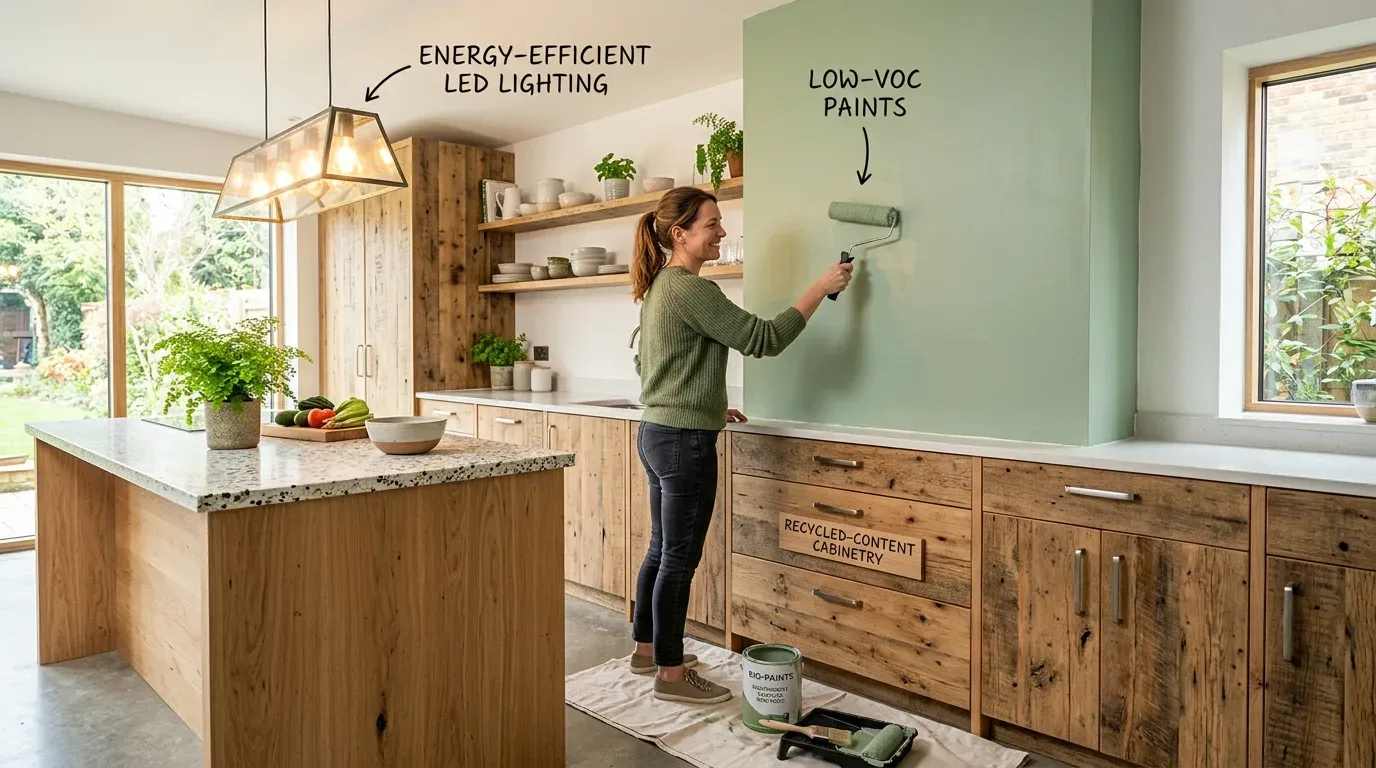
- Low-VOC paints, improve indoor air quality and meet strict emission standards
- Reclaimed wood, reduces environmental impact and adds character
- Bamboo flooring, fast-growing, renewable resource suitable for high-traffic areas
- Linen textiles, natural, breathable, and sustainable for soft furnishings
- Recycled glass countertops, eco-friendly and durable surface options
- Natural fiber carpets, wool or sisal for low environmental impact
Generic-grade tells we refuse to spec
- Standard MDF, not eco-friendly or sustainably sourced
- Vinyl flooring, non-biodegradable and off-gases VOCs
- Oil-based paints, higher VOC emissions than water-based alternatives
- Laminate countertops, less sustainable and harder to recycle
- Synthetic textiles, less environmentally friendly
- Carpet tiles with backing, often contain synthetic adhesives
Regional Context: Palo Alto’s Unique Green Building Landscape
In Palo Alto, the green building code aligns closely with California’s statewide standards but emphasizes regional sustainability goals. The city’s architectural stock, often characterized by older homes near University Avenue, presents unique challenges and opportunities for eco-friendly upgrades. Light levels and landscape considerations influence material choices, favoring natural and low-impact finishes that blend seamlessly with the local environment. The Bay Area’s focus on energy efficiency encourages homeowners to incorporate solar-ready roofing and advanced insulation, which are particularly effective given Palo Alto’s mild climate and high land value.
Our experience shows that the Palo Alto market values subtle modernizations that preserve character while meeting stringent green standards. For homeowners considering a remodel, understanding the regional nuances, like the importance of natural light and landscape integration, is critical. To explore how these principles apply in your project, visit our San Jose hub for regional insights and tailored strategies.
Should You Remodel or Rebuild in Palo Alto to Meet Green Standards?
Homeowners often face the fundamental decision of whether to undertake a major rebuild or a careful remodel to meet Palo Alto’s green building standards. The first question we ask is what the project’s main goals are: is it to improve energy efficiency, enhance indoor air quality, or preserve historic character? In many cases, remodeling offers a cost-effective way to upgrade systems and materials without the expense and disruption of a rebuild.
However, certain structural issues or the desire for a significantly different layout may tip the scale toward rebuilding. Palo Alto’s land value and historic districts often favor preserving existing structures while upgrading them to current green standards. The key is understanding the specific requirements of the city’s green code, which mandates energy-efficient insulation, low-emission materials, and sometimes structural modifications for optimal performance. For example, upgrading insulation in an older home near University Avenue can dramatically reduce energy costs and meet the city’s sustainability goals without losing its historic charm.
When deciding, consider the ROI of each approach. A remodel that aligns with green standards can add substantial value, especially when combined with smart-home features and high-performance finishes. Consulting with a regional expert helps clarify whether a rebuild or remodel best suits your budget, timeline, and environmental goals.
What This Costs in 2026
| Scope | Palo Alto / Bay Area | Sacramento |
|---|---|---|
| Basic interior refresh with minimal upgrades | $30K-$70K | $20K-$50K |
| Mid-tier remodel with energy-efficient appliances and finishes | $70K-$200K | $50K-$150K |
| Complete overhaul including structural upgrades and smart systems | $200K-$600K | $150K-$400K |
Local permits & planning
Working Notes
What We Have Learned Doing This: Palo Alto Green Building Code Remodeling Standards
“Submit the math for any Title 24 credit calculation. The plan checker should never have to ask.”
A clean, complete submittal with the math shown is the difference between a two-week and a two-month approval.
Old houses lie, and so do new ones. Even a ten-year-old house lies the moment you assume the framing sits where the plans say. We stopped trusting old drawings, prior contractor work, and the phrase it should be fine a long time ago. The budget needs a real line for what demolition will uncover, usually 15 to 20 percent once walls start opening.
The cheapest tool on any project is a sample board and an afternoon. We have watched five-figure mistakes get caught by a fifteen-dollar paint sample lived with for a week in the actual light of the actual room. Decisions made under showroom lighting do not survive contact with a real house.
Order the long-lead items before anything else and design the sequence so the rest of the job can proceed without them. The appliance, the stone, the custom millwork set the schedule, and pretending otherwise is how a project loses a month it never gets back.
These notes come from our own project debriefs. Most were learned the expensive way the first time.
Sources & Professional References
This guide's positions on materials are grounded in published building-code, standards, and recognized design-authority sources, alongside Designed | Curated Interiors' verified credentials and active project files:
- American Society of Interior Designers (ASID): interior-design practice standards
- International Code Council (ICC): Chapter 8 Interior Finishes
- Planning & Development Services, Palo Alto (Santa Clara County) building permit portal
- NKBA, Amy Kunst Member Profile (verified credential, NKBA Committee Member)
- Featured in: Homes & Gardens (design expert quote, May 2026) · Sacramento Love (guest author, 2024)
From Principle to a Real Room
A trend piece is the briefing document, not the deliverable. The pages below show how we translate these principles into finished rooms across Palo Alto and the rest of Northern California.
- Sacramento & Bay Area Interior Design Services How we scope, source, and deliver work end to end.
- Interior Designer Hub, Palo Alto Where most of our Palo Alto work lives, the regional fit explained.
- Palo Alto Historic Preservation Remodeling Guidelines Related cluster piece referenced from the Palo Alto Historic Preservation Remodeling Guidelines build files.
- Palo Alto Flood Zone Remodeling Requirements Related cluster piece referenced from the Palo Alto Flood Zone Remodeling Requirements build files.
- Truckee Wind Speed Building Code Standards Related cluster piece referenced from the Truckee Wind Speed Building Code Standards build files.