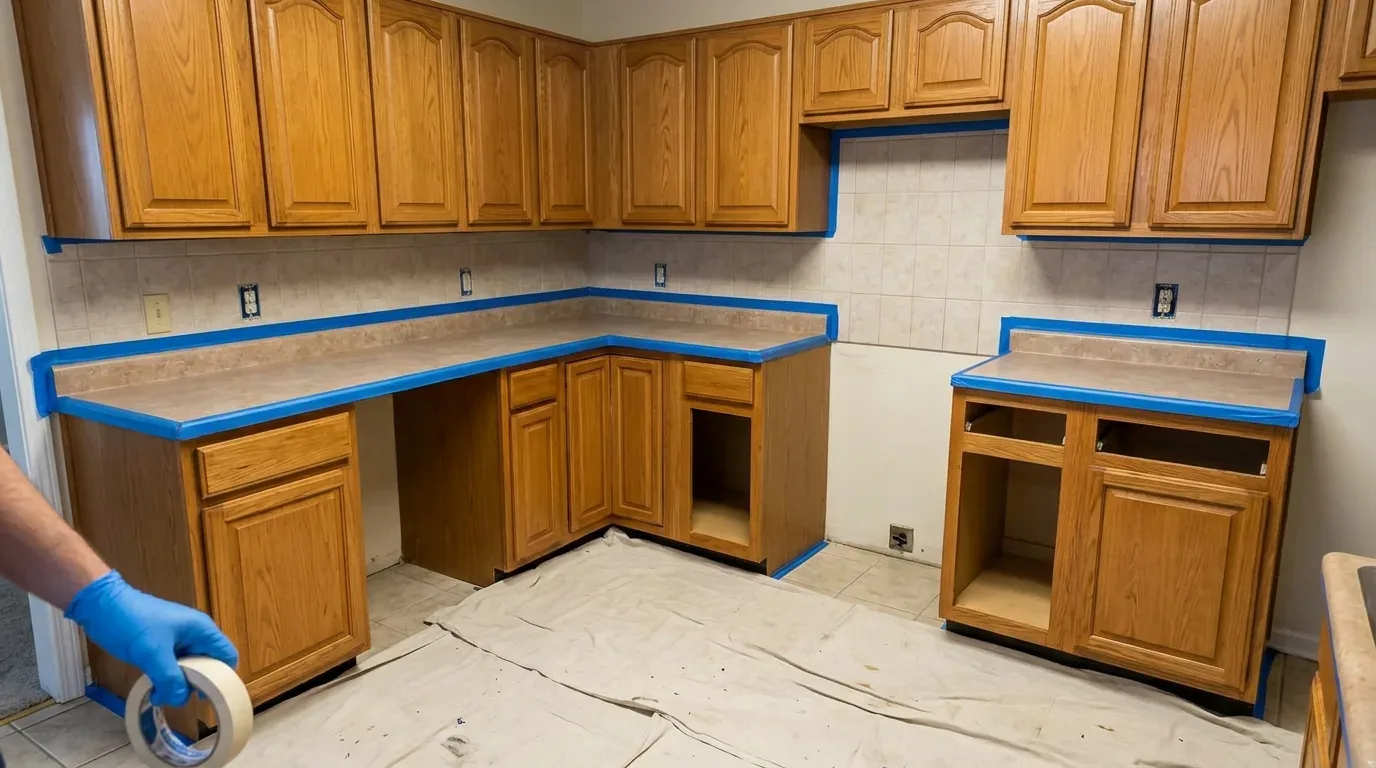
Porcelain wins here. Your feet may hurt after a long day. But a porcelain floor can take a cast-iron skillet hitting it without becoming the story of the kitchen. Ceramic handles low-traffic pantries well. Stone requires acceptance of etching. The harder decision is not simply porcelain versus ceramic. Details matter. For our 2026 specifications, I check the actual windows before I trust a Pinterest board. Midtown gets plenty of afternoon sun on south-facing windows. A pale floor can show that glare more than you expect. I’d use a tile finish that doesn’t exaggerate glare, because a floor that looks fine in a sample can read much harder under direct sun. This guide is built from our active project files and covers porcelain, ceramic, natural stone, traction, grout, tile sizes and layouts, maintenance, cost, and how tile compares with hardwood and LVP. It is written from a designer's perspective, where a floor has to work quietly with the rest of the room rather than compete with it.
Direct Answers (Tile Floors For Kitchens)
| What type of tile is best for kitchen floors? | Porcelain handles kitchen abuse better than natural stone. |
| Is porcelain or ceramic tile better for a kitchen floor? | For most kitchen floors, I'd put porcelain first. Ceramic still works if the product is actually rated for floor use. |
| What tile finish is safest for a Sacramento kitchen? | Get slip-resistant ratings without deep grooves that catch dirt. |
| How should kitchen floor tile be laid out? | Start from the kitchen's center and primary sightlines rather than simply beginning at the nearest wall. |
Tile Floors For Kitchens 2026 at a Glance
| Element | In | Out |
|---|---|---|
| Material | Porcelain floors | Wall-only ceramic |
| Scale | Quiet large-format tile | Busy small-tile fields |
| Shape | Wood-look porcelain planks | Fake rustic plank variation |
| Safety | Low-sheen traction | Glossy slippery surfaces |
| Grout | Tighter grout joints | Bright white grout everywhere |
| Color | Warm mineral colors | Cold gray as default |
| Stone | Natural stone accents | High-maintenance marble floors |
| Layout | Centered layouts | Starting from a crooked wall |
Start With How the Kitchen Will Be Used
Performance beats pretty photos. In a busy kitchen, I start by looking at floor-rated porcelain. The useful numbers are 0.5% absorption and PEI 4 or 5. Oak, limestone, or handmade ceramic looks can all work. The floor rating is what I check first. A floor can be beautiful and still be a poor choice if the product is intended for walls or light-duty applications.
Porcelain is not the only answer. A PEI 4 rated ceramic survives a modest East Sacramento bungalow kitchen. Quartzite shows gorgeous movement across a large slab layout, yet stubborn oils stain it fast without sealer. Marble is a different commitment because acids can etch the surface. I would not specify it simply because a slab photograph looks beautiful. Think about how much wear you're comfortable seeing. Some people don't mind a few marks; others want the floor looking nearly new. Wet shoes need some grip. I don't want a texture so deep that bacon grease and crumbs have somewhere to hide. I tend to reach for matte porcelain first. Polished tile gets slippery fast once water is on it. Brands and collections change, so I judge the actual sample, not the catalog category. Across our active project specifications, I also pay close attention to the edge, grout color, and transition into adjacent flooring. Set the joints first. A 12-inch tile and a 24-inch tile won't frame the cabinets the same way, especially along a long island.
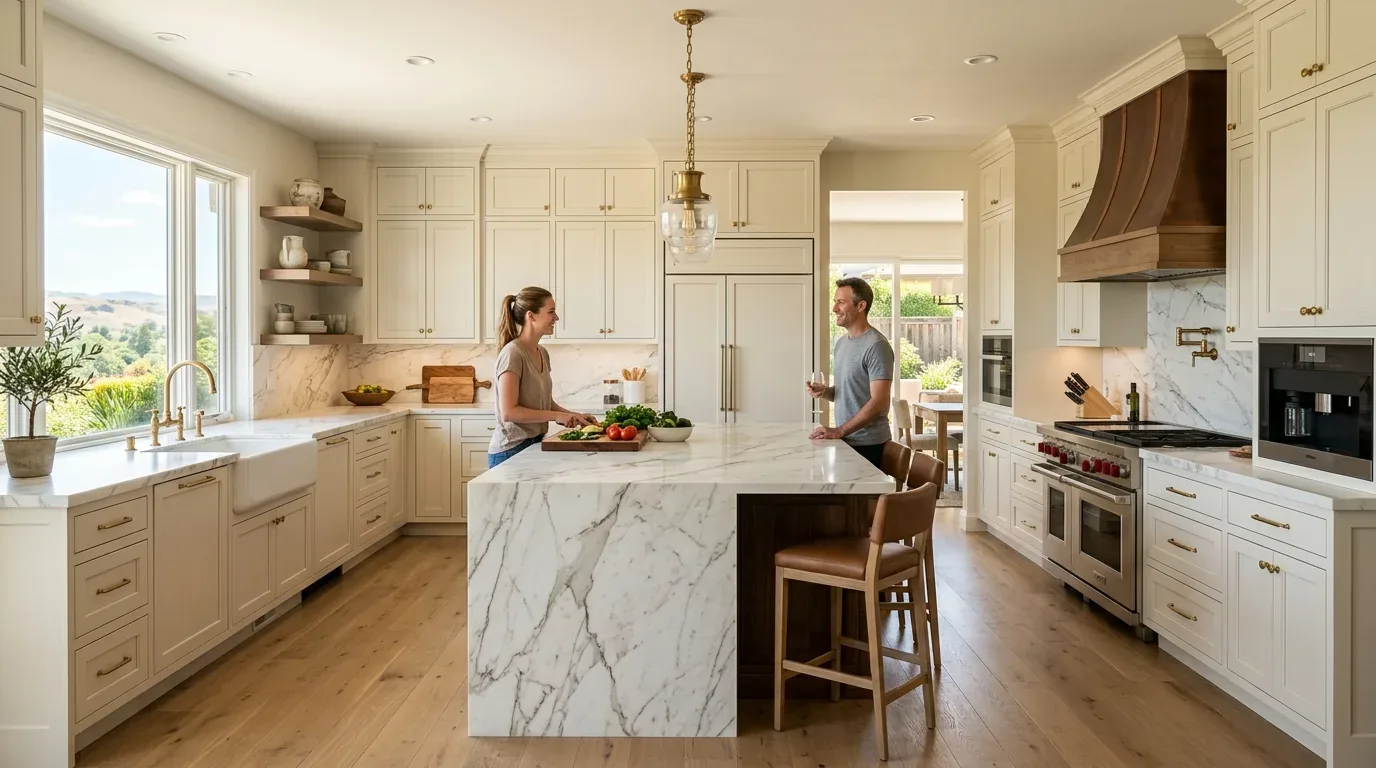
Specify the Material, Not Just the Look
Authenticity-grade materials
- Porcelain, ≤0.5% absorption, a strong floor choice for kitchens because moisture and spills are less of a concern than with more absorbent materials; specify PEI 4-5 for floor use.
- Quartzite, natural stone with substantial visual variation and good durability; plan for periodic sealing and approve the actual slab.
- Granite, durable natural stone with a wide range of colors and patterns; sealing is part of ownership rather than a reason to reject it.
- Marble, useful when patina and etching are acceptable; acidic foods and cleaners can permanently change the surface.
- 3/4-inch frameless plywood cabinetry, dadoed and glued box construction provides a substantial companion to a properly specified tile floor.
- Engineered quartz, approximately 90-93% ground quartz, consistent color and no sealing make it useful when the floor already supplies natural variation.
- 16-gauge 304 stainless steel, an undermount sink with sound dampening pairs well with durable tile because it tolerates hard daily use.
- Solid brass with ceramic-disc cartridge and PVD finish, a more durable hardware specification that does not introduce a competing low-grade finish next to the floor.
- Engineered hardwood with a 4-6 mm wear layer, a genuine alternative to tile when warmth underfoot and a continuous floor matter more than maximum water resistance.
- LVP with a 20-mil wear layer, practical for a high-traffic kitchen when a softer, quieter floor and lower installation complexity outweigh the visual and material qualities of tile.
Generic-grade tells we refuse to spec
- “Quality porcelain” without stating absorption or floor rating.
- Polished tile specified for a kitchen simply because it photographs well.
- Wall-rated ceramic used on a floor.
- A tile selected before checking the actual sample in the kitchen's daylight.
- Very small patterned tile used everywhere without considering grout maintenance.
- Thin 1cm stone on a lasting remodel specification.
- Marble treated as maintenance-free because it was sealed at installation.
- A wood-look plank chosen without checking how repeated grain patterns read across a large floor.
- Bright white grout paired with a high-use cooking zone without discussing cleaning.
- A layout that begins from the nearest wall instead of the kitchen's main sightline.
Tile Layouts That Work With the Architecture
| Tile Format | Defining Trait | Best Kitchen Application | Installation and Visual Distinction |
|---|---|---|---|
| Large-format porcelain | Broad field with fewer grout joints | Open kitchens and calm contemporary interiors | Needs careful substrate preparation and a deliberate layout because long sightlines expose alignment problems |
| Plank porcelain | Wood-floor proportions with ceramic durability | Kitchens connected to wood flooring or homes where a continuous visual language matters | Grain repetition and plank staggering need review before installation |
| Hexagon tile | Small geometric field with stronger pattern | Compact kitchens or restrained rooms that need a defined floor plane | More grout and more visual activity make color and joint width especially important |
| Patterned encaustic-look porcelain | Decorative repeat without the maintenance of cement tile | A kitchen where cabinetry and counters are intentionally quiet | Pattern scale must be judged from standing distance, not only from a close-up sample |
Designer Decision Matrix: Which Tile Floors For Kitchens Approach Fits Your Home
How we actually decide: match your situation to what we would specify, and the reasoning behind it.
| Your Goal | Best Solution | Why We Recommend It |
|---|---|---|
| Lowest long-term maintenance | Matte porcelain with a PEI 4-5 floor rating and a grout color close to the tile | Low absorption reduces staining concerns, while a restrained grout contrast makes routine crumbs and cooking residue less visually dominant. |
| Warmest alternative to hardwood | Wood-look porcelain plank | It preserves the directional movement and warmth of a wood floor while giving a Sacramento kitchen stronger resistance to spills and wet shoes. |
| Natural material with visible aging | Quartzite | Quartzite gives a genuine stone surface and variation without asking the homeowner to accept marble's greater sensitivity to acids and etching. |
| Small kitchen | Medium-format porcelain with a quiet pattern and closely related grout | Moderate scale keeps grout from dominating a compact floor while avoiding the difficult cuts that can make a very large tile feel forced. |
| Contemporary kitchen | Large-format matte porcelain in a warm stone tone | Fewer joints calm the floor plane and work with slab-front cabinetry, especially where Northern California daylight already creates strong changes in shadow. |
| Historic or pre-war Sacramento house | Porcelain or ceramic tile sized to respect the room's proportions rather than forcing oversized slabs | Older Sacramento rooms are often less geometrically perfect, so a forgiving scale and carefully centered layout can look intentional where large modules would magnify irregular walls. |
| High-traffic family kitchen with dogs | Matte PEI 4-5 porcelain with a practical grout color | The combination tolerates traffic, wet paws, and dropped cookware better than softer flooring while avoiding the cleaning burden of highly textured tile. |
| Lower upfront flooring cost | Stock porcelain in a standard rectangular format | Common formats reduce special-order risk and simplify cutting, while the design can still feel custom through grout tone and a properly centered layout. |
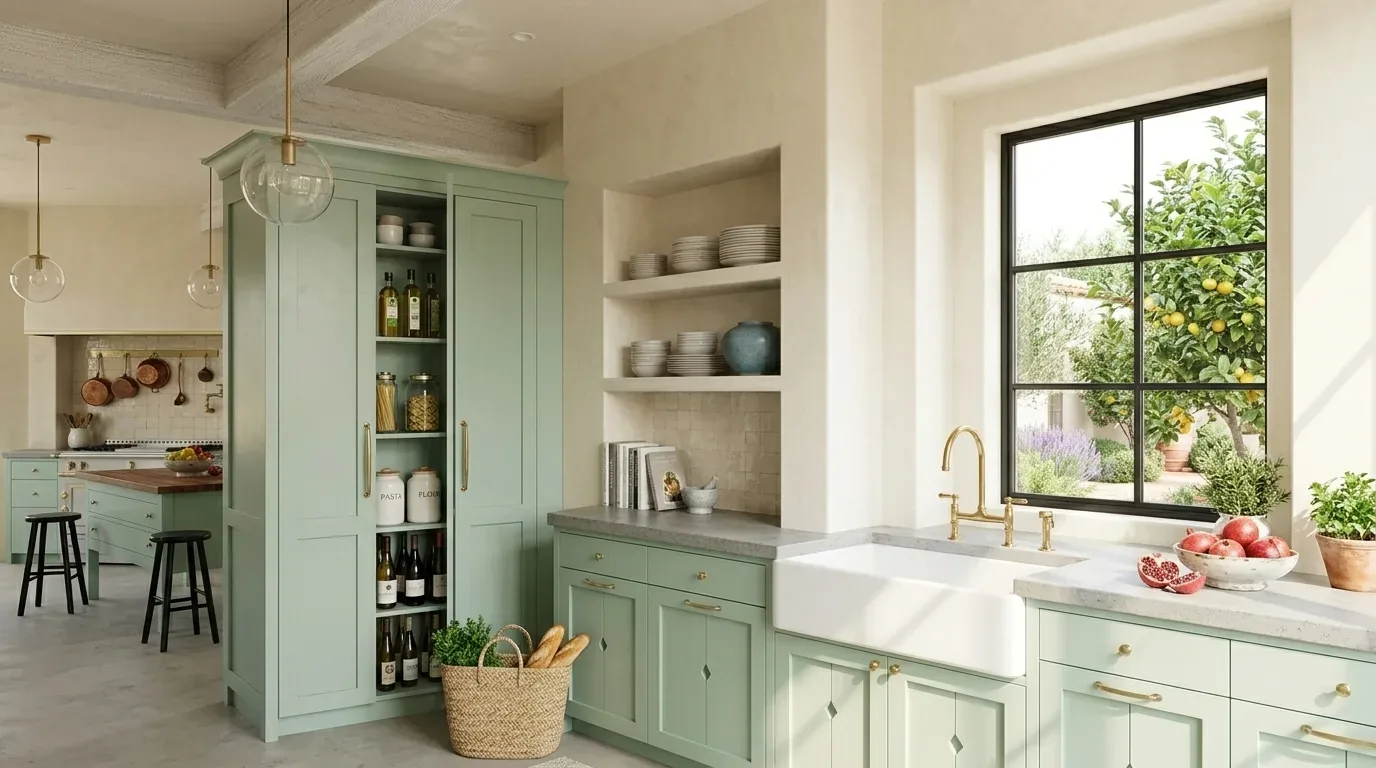
Porcelain, Ceramic, Stone, Hardwood, or LVP: Which Floor Should You Choose?
The real question is not “Which kitchen floor is prettiest?” It is “Which floor will behave the way I need it to for the next several years?” We start with the daily routine. Who cooks, where they stand, and what gets dragged across the floor tell me more than a style photo does. Dogs change the calculation. So do kids and a kitchen that sees wet shoes or dinner every night. I'd give floor-rated porcelain a close look. Some kitchens want a warmer floor. If the adjoining rooms already have engineered hardwood, carrying it into the kitchen can make more sense. LVP has a place when keeping the floor cost down matters more than getting the depth of real tile.
| Choose | If your priority is | Why |
|---|---|---|
| Porcelain | Durability | Low absorption makes porcelain a dependable choice where water gets onto the floor. |
| Ceramic | A softer visual feel | Use a ceramic product that is rated for floors. I wouldn't specify a wall tile for a busy kitchen. |
| Natural stone | Variation and patina | Stone has real depth. It also needs sealing and care suited to the particular stone. |
| Engineered hardwood | Warmth | A substantial wear layer holds up better than a thin decorative product and can carry the floor into the adjacent living space. |
| LVP | Lower-cost resilience | A 20-mil wear layer is a more serious kitchen specification than bargain flooring. It still won't have the material character of stone or porcelain. |
In Northern California homes, I often end up making the decision at the transition. The height of the adjoining floor can matter as much as the tile itself. A kitchen opening into a living room with existing oak flooring may benefit from engineered hardwood or a wood-look porcelain selected to respect the adjacent floor. Patio doors change the floor decision. If wet shoes come straight through there, porcelain is often easier to live with.
What Makes Kitchen Tile Look Expensive, and What Makes It Look Cheap?
Expensive-looking tile is usually not about the tile's price. It is about scale, alignment, restraint, and the relationship between the floor and everything above it. You don't need expensive stone to get a good-looking kitchen floor. Keep the grout quiet, center the layout, and make the cuts look deliberate.
Starting at the closest wall is a common way to lose the layout. A loud grout grid doesn't help, and wood-look planks look especially artificial when the same printed grain keeps turning up. Don't judge the floor from one little sample. Lay several pieces side by side first. That’s where the pattern shows itself. A single tile tells you very little about how the floor will read once the repeats start. A repeated pattern can get loud quickly. At the doorway, I look at the last full row and the transition together so the floor doesn’t feel like it stops abruptly. A beautiful tile can still look wrong where it meets the next floor. A warm oak cabinet, cool gray floor, bright white quartz, and blue-gray backsplash can create four competing temperatures before the homeowner has added a single accessory. In Sacramento's strong daylight, that conflict becomes more apparent. The best floor usually gives the room one quiet, continuous plane and lets the cabinetry or countertop carry the stronger detail.
The National Kitchen and Bath Association's professional focus on kitchen planning reinforces this basic point: the floor is part of a coordinated working environment, not an isolated finish. I treat it accordingly.
What Will Kitchen Tile Look Like After 5 to 10 Years?
Porcelain generally ages quietly. The surface itself is unlikely to absorb a kitchen spill when properly specified, but grout is the part homeowners notice first. Cooking residue collects there, especially near the range and sink. That is why I would rather specify a sensible grout color and joint than promise a maintenance-free floor.
Natural stone changes more visibly. Granite and quartzite can develop a lived-in quality while still performing well, provided sealing is maintained. Marble is different. Acidic foods and cleaners can etch it, and scratches become part of the surface. That can be beautiful if the homeowner wants patina. Showroom perfection isn't the goal. A honed stone floor will pick up texture and small changes with use, and that's part of how the material ages.
Look at the surface in ordinary light before deciding. Texture can hide a splash. Deep texture needs a mop that can actually reach it. If grease can settle below the raised surface, I’d rather use a shallower texture in a kitchen. Polished tile wipes clean easily. I'd hesitate to use it where water hits the floor. Wet shoes can make a smooth surface surprisingly slick.
The useful middle ground is usually a matte or low-sheen porcelain with enough surface texture for traction and not so much that a mop catches on it.The American Society of Interior Designers' broader emphasis on designing around how people actually live is relevant here. A material that looks perfect on installation day but irritates its owner during ordinary cleaning is not a successful kitchen specification.
Best Pairings: Cabinets, Counters, Grout, and Kitchen Light
Pick the loud surface first. If the backsplash has strong veining, I usually let the floor stay quieter so the two materials aren't competing across the room. Busy cabinets need quiet floors. Try large format matte porcelain. Plain cabinet fronts let you use patterned cement tiles near East Sacramento bungalows without overwhelming the room.Oak and walnut kitchens match earthy slate or sandstone tones naturally. West-facing Land Park windows make cold gray tiles look icy during late afternoon heat. Samples need to be viewed at morning and afternoon light, not just under showroom LEDs.
For grout, I generally prefer a close tonal relationship rather than a hard outline. A medium warm gray, taupe, or sand grout can preserve the tile field and reduce the visual emphasis on cleaning lines. If the tile itself is strongly patterned, matching grout is usually the calmer choice. A quiet large-format tile can take a slightly darker joint. That small shift helps show the layout without drawing a checkerboard across the floor.
Then look at the floor beside it. Two millimeters of height mismatch at a threshold causes stubbed toes. Hard floor switches ruin an open floor plan. Let the transition get quiet. Keep the undertones close. A warm beige floor meeting a cool gray tile can make the doorway look like a hard break instead of one connected floor.
Common Mistakes We See
Biggest Waste: Spending more on the tile and then letting the nearest wall dictate the layout. The first row should answer to the room’s sightline, not just the wall beside it. If the room is out of square, the expensive material can produce an expensive-looking mistake.Biggest Regret: Choosing polished tile because it looks dramatic in a showroom. Kitchen floors take a beating. Get unglazed porcelain that handles dropped cast iron skillets. Satin finishes provide grip while keeping mop heads from snagging. Hidden Cost: Grout needs a place in the maintenance plan from the start. A busy pattern means more joints and more cuts. That extra labor can erase the savings from a cheaper tile, especially once the grout work is added. From our project debriefs and post-occupancy reviews, 2023-2026. This is one of the most expensive visual mistakes because the first course controls everything that follows. If the wall is crooked, every subsequent row can inherit the error, and tapered cuts may land directly in the main sightline. The cure is a dry layout that establishes the center and the primary viewing axis first. In an older Sacramento house, I assume the geometry needs to be checked rather than assuming a wall is a reliable starting line. A tile can look perfectly appropriate and still be the wrong product for a kitchen floor. The floor needs a product rated for that application, with porcelain ideally at or below 0.5% absorption and PEI 4-5 for heavy kitchen use. The cure is simple: read the manufacturer's technical specification before ordering. “Porcelain” by itself does not tell you everything about the intended application, finish, or wear rating. More texture is not automatically safer. Heavy hand-scraped textures trap flour and cooking oil. Pick smooth matte glazes instead. I test actual samples with the hand and look at how crumbs and residue sit on the texture before approving a kitchen floor. Patterned tile becomes difficult when the cabinetry, backsplash, counters, and floor all ask for attention. The cure is to choose one dominant surface and let the others support it. A quiet large-format porcelain can make a highly figured stone counter look expensive. A busy patterned floor can work too, but then the surrounding finishes need discipline. Homeowners often compare tile samples and forget that the finished floor includes thousands of inches of grout. Small formats and high-contrast joints increase the visual and cleaning burden. Match your grout color to the tile body before ordering. Matching grout hides crumbs between cleanings. A single sample cannot tell you how a tile will behave across a kitchen. Large-format pieces can reveal subtle variation, while wood-look planks can repeat a printed grain in ways that are invisible on a small sample. The cure is a dry layout using enough pieces to see the pattern, joint rhythm, cuts, and relationship to cabinetry before the order becomes irreversible.Observed Failure Modes, How Tile Floors For Kitchens Goes Wrong
Starting From the Nearest Wall
Choosing Wall Tile for Floors
Making Traction Too Aggressive
Overworking the Pattern
Ignoring Grout Maintenance
Buying Before Checking the Full Field
What's Going Out for 2026
What Tile Floors For Kitchens Costs in 2026
| Scope | Typical range |
|---|---|
| Cosmetic refresh with cabinets refaced, counters, fixtures, and paint | $45k-$75k |
| Mid-range full remodel with new cabinetry, quartz, appliances, and no layout change | $75k-$125k |
| High-end kitchen with layout change or structural work | $125k-$225k+ |
Working Notes
What We Have Learned Doing This: tile floors for kitchens
“Freeze drawings first. Fabricators need exact room dimensions. Shifting any base box later ruins the stone layout. You'll prevent expensive do-overs by checking clearances today.”
These notes come from our own tile floors for kitchens project debriefs. Most were learned the expensive way the first time.
Sources & Professional References
This guide's positions on materials are grounded in published building-code, standards, and recognized design-authority sources, alongside Designed | Curated Interiors' verified credentials and active project files:
- American Society of Interior Designers (ASID): interior-design practice standards
- International Code Council (ICC): Chapter 8 Interior Finish Decorative Materials And Furnishings
- NKBA, Amy Kunst Member Profile (verified credential, NKBA Committee Member)
- Featured in: Good Housekeeping (storage and space-planning expert quotes, July 2026) · Homes & Gardens (design expert quote, May 2026) · Sacramento Love (guest author, 2024)
Frequently Asked
What type of tile is best for kitchen floors?
Is porcelain or ceramic tile better for a kitchen floor?
What tile finish is safest for a Sacramento kitchen?
How should kitchen floor tile be laid out?
What should I look for when choosing kitchen floor tile materials?
From Tile Floors For Kitchens to a Real Room
A trend piece is the briefing document, not the deliverable. The pages below show how we translate these principles into finished rooms across Sacramento and the rest of Northern California.
- Sacramento & Bay Area Interior Design Services How we scope, source, and deliver work end to end.
- Interior Designer Hub, Sacramento Where most of our Sacramento work lives, the regional fit explained.
- Modern Tudor Homes Heritage-architecture renovation patterns from our project files.