
Think: tech gadgets in a vintage look, chill zones, earth-friendly choices. That's 2026 design. Design in 2026? Simple. Think ahead. Keep it focused.
What's hot in 2026? Think materials and colors. Mix in new design ideas with local Sacramento vibes. We'll dig into how Sacramento's older homes shape what's trendy now. We're all about mixing practical designs with fresh ideas, keeping it warm and classic.
Direct Answers (Interior Design Principles 2026)
| What are the key interior design principles for 2026? | Stick with the local feel. Choose materials that last. Wood, stone, and things that age well. |
| How does Sacramento's regional context influence 2026 interior design? | Sacramento's older homes like earthy tones. They love natural stuff and eco-friendly tricks. |
| What materials are recommended for 2026 interiors in Sacramento? | Clay, linen, local woods, recycled stuff. They're durable and suit the area. |
| Why is restraint important in 2026 interior design? | Simple style keeps it calm, avoids fads. Works well for Sac homes. |
Interior Design Principles 2026 2026 at a Glance
| Element | In | Out |
|---|---|---|
| Color | Soft, muted color palettes with earthy undertones | Bold, high-contrast color schemes |
| Material | Natural, textured materials like clay and linen | Overly glossy, synthetic textures |
| Sustainability | Sustainable and low-impact design practices | Disposable, non-recyclable materials |
| Layout | Flexible, multi-use layouts gaining popularity | Rigid, single-use layouts |
| Technology | Integration of smart technology for seamless living | Tech overuse that disrupts calm |
| Cultural Influence | Cultural influences blending global aesthetics | Cultural motifs without context |
| Materials | Sustainable materials like recycled composites | Non-sustainable, resource-intensive materials |
| Design Philosophy | Design philosophies emphasizing calm and restraint | Fast-paced, trend-driven design fads |
The Rise of Calm and Restraint in 2026
Across our active project specifications, we see a clear move toward interior spaces that evoke calm and restraint. Soft colors are in. Think sandy, stone, soft sage. Calming, timeless colors. Everyone wants a flexible, grounded space. Clay plasters, linen, matte cabinets. They keep the vibe calm.
Design's leaning hard into being eco-friendly and long-lasting. Recycled materials, local wood like Rift Sawn White Oak. Durable and classic come first. The American Society of Interior Designers emphasizes that future-forward design incorporates a sense of calm, which is why restraint in color and material choices is becoming a hallmark of 2026 interiors. We aim for spaces that soothe and stand up to changing styles.
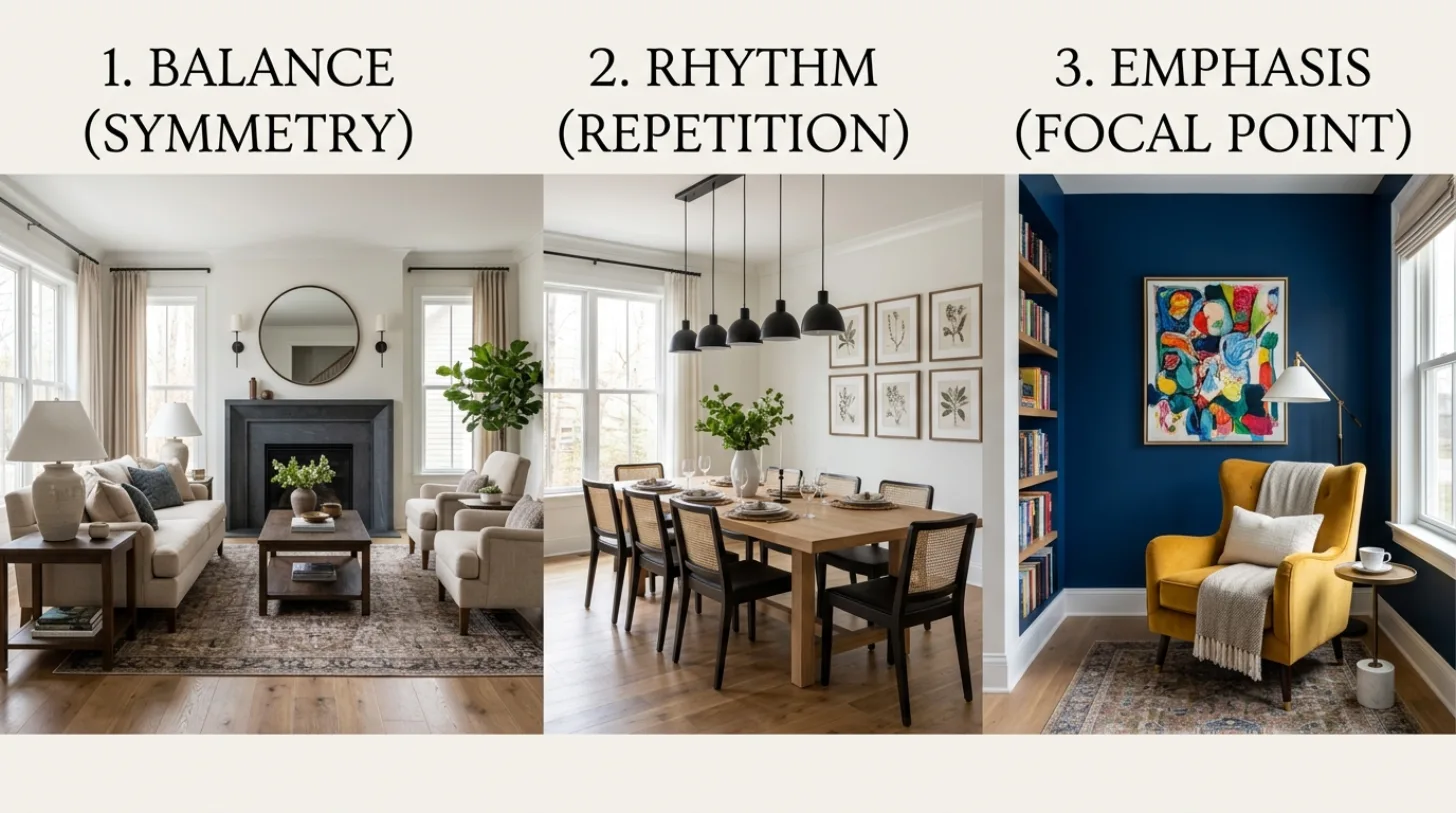
Material Specificity for 2026 Interiors
Authenticity-grade materials
- White oak (rift-sawn), for floors and slat detail; calmer grain than plain-sawn
- Linen fabric, for upholstery and window treatments; natural, breathable, and aging gracefully
- Clay plaster, wall finishes that add texture and warmth with low VOC emissions
- Recycled glass tiles, for backsplashes and accent areas; eco-friendly and visually rich
- Reclaimed wood, for furniture and accents; supports sustainability and adds character
- Matte ceramic, for fixtures and hardware; reduces glare and enhances understated elegance
- Recycled composite surfaces, for countertops; durable and eco-conscious
- Natural wool rugs, for warmth and acoustic comfort; biodegradable and hypoallergenic
Generic-grade tells we refuse to spec
- Synthetic laminates, often shiny and less sustainable
- High-gloss finishes, can feel cold and are difficult to maintain
- Non-recycled plastics, resource-intensive and short-lived
- Veneer over MDF, prone to chipping and less durable
- Polyester fabrics, less breathable and less sustainable
- Resin-based composites, often not eco-friendly
- Overly glossy marble, high maintenance and dated in look
- Vinyl flooring, less sustainable and can emit VOCs

How to Choose the Right Materials for 2026
The first question homeowners ask is often about durability and sustainability. They need durable materials that fit their ethics. Decide on clay plaster and linen for less impact. Or try recycled countertops. We mold our approach to respect what's needed, whether it's style or handling moisture. For example, in kitchens, recycled glass tiles and reclaimed wood can add character while supporting sustainability, as the American Society of Interior Designers recommends.
It's often a trade-off between what lasts and cost. Here’s a quick comparison:
| Material Type | Cost Range | Longevity | Environmental Impact |
|---|---|---|---|
| Reclaimed wood | $15-$30 per sq ft | Decades with proper treatment | High, supports sustainability |
| Veneer over MDF | $10-$20 per sq ft | Less durable, prone to chipping | Low, synthetic core |
What to Avoid When Applying 2026 Design Principles
One common mistake is overusing high-gloss finishes or overly shiny surfaces, which can feel cold and dated quickly. Use matte or textured surfaces to add warmth. Avoid the fleeting trends, like some plastics. Linen, clay plaster. These materials age beautifully.
Keep spaces free from unnecessary stuff. The 2026 style? Prioritize simplicity. Streamline things; trim the fuss. Simplicity makes a space relaxing and easy to maintain.
Observed Failure Modes, How Interior Design Principles 2026 Goes Wrong
From our project debriefs and post-occupancy reviews, 2023-2026.
Overly Glossy Finishes Create Cold Spaces
Many Sacramento homeowners and designers fall into the trap of overusing high-gloss surfaces in pursuit of a modern look. Shiny surfaces can be too stark without enough sun. It’s too showy, lacks warmth. Matte finishes warm up a space. Textures, too. Finish choices that mature gracefully help keep a calming feel.
Trend-Driven Materials Lack Longevity
Chasing the latest trends with materials that are not sustainable or durable often leads to quick obsolescence. Trendy plastics won't last. Style often wins over practicality in some project designs. Use linen or reclaimed wood for a local, eco-friendly touch. Keeps things looking sharp over time.
Ignoring the Core Design Problem
In many cases, Sacramento homeowners assume the problem is the size or look of a feature, leading to costly solutions like extensions or custom builds. Could be lighting or privacy affecting the space. Used measurements and pics to see that shifting furniture and updating curtains fixes the problem. Thoughtful design saves money and aligns with 2026's ideas.
Neglecting Regional Context
Applying design principles without considering Sacramento’s architectural and landscape context can result in spaces that feel out of place. Modern styles don't always fit historic Sacramento neighborhoods. Regional materials and respecting architecture create balance. Our experience shows that restrained, natural palettes work particularly well here, reinforcing that regional understanding is key to successful 2026 interiors.
What's Going Out for 2026
- Bright, overly saturated color schemes
- Synthetic, shiny textures
- Disposable, non-recyclable materials
- Overly ornate or decorative elements
- Fast-trend finishes with short lifespan
- Excessive use of high-tech gadgets disrupting calm
- One-size-fits-all design solutions
- Ignoring regional character and landscape influences
What Interior Design Principles 2026 Costs in 2026
| Scope | Typical range |
|---|---|
| Refresh scope with natural, sustainable materials | $70K-$150K |
| Mid-tier full remodel with custom details | $150K-$350K |
| Estate-scale renovation or rebuild | $350K-$2M+ |
Working Notes
What We Have Learned Doing This: Interior Design Principles: A Designer's Guide to the 2026 Look
“Trades do not read minds. They read drawings.”
Trust builds in those dull chats: structural walls, number changes, or schedule slips. Clients forgive reality. No one likes surprise issues.
Get long-lead items first. Plan work around them. Appliances and millwork decide the timeline. Ignoring that loses time.
Specify for the next ten years, not the next photo shoot. The work that holds its value is quiet, well made, and a little bit boring on the day it is installed.
These notes come from our own interior design principles: a designer's guide to the 2026 look project debriefs. Most were learned the expensive way the first time.
Sources & Professional References
This guide's positions on materials are grounded in published building-code, standards, and recognized design-authority sources, alongside Designed | Curated Interiors' verified credentials and active project files:
- American Society of Interior Designers (ASID): interior-design practice standards
- International Code Council (ICC): Chapter 8 Interior Finishes
- NKBA, Amy Kunst Member Profile (verified credential, NKBA Committee Member)
- Featured in: Homes & Gardens (design expert quote, May 2026) · Sacramento Love (guest author, 2024)
Frequently Asked
What are the key interior design principles for 2026?
How does Sacramento's regional context influence 2026 interior design?
What materials are recommended for 2026 interiors in Sacramento?
Why is restraint important in 2026 interior design?
When should homeowners consider early planning for materials?
How can homeowners apply sustainability in their interior design?
From Interior Design Principles 2026 to a Real Room
A trend piece is the briefing document, not the deliverable. The pages below show how we translate these principles into finished rooms across Sacramento and the rest of Northern California.
- Sacramento & Bay Area Interior Design Services How we scope, source, and deliver work end to end.
- Interior Designer Hub, Sacramento Where most of our Sacramento work lives, the regional fit explained.
- Modern Tudor Homes: Authentic, Revival, and Neo-Tudor (A Designer Reference) Heritage-architecture renovation patterns from our project files.
- Japandi Living Room: A Designer's Guide to the 2026 Look The 2026 warm-neutral playbook applied to the living room.