Sacramento + Marin Interior Designer · Amy Kunst, NKBA 📞 916-756-5977 Get Free Quote

Interior Design Quotation: A Designer's Guide to the 2026 Look

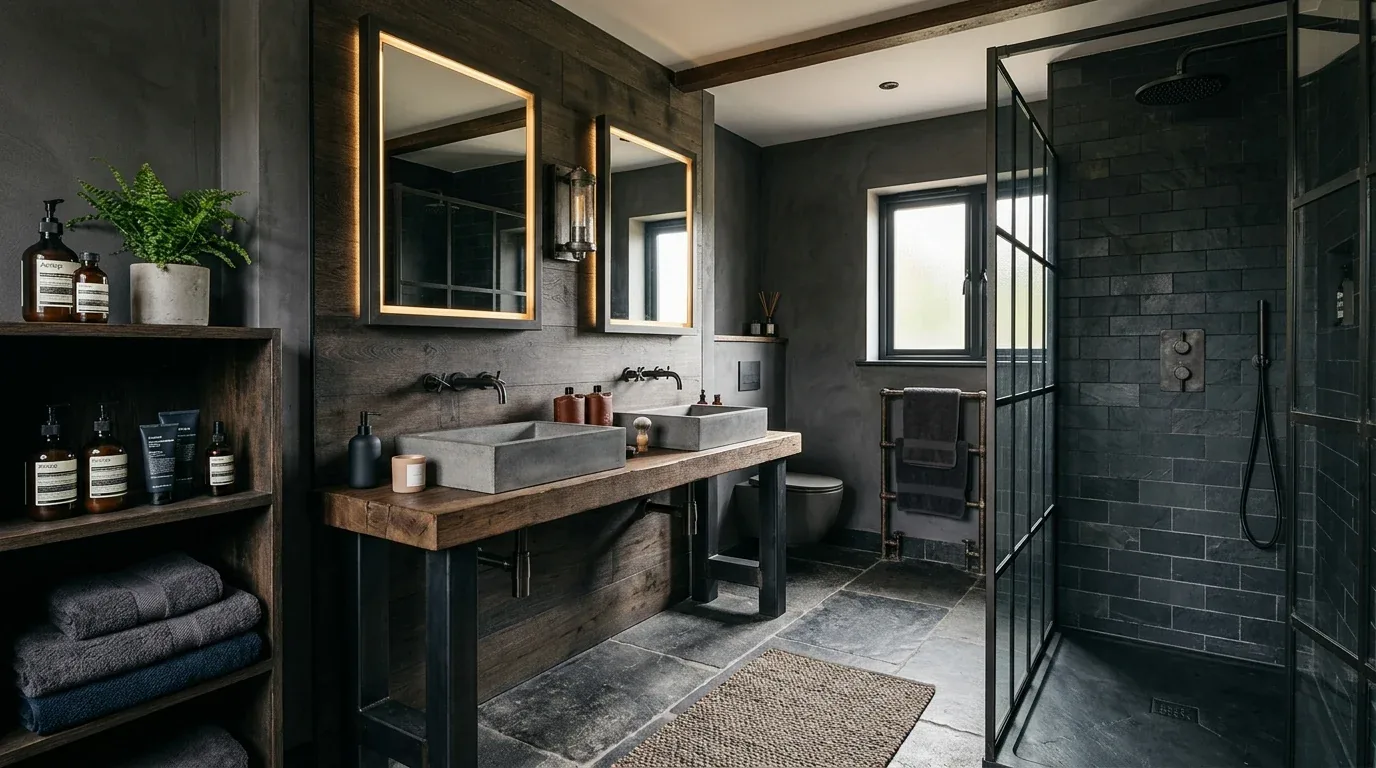
A modern bathroom with dark tiles, a double concrete sink on a wooden countertop, illuminated mirrors, and a glass-enclosed shower
A modern bathroom with dark tiles, a double concrete sink on a wooden countertop, illuminated mirrors, and a glass-enclosed shower.

An interior design quotation should tell you exactly what you are paying for, what is included, what is not, and when each phase is expected to happen. The best quotation is not simply a price; it is a clear map of scope, services, allowances, responsibilities, and timing. That level of detail matters because a low-looking number can become expensive when design hours, revisions, procurement, installation, freight, or contractor coordination are left vague. My preference is warm restraint: fewer assumptions, better specifications, and enough information that a homeowner can make a decision without decoding the designer's proposal.

This guide is built from our active project files and looks at what belongs in an interior design quotation, how detailed the cost structure should be, which expenses commonly appear, how timelines and service packages can be presented, and how to compare quotations without being distracted by the lowest headline number. The designer perspective is simple: the quotation should make the eventual work feel more predictable, not merely more attractive on paper.
Direct Answers (Interior Design Quotation)

What services should an interior design quotation include?An interior design quotation should detail the scope, services, allowances, responsibilities, and timing of each phase, including programming, floor-plan development, finish selections, cabinetry, lighting, plumbing fixtures, furnishings, drawings, contractor coordination, purchasing, receiving, installation, and final styling.
How do designers typically charge for their services?Designers usually charge a flat fee, hourly rate, or a percentage of the overall project cost.
Why is material specificity important in an interior design quotation?Material specificity ensures clarity and accuracy in costs; specifying exact materials like frameless full-access cabinets or Blum soft-close hardware helps avoid budget surprises by clearly defining what is included in the project.
What should a Sacramento-specific interior design quotation consider?A Sacramento-specific quotation should account for the home's age and construction, daylight exposure, indoor-outdoor living considerations, and local architectural styles to ensure accurate material selection and installation details.

Start With a Quotation That Defines the Work

The first design move is not choosing a fee structure. It is defining the work tightly enough that the fee has meaning. Across our active project specifications, I want to see rooms, deliverables, decision points, procurement responsibilities, and client responsibilities separated rather than bundled into a sentence such as “full-service interior design.” A useful quotation should tell a homeowner what happens after the deposit is paid. That can include programming, floor-plan development, finish selections, cabinetry, lighting, plumbing fixtures, furnishings, drawings, contractor coordination, purchasing, receiving, installation, and final styling.

Material specificity matters too. If a quotation includes cabinetry, I would rather identify frameless full-access boxes, 3/4-inch plywood construction, solid-wood dovetailed drawers, and the intended finish than write “custom cabinets.” If hardware is specified, a line such as Blum or Salice soft-close hardware communicates more than “premium hardware.” The same applies to window treatments, where a quotation should distinguish a basic manual shade from a motorized system such as Lutron or Hunter Douglas because the price, wiring coordination, and homeowner experience are materially different.

The quotation should also separate design fees from pass-through costs. A homeowner needs to know whether freight, receiving, storage, installation, trade discounts, markup, and sales tax are included. The National Kitchen and Bath Association's professional focus on planning and coordinated kitchen and bath work is a useful reminder that specifications and responsibilities need to be understood before construction starts. A good quotation makes those mechanics visible because that is where many budget surprises originate.

Close-up of decorative wooden spheres with resin inlays on a marble surface
Close-up of decorative wooden spheres with resin inlays on a marble surface.

Material Specificity Makes the Quotation Defensible

Authenticity-grade materials

  • White oak, rift-sawn, for floors and slat detail because the calmer grain works with warm-restraint interiors.
  • 3/4-inch plywood cabinetry, for box construction because it gives a quotation a meaningful construction standard instead of a vague quality adjective.
  • Solid-wood dovetailed drawers, because drawer construction affects durability and should not disappear inside a generic cabinet allowance.
  • Calacatta-style quartz, when a lower-maintenance stone appearance is needed because the consistent pattern is easier to budget and maintain than highly variable natural stone.
  • Honed natural stone, where a softer surface is wanted because honed finishes reduce visual glare and suit the quieter Northern California light.
  • Conversion-varnish finish, for painted cabinetry because it gives the specification a clear performance expectation.
  • Brushed nickel, for hardware and plumbing because its softer reflectivity can bridge warm wood and cooler architectural surfaces.
  • Integrated LED lighting, because fixture count alone does not communicate color quality, placement, or the labor needed to coordinate lighting.
  • Motorized Lutron shades, where automation is part of the brief because wiring, controls, programming, and installation need to be accounted for.
  • Hunter Douglas shades, when daylight control and privacy need to be specified alongside the window treatment rather than treated as an afterthought.

Generic-grade tells we refuse to spec

  • “Premium cabinetry” with no box or drawer construction
  • “Designer lighting” with no fixture or labor allowance
  • “High-end hardware” without a finish or manufacturer
  • “Natural stone” without slab type or finish
  • “Custom window treatments” without fabric, lining, or operating method
  • One furniture allowance covering several unrelated pieces
  • A single materials allowance with no room breakdown
  • “Installation included” without identifying who installs what
  • Freight and receiving described as incidental
  • A contingency presented as if it were guaranteed project cost

Designer Decision Matrix: Which Interior Design Quotation Approach Fits Your Home

How we actually decide: match your situation to what we would specify, and the reasoning behind it.

Your GoalBest SolutionWhy We Recommend It
Lowest upfront design commitmentA defined consultation or concept package with fixed deliverablesA narrow scope prevents a small project from carrying the overhead of procurement and construction administration that the homeowner does not need.
Full-service remodelA phased quotation covering design, documentation, procurement, coordination, and installationSeparating phases makes it easier to understand where the budget is committed and prevents construction coordination from appearing free simply because it is bundled.
Luxury finishA specification-led quotation with named materials, manufacturers, allowances, and installation responsibilitiesLuxury is often lost through substitutions and poorly defined allowances, not through the absence of expensive products.
Older Sacramento homeA quotation with investigation allowances and clearly identified unknownsOlder housing stock can hide framing, plumbing, electrical, or finish conditions that make a rigid fixed number misleading before walls or floors are opened.
Northern California indoor-outdoor homeA quotation that separately identifies glazing-adjacent shades, flooring transitions, and durable finishesStrong daylight, open doors, and repeated movement between exterior and interior spaces make glare, wear, and material transitions more consequential than they appear in a mood board.
Limited constructionA design-only quotation with purchasing as an optional phaseSeparating procurement lets a homeowner control the service level without pretending that sourcing, ordering, receiving, and damage resolution require no professional time.
Predictable decision-makingA quotation with explicit revision limits and approval milestonesThe cost of changing a selection after ordering is very different from changing a concept during design, so the quotation should make that boundary visible.
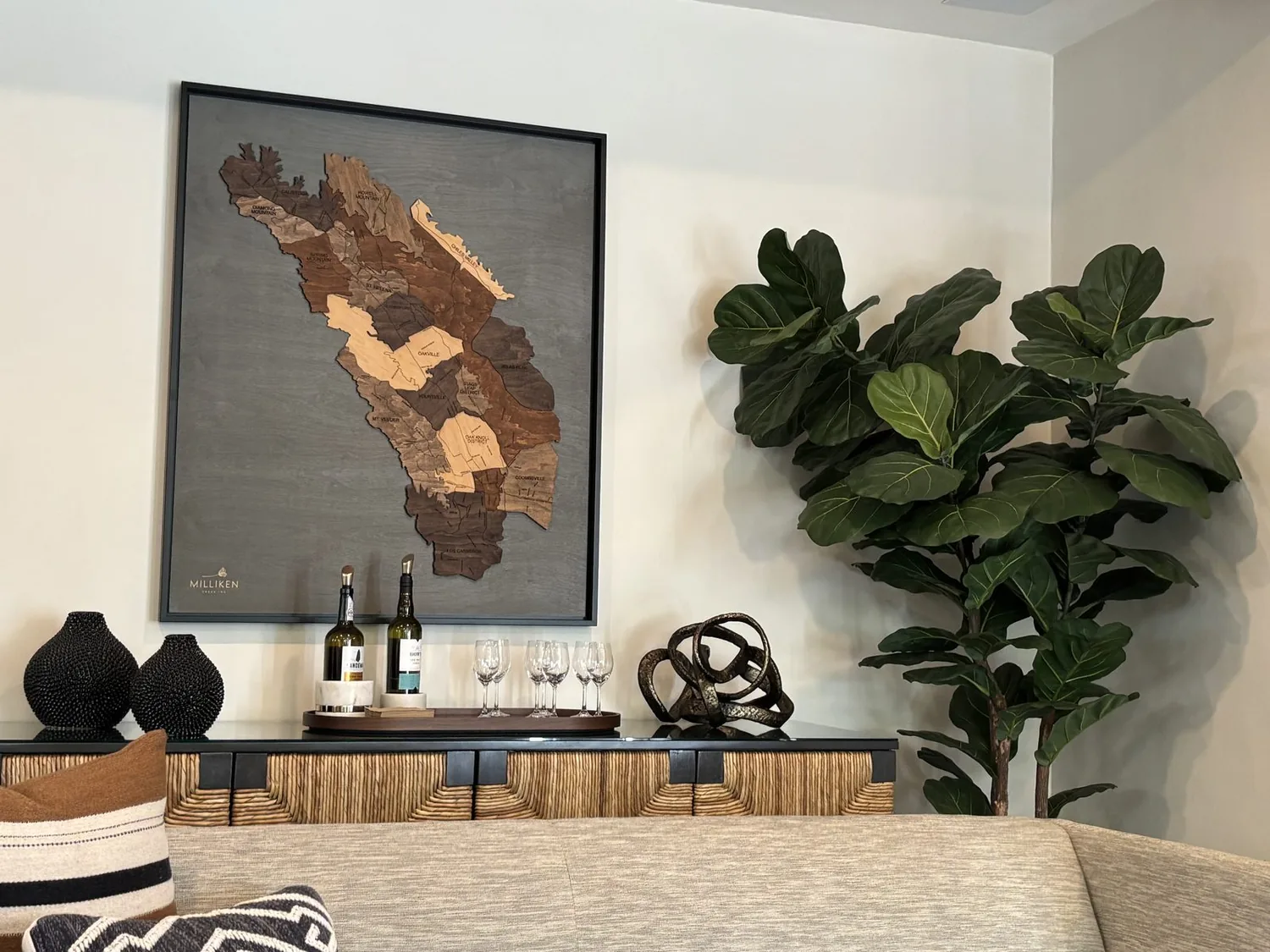
A modern living room corner with a wooden map wall art, decorative bottles and glasses on a console, a sculptural decor piece, and a large leafy plant
A modern living room corner with a wooden map wall art, decorative bottles and glasses on a console, a sculptural decor piece, and a large leafy plant.

What Information Does a Designer Need Before Quoting?

The homeowner's real question is usually not “What does interior design cost?” It is “How do I know this number will not change dramatically once we start?” The first question we ask is what, exactly, needs to change. From there, I want the rooms involved, approximate dimensions, photographs or drawings, home age, desired outcome, construction changes, budget range, and the level of service the homeowner expects.

A quotation becomes more reliable when the designer knows whether the work is a cosmetic refresh, a kitchen remodel, a whole-home renovation, or a furnishing project. I also want to know who is purchasing products, who is receiving them, whether the contractor is already selected, and whether permit research is likely to matter. The American Society of Interior Designers emphasizes the professional scope of interior design, including planning and coordination, which is why those responsibilities should be visible rather than assumed.

For a Sacramento home from the 1990s, for example, I would not price cabinetry, lighting, and finishes exactly the same way I would price the same wish list in a much older house. The age of the home changes the likelihood of coordination work, and the quotation should acknowledge that difference without pretending to know every concealed condition in advance.

How Detailed Should an Interior Design Quotation Be?

A useful quotation should be detailed enough that two people can read it and reach the same conclusion about what the designer is doing. That means listing the service phases, major deliverables, fee method, payment schedule, purchasing responsibilities, allowances, exclusions, revision policy, and expected timeline. It does not mean filling forty pages with every future product before design decisions have been made.

I prefer categories that correspond to real work: discovery and programming, concept development, design documentation, selections and specifications, procurement, construction coordination, installation, and closeout. Each phase should explain what the homeowner receives. If purchasing is included, the quotation should state how purchasing fees or markups work, because a product's retail price is not necessarily the same thing as the cost of sourcing, ordering, tracking, receiving, inspecting, and resolving damage.

The quotation should also distinguish an allowance from a committed price. A countertop allowance is not the same as a selected slab. That distinction is especially important when natural stone, custom millwork, or made-to-order furnishings are involved. Clear language here protects the homeowner from false certainty and gives the designer room to make good decisions later.

What Expense Categories Belong in the Quote?

The cleanest quotations separate professional services from project expenses. Design fees are one category. Construction is another. Products, materials, freight, receiving, storage, installation, taxes, permit-related costs, and specialty consultants may each deserve their own line or clearly defined allowance. The National Association of the Remodeling Industry's professional focus on remodeling work reinforces why construction responsibilities and project costs should not be blurred together.

  • Design and consultation fees
  • Construction drawings or documentation
  • Materials and finish allowances
  • Furniture and decorative objects
  • Lighting and plumbing fixtures
  • Window treatments and controls
  • Procurement, freight, receiving, and storage
  • Installation and styling
  • Contractor or specialist costs
  • Permit or consultant allowances where applicable

There is also a practical Northern California issue: freight and labor can become meaningful portions of a specification when products are coming from outside the region. Hiding those costs inside a general “materials” number makes comparison harder. Naming them makes the quotation more honest.

Should the Quotation Include a Project Timeline?

Yes. A quotation does not need to promise an exact completion date, but it should show the expected sequence and approximate duration of each phase. For example, concept development might be described as a range of weeks, followed by selections, documentation, purchasing, construction coordination, and installation. The point is not calendar theater. The point is to show where the homeowner's decisions affect the schedule.

Product lead times should be handled carefully. A quotation can say that procurement begins after approval and that manufacturer lead times are outside the designer's direct control. It can also identify decisions that must happen early, such as cabinetry, windows, lighting infrastructure, or custom millwork. That is far more useful than writing “project duration: six months.”

For Sacramento homes, daylight and indoor-outdoor use can also affect sequencing. A room may need window treatment decisions before furniture is finalized because glare and privacy change how the space is used. The quotation should make those dependencies visible because timing is part of the design, not an administrative footnote.

Are Different Service Packages Worth Comparing?

They can be, provided the packages represent genuinely different levels of work. A good quotation might offer consultation-only, design-only, and full-service design with procurement and installation. The important part is not having three prices. It is explaining what disappears when the price goes down.

For example, a design-only package might provide a furniture plan, finish schedule, and specification package while leaving purchasing to the homeowner. Full-service design could add sourcing, ordering, receiving, damage claims, contractor coordination, and installation. Those are materially different services. If both packages promise the same outcome but one is simply cheaper, the comparison becomes confusing.

I would also ask what happens when the homeowner changes direction. Revision limits, additional design hours, and out-of-scope requests should be stated before work begins. A package becomes useful when it gives the homeowner control over the relationship without hiding the work that still has to be done.

How Do You Make a Quotation Comprehensive and Transparent?

Read it as if you know nothing about the project. If you cannot tell what happens next, who is responsible for purchasing, what happens to damaged merchandise, how many revisions are included, or which costs are allowances, the quotation needs work. I also recommend comparing proposals line by line rather than comparing the final totals first.

Look for exclusions. Ask whether contractor coordination is included. Ask whether procurement is billed separately. Ask whether installation is part of the design fee or a separate project expense. Ask what happens when a selected product is discontinued. These questions are not adversarial. They are how you turn an attractive proposal into a usable agreement.

Harvard's Joint Center for Housing Studies tracks the broader remodeling environment, but a homeowner still needs project-specific clarity. No market report can tell you whether your quotation includes receiving fees or a second round of drawings. Those details belong in the document itself.

Observed Failure Modes, How Interior Design Quotation Goes Wrong

From our project debriefs and post-occupancy reviews, 2023-2026.

One Number Hides Everything

The failure pattern is a quotation that gives a homeowner one impressive-looking total with almost no explanation. The symptom appears later when a product, revision, freight charge, or coordination task becomes an “extra.” The cure is simple: separate professional fees, project expenses, allowances, and exclusions. Across active specifications, the difference between a transparent $100,000 project budget and a vague $100,000 estimate can be enormous. The first tells you what the money is doing. The second only tells you what someone hopes the money will cover.

Allowances Masquerade as Prices

An allowance can make a quotation look pleasantly controlled while shifting the uncertainty onto the homeowner. A generous-looking countertop allowance may still be too low for the stone the design requires. A furniture allowance may cover a sofa but not the rug, delivery, or installation. The cure is to label every allowance clearly and explain what happens when the selected item exceeds it. The money-specific lesson is blunt: a low allowance does not lower the project cost. It lowers the number printed on the first page.

Free Coordination Gets Expensive

Contractor calls, vendor questions, substitutions, damaged deliveries, drawing clarifications, and installation decisions consume real design time. When those tasks are not listed in a quotation, homeowners often assume they are included indefinitely. That can create friction when the designer later bills additional hours. The cure is to define coordination by phase or service level. A quotation that charges more for coordination can actually be the safer financial choice because the homeowner knows who is carrying that work.

Packages Differ Only on Paper

Three packages with three prices are not useful if the descriptions are almost identical. A homeowner cannot make a rational decision because the cheaper package looks like a discount on the same service. The cure is to remove actual responsibilities from the lower tiers, such as procurement, installation management, or construction coordination. That makes the price difference explainable. If a $20,000 design package and a $12,000 package appear to deliver the same work, the quotation has failed before the project starts.

The Timeline Is Decorative

A quotation that says “approximately six months” without identifying phases is not a useful schedule. It does not show when selections are due, when purchasing begins, or which decisions can hold up construction. The cure is a phase-based timeline with dependencies. This matters financially because a delayed cabinet order or late lighting decision can force labor to be repeated. The cheapest quotation is not necessarily the cheapest project when the schedule is allowed to drift.

Exclusions Arrive Too Late

One of the costliest quotation problems is discovering an exclusion after the homeowner has already approved the work. Permit coordination, specialty engineering, receiving, storage, installation, or additional drawings can each become significant expenses. The cure is to state exclusions beside the relevant service rather than bury them at the end. If a homeowner needs to ask three times whether a service is included, the quotation is not yet transparent enough.

What's Going Out for 2026

  • Single-line design fees with no service breakdown
  • Unlabeled material allowances
  • Unlimited revisions implied by vague language
  • Procurement fees hidden inside product prices
  • Generic “premium” material descriptions
  • Timelines without phases or dependencies
  • Packages with indistinguishable deliverables
  • Verbal promises that never appear in the quotation
  • Exclusions buried in dense legal language
  • Artificially low totals designed to win the first comparison

What Interior Design Quotation Costs in 2026

ScopeTypical range
Refresh scope$8K-$20K
Mid-tier scope$25K-$60K
Estate-scale$60K-$150K+

Working Notes

What We Have Learned Doing This: interior design quotation

“A finish you cannot maintain is a finish you cannot afford.”

A renovation is a dependency chain, not a list of tasks. A two-day cabinet delay quietly becomes a two-week slip by week sixteen because every trade downstream is holding a calendar. The least glamorous part of this work, and the most valuable, is keeping that chain from cascading.

Order the long-lead items before anything else and design the sequence so the rest of the job can proceed without them. The appliance, the stone, the custom millwork set the schedule, and pretending otherwise is how a project loses a month it never gets back.

Most of the money that gets wasted is spent solving the wrong problem confidently. A homeowner asks for more space, every contractor agrees and prices an addition, and the real issue turns out to be light, or proportion, or one bad sightline. We make the room tell us the problem before anyone signs a demolition contract.

These notes come from our own interior design quotation project debriefs. Most were learned the expensive way the first time.

Sources & Professional References

This guide's positions on materials are grounded in published building-code, standards, and recognized design-authority sources, alongside Designed | Curated Interiors' verified credentials and active project files:

Frequently Asked

What services should an interior design quotation include?
An interior design quotation should detail the scope, services, allowances, responsibilities, and timing of each phase, including programming, floor-plan development, finish selections, cabinetry, lighting, plumbing fixtures, furnishings, drawings, contractor coordination, purchasing, receiving, installation, and final styling.
How do designers typically charge for their services?
Designers usually charge a flat fee, hourly rate, or a percentage of the overall project cost. Rates range from $50 to $250 per hour, with flat fees often starting around $2,000 for small projects.
Why is material specificity important in an interior design quotation?
Material specificity ensures clarity and accuracy in costs; specifying exact materials like frameless full-access cabinets or Blum soft-close hardware helps avoid budget surprises by clearly defining what is included in the project.
What should a Sacramento-specific interior design quotation consider?
A Sacramento-specific quotation should account for the home's age and construction, daylight exposure, indoor-outdoor living considerations, and local architectural styles to ensure accurate material selection and installation details.
How can homeowners avoid budget surprises in an interior design project?
Homeowners can avoid budget surprises by ensuring that a quotation separates design fees from pass-through costs such as freight, receiving, storage, installation, trade discounts, markup, and sales tax, and by verifying that the quotation addresses the root cause of any issues rather than just the symptoms.

From Interior Design Quotation to a Real Room

A trend piece is the briefing document, not the deliverable. The pages below show how we translate these principles into finished rooms across Sacramento and the rest of Northern California.

Start a Project Conversation →

Call (916) 756-5977Book a Consultation