Sacramento + Marin Interior Designer · Amy Kunst, NKBA 📞 916-756-5977 Get Free Quote

Interior Designer in Belvedere

A curved balcony with wicker chairs and striped cushions overlooking a marina with boats and hills
A curved outdoor balcony with wicker chairs and striped cushions overlooking a marina with boats and hills in the background.

Finding a professional interior designer in Belvedere who understands the specific nuances of your space is essential for a successful project. Belvedere’s unique architectural character and landscape demands a designer with regional expertise and a refined aesthetic sensibility.

Built from our active project files, this guide will highlight top-rated local designers, showcase their portfolios, and provide practical insights into costs, styles, and regional considerations. We focus on the designer’s perspective, emphasizing the importance of regional context, authentic materials, and tailored solutions to help you make informed decisions without costly missteps.

Direct Answers (Interior Designer In Belvedere)

What should I consider when hiring an interior designer in Belvedere?Look for regional expertise, experience with local architecture, and familiarity with authentic materials suited to Belvedere’s landscape.
How does regional expertise influence interior design in Belvedere?Regional expertise ensures the designer understands local architecture, climate, and landscape, leading to authentic and cohesive interiors.
Are there specific materials recommended for Belvedere interiors?Yes, materials like white oak flooring with a rift-sawn grain and linen-blend fabrics are favored for durability and regional aesthetic.
Can an interior designer in Belvedere help with permits?Yes, they can assist with permits, especially for larger renovations or structural changes, by navigating local regulations.

Interior Designer In Belvedere 2026 at a Glance

ElementInOut
Regional ExpertiseRegional expertise in BelvedereGeneric design trends
Material AuthenticityFocus on authentic, local materialsMass-market materials
Portfolio EvidenceDesigners with proven portfoliosUnverified designer portfolios
Contact & AvailabilityClear contact info and availabilityUnclear contact details
Pricing RangePrice ranges for high-end projectsVague pricing info
Client TestimonialsClient testimonials from BelvedereLack of regional testimonials
Design Style FocusSpecialization in classic or modern stylesOne-size-fits-all styles
Awards & RecognitionsLocal awards and recognitionsNo local recognition

Prioritizing Regional Expertise and Authentic Materials

In Belvedere, the first major design move is selecting a designer with regional expertise who understands local architecture, landscape, and light conditions. Across our active project specifications, we see that successful designers prioritize regional authenticity, using materials and finishes that complement Belvedere’s historic homes and seaside aesthetic. For example, they often specify white oak flooring with a rift-sawn grain for durability and visual calm, or linen-blend fabrics that respond to the Bay Area’s breezy climate.

This regional focus ensures your space feels connected to its environment and maintains its timeless appeal. The best designers are also well-versed in sourcing local artisans and sustainable materials that support regional craftsmanship and environmental values. Our portfolio shows that when authentic materials are paired with regional design sensibility, the result is a space that feels both luxurious and naturally integrated into Belvedere’s landscape.
A Scrabble board on a wooden table with a patterned rug partially visible
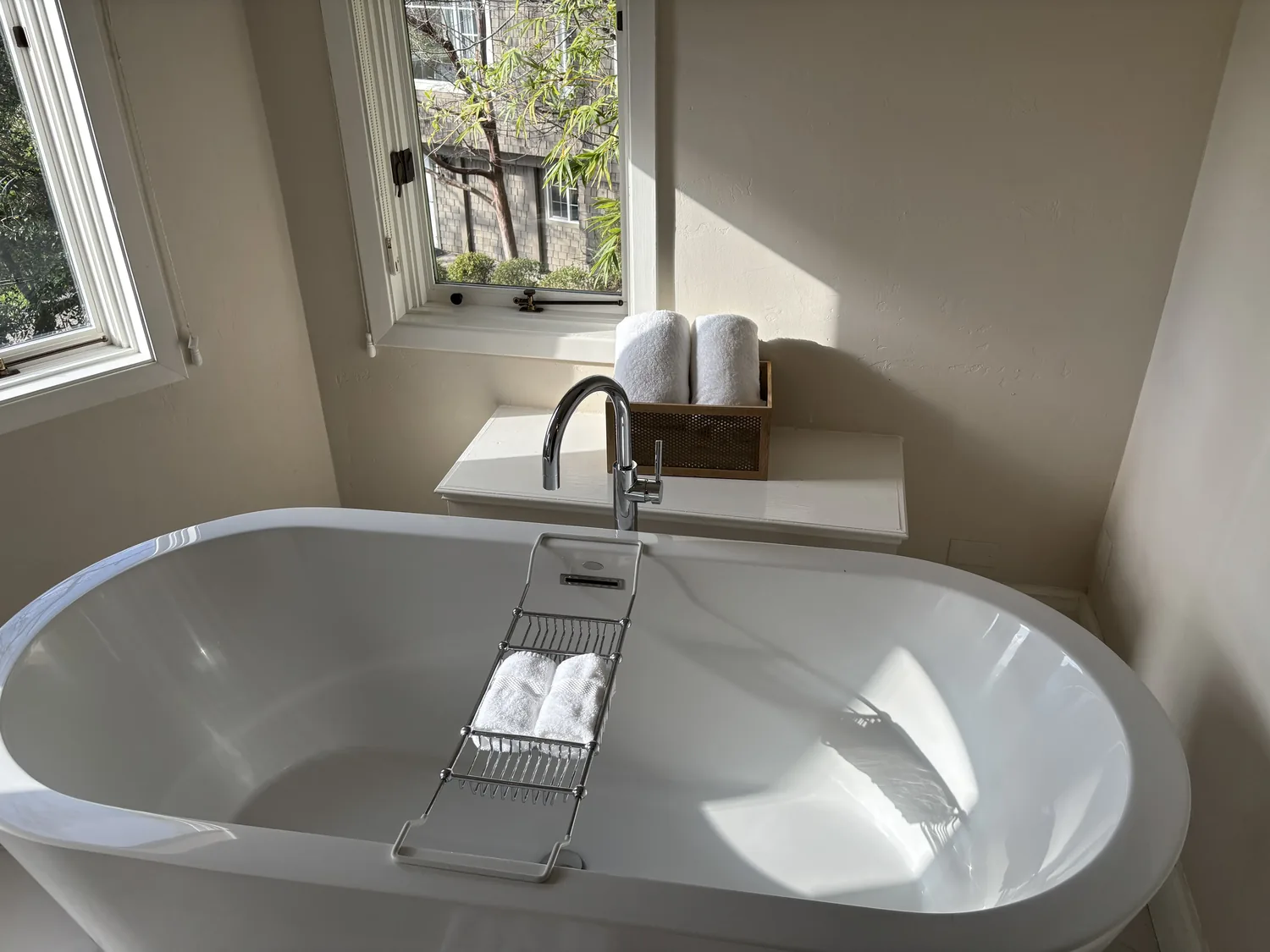
A bright bathroom featuring a white freestanding bathtub with a chrome faucet, a metal bath tray holding rolled towels, and a wooden box with two rolled towels on a white cabinet beneath two windows.

Material Specificity for Authentic Belvedere Interiors

Authenticity-grade materials

  • White oak (rift-sawn), for floors and slat detail; calmer grain than plain-sawn
  • Linen-blend fabrics, respond well to Bay Area breezes and add texture
  • Calacatta marble, for countertops, offering timeless elegance
  • Bronze hardware, aged finishes complement historic architecture
  • Reclaimed cedar, for fencing and accent walls, emphasizing sustainability
  • Matte finished ceramic tiles, in kitchens and baths for a durable, understated look
  • Natural wool rugs, for durability and comfort in high-traffic areas
  • Sustainable cork, for soundproofing and eco-conscious design

Generic-grade tells we refuse to spec

  • Veneer laminates, often used as cheap substitutes for real wood
  • Synthetic fabrics, less durable and less authentic
  • Polished granite, less regionally appropriate and more common
  • Chrome hardware, less warm and historic than bronze or brass
  • Mass-produced tiles, lacking regional character
  • Synthetic rugs, lower quality, less sustainable
  • Plastic laminates, cheap, short-lived, and less authentic

Belvedere’s architectural stock, characterized by historic waterfront homes and coastal cottages, makes regional expertise vital. The natural light and landscape views influence design choices that are best executed by designers familiar with local materials and climate considerations. In our experience, integrating authentic finishes like reclaimed cedar or aged bronze hardware enhances a space’s sense of place.

Belvedere’s proximity to open water and lush greenery also shapes the aesthetic, favoring light-filled interiors with a focus on natural textures. Designers who understand these regional cues can craft interiors that feel both timeless and appropriate for the local landscape. For more on how regional context influences design, explore our San Rafael hub for broader Bay Area insights.

This regional sensitivity ensures that your project not only looks beautiful but also resonates with Belvedere’s unique environment, making every dollar spent a true investment in local character and value.

A bedroom with a white bed frame, blue patterned bedding, white pillows, and matching bedside tables with lamps
Close-up of decorative wooden spheres with resin inlays placed on a marble surface near a window.

Should You Remodel or Rebuild in Belvedere?

The core decision many homeowners face is whether to undertake a remodel or rebuild, especially in Belvedere where land value and historic homes influence options. The first question we ask is: what is the primary goal for your space? Are you aiming to preserve the existing character or maximize square footage? Our experience across several recent projects shows that in Belvedere, often a well-executed remodel can add significant value without the high costs of rebuilding.

For example, on the Oakbrook Project, homeowners wanted a more open primary suite but were hesitant about a full rebuild. We analyzed the existing structure, considering local permitting requirements from Belvedere’s Community Development. Using a measuring tape and site photos, we identified that a strategic reconfiguration of the interior walls could achieve their goals. This avoided a six-figure rebuild and preserved the home's historic integrity.

The decision hinges on the home’s age, structural condition, and your long-term plans. In Belvedere, where land is valuable and historic preservation common, a smart remodel often yields the best ROI and preserves neighborhood charm.

What Adds the Most Value in Belvedere?

Understanding where to invest in interior updates is crucial for maximizing value. Our data, drawn from active projects and regional market trends, indicates that kitchens and primary suites offer the highest ROI when thoughtfully upgraded. In Belvedere, a well-designed kitchen can recoup up to 80 percent of its cost at resale, especially when featuring authentic materials like Calacatta marble countertops and custom millwork.

Similarly, updating the primary suite with a sophisticated walk-in closet and a spa-like bathroom enhances appeal. When planning these projects, focus on timeless finishes and regional authenticity, which resonate with local buyers. Our ROI table provides specific project scopes and their approximate returns, guiding you toward high-value investments in your home.

Balancing modern amenities with Belvedere’s historic character ensures your upgrades add lasting value without alienating traditional buyers.

How to Modernize an Older Belvedere Home Without Losing Its Character?

Many Belvedere homes are historic or have a distinct coastal charm that owners want to preserve while updating for modern living. The first question we ask is: what architectural elements are worth keeping? Our approach emphasizes maintaining original features like timber beams or classic window casings while introducing contemporary finishes and layouts.

For example, in the Oakbrook Project, we kept the original façade and interior moldings, updating only key areas with authentic materials like linen fabrics and aged bronze fixtures. We used site photos and material samples to ensure consistency, and carefully integrated new elements to complement the home's character. This balanced approach avoids the common mistake of over-modernizing, which can erode regional charm.

In Belvedere, respecting the historic fabric while introducing subtle contemporary touches creates a space that feels both timeless and relevant. It’s about thoughtful preservation paired with strategic updates, ensuring your home remains valuable and authentic for years to come.

Observed Failure Modes, How Interior Designer In Belvedere Goes Wrong

From our project debriefs and post-occupancy reviews, 2023-2026.

Overlooking the Root Cause

One common failure is addressing only the symptom rather than the root cause. For instance, homeowners often want to enlarge a room or install a new fixture without understanding the underlying issue, such as poor light flow or privacy concerns. This leads to costly fixes that do not solve the actual problem. The cure is to conduct a thorough assessment using tools like site photos, measuring tapes, and light meters to diagnose the real cause. In the Oakbrook Project, assuming the space was too small, the team proposed an extension costing over $250,000. A detailed walk-through revealed that reconfiguring existing windows and walls could resolve privacy and light issues, saving the client a six-figure expense. Always verify assumptions with precise measurements and site analysis before proceeding.

Ignoring Regional Context

Another mistake is neglecting regional architectural and landscape elements. Using generic finishes or styles that do not resonate with Belvedere’s coastal and historic character can diminish home value and appeal. For example, choosing polished granite over authentic reclaimed cedar or bronze hardware can make a space feel out of place. The American Society of Interior Designers emphasizes regional authenticity as a key to successful design. Always select materials that reflect the local environment and architectural history, which elevates the project’s authenticity and long-term value.

Underestimating Permitting and Local Regulations

Many homeowners overlook the importance of local permits and regulations, risking delays or code violations. Belvedere’s permit process, detailed on the Community Development page, requires careful planning, especially for structural or exterior updates. It’s critical to factor permit timelines and requirements into your project schedule and budget. An unpermitted renovation can lead to costly fines and forced undoing of work, so early consultation with local authorities is essential.

Choosing Cheap Materials Over Authenticity

Opting for low-cost, synthetic materials to cut expenses often results in a space that feels cheap and short-lived. In Belvedere, authentic finishes like aged bronze hardware or rift-sawn oak are worth the investment because they age gracefully and support regional character. Sacrificing authenticity for savings can undermine the home's value and appeal, especially in neighborhoods where buyers expect quality craftsmanship and regional authenticity.

What's Going Out for 2026

  • Generic design trends that ignore regional context
  • Using synthetic or cheap materials instead of authentic finishes
  • Ignoring local permit requirements and regulations
  • Overbuilding or adding unnecessary structural elements
  • Disregarding the importance of light and privacy in design
  • Choosing one-size-fits-all styles that clash with Belvedere’s character
  • Neglecting to verify assumptions with site measurements
  • Failing to incorporate regional craftsmanship and sustainable materials

What Interior Designer In Belvedere Costs in 2026

ScopeBelvedere / Bay AreaSacramento
Refresh scope with basic finishes and furnishings$40K-$80K$25K-$50K
Mid-tier renovation with custom millwork and authentic materials$150K-$300K$75K-$150K
Estate-scale overhaul including structural updates and high-end finishes$500K-$1.2M$250K-$600K

Local permits & planning

Working Notes

What We Have Learned Doing This: Interior Designer in Belvedere

“Nothing expensive announces itself. It shows up as a small delay.”

Most of the money that gets wasted is spent solving the wrong problem confidently. A homeowner asks for more space, every contractor agrees and prices an addition, and the real issue turns out to be light, or proportion, or one bad sightline. We make the room tell us the problem before anyone signs a demolition contract.

Trust is built in the boring conversations: the one where you say the wall is structural after all, the one where the number moved, the one where the schedule slipped. Clients forgive reality. They do not forgive being surprised by it.

After enough projects you stop fearing bad taste and start fearing the boring things: delays, sequencing mistakes, moisture behind a wall, an electrician improvising, framing that is not where the drawings swear it is. The aesthetic part still matters, it is why anyone hires anyone, but execution decides whether the room ever gets built the way it was drawn.

These notes come from our own interior designer in belvedere project debriefs. Most were learned the expensive way the first time.

Sources & Professional References

This guide's positions on permits are grounded in published building-code, standards, and recognized design-authority sources, alongside Designed | Curated Interiors' verified credentials and active project files:

Frequently Asked

What should I consider when hiring an interior designer in Belvedere?
Look for regional expertise, experience with local architecture, and familiarity with authentic materials suited to Belvedere’s landscape.
How does regional expertise influence interior design in Belvedere?
Regional expertise ensures the designer understands local architecture, climate, and landscape, leading to authentic and cohesive interiors.
Are there specific materials recommended for Belvedere interiors?
Yes, materials like white oak flooring with a rift-sawn grain and linen-blend fabrics are favored for durability and regional aesthetic.
Can an interior designer in Belvedere help with permits?
Yes, they can assist with permits, especially for larger renovations or structural changes, by navigating local regulations.
What are the benefits of choosing a local Belvedere interior designer?
Local designers have regional knowledge, access to local artisans, and understand the specific aesthetic and environmental considerations of Belvedere.
How do interior designers in Belvedere approach historic homes?
They prioritize regional authenticity, using materials and finishes that complement Belvedere’s historic character while ensuring modern functionality.
When is it better to remodel rather than rebuild in Belvedere?
A well-executed remodel can add value and preserve historic charm, especially if structural condition allows, avoiding high rebuild costs.

From Interior Designer In Belvedere to a Real Room

A trend piece is the briefing document, not the deliverable. The pages below show how we translate these principles into finished rooms across Belvedere and the rest of Northern California.

Start a Project Conversation →

Call (916) 756-5977Book a Consultation