Sacramento + Marin Interior Designer · Amy Kunst, NKBA 📞 916-756-5977 Get Free Quote

Can I Have The Indoor-Outdoor Flow I See On Pinterest Without Violating Fire-Resistant Building Codes? Mill Valley

A spacious outdoor wooden deck with modern patio furniture and a fire pit, surrounded by trees
A spacious outdoor wooden deck with modern patio furniture and a fire pit, surrounded by trees and overlooking a scenic view.

Designing a seamless indoor-outdoor flow in a Mill Valley home while adhering to fire-resistant building codes is not only possible but essential for safety and aesthetic harmony. The key is understanding the specific fire safety regulations that apply locally and integrating materials and design elements that meet these standards without sacrificing style. In 2026, fire-resistant design in Mill Valley emphasizes thoughtful transitions, durable materials, and code compliance that protect residents while enhancing the home’s natural connection to the landscape.

Built from our active project files, this guide will explore practical strategies for creating fire-safe indoor-outdoor spaces, including the latest materials, design ideas inspired by Pinterest, and local regulatory insights. We’ll share case studies of Mill Valley homes successfully balancing fire safety with aesthetic appeal, along with expert tips on transitional elements and regional considerations. This approach reflects our signature warm-restraint perspective, ensuring safety does not overshadow beauty.

Direct Answers (Pinterest Indoor Outdoor Flow Fire Resistant Codes Mill Valley)

What are the fire-resistant codes for indoor-outdoor flow in Mill Valley?Mill Valley follows the California Building Code, which requires fire-rated doors, windows, and transition zones for indoor-outdoor spaces.
How can I create a fire-safe indoor-outdoor transition in Mill Valley homes?Use fire-rated doors, such as aluminum or tempered glass, and incorporate fire-resistant fencing or screens to ensure safety while maintaining aesthetic appeal.
Are there specific materials recommended for fire-resistant outdoor flooring in Mill Valley?Yes, ceramic or fiber-reinforced composite decking are preferred for outdoor flooring due to their fire-resistant properties.
When should I consider rebuilding instead of remodeling for fire safety in Mill Valley?Rebuilding may be advisable if the existing structure is outdated or the landscape has changed significantly, though remodeling can suffice if the current structure is sound.

First Major Design Move, Creating a Fire-Resistant Indoor-Outdoor Transition

Our first major move in designing a fire-safe indoor-outdoor flow in Mill Valley is selecting the right transition elements that meet fire-resistance standards. This often involves choosing fire-rated doors, windows, and transition zones that align with the California Building Code and local amendments. For example, using fire-rated aluminum or tempered glass doors can provide an unobstructed view while maintaining safety compliance. Across our active project specifications, we favor materials like metal clad doors with fire-resistant cores and ceramic or fiber-reinforced composite decking for outdoor flooring, which resist ignition and withstand heat.

Designing these transitions requires balancing fire safety with aesthetic appeal. Incorporating sliding or bi-fold doors with fire-rated glazing allows for seamless indoor-outdoor access while satisfying fire codes. We also consider the placement of fire-resistant screens or fencing that act as safety buffers without disrupting visual flow. The key is integrating these elements thoughtfully so that safety is built into the design rather than added as an afterthought.

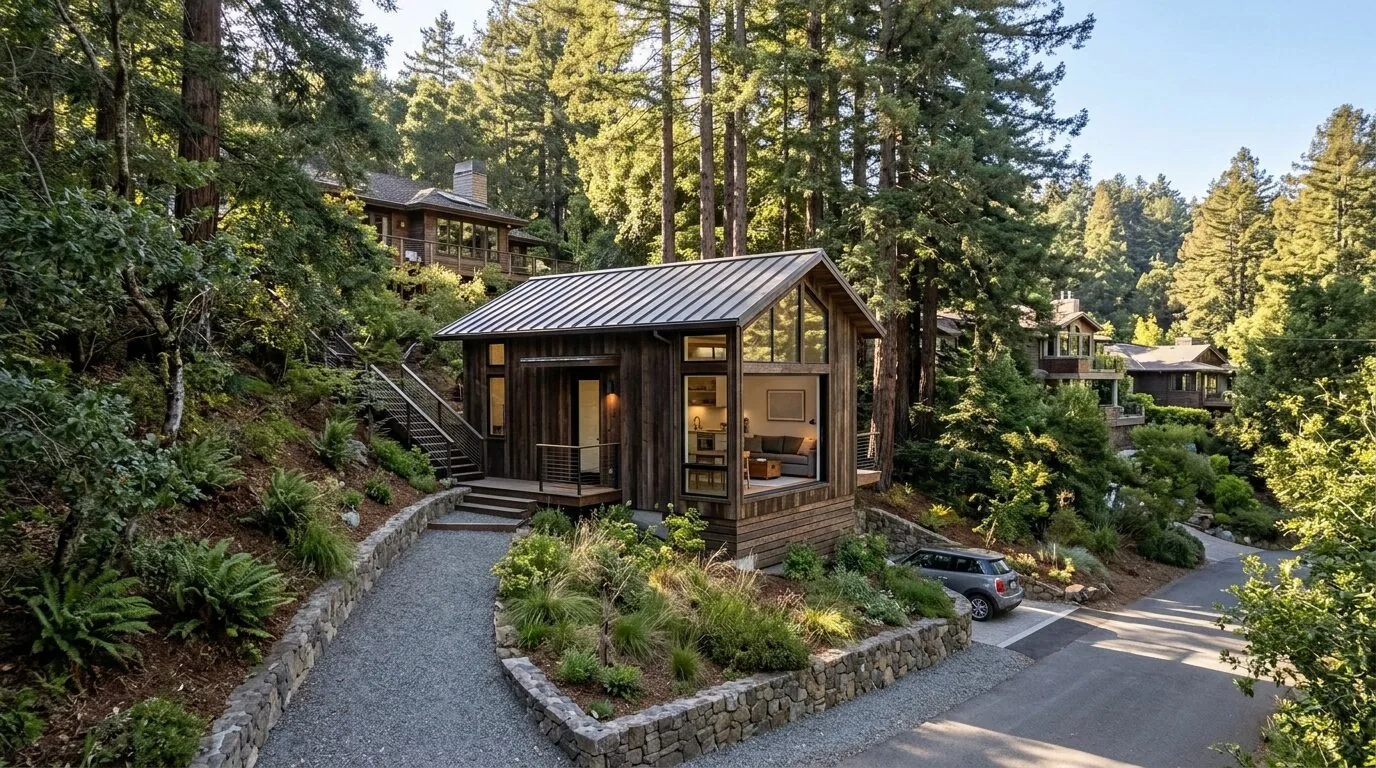
A small modern cabin-style house surrounded by tall trees and greenery, with a gravel pathway and stone retaining walls
Adu in mill valley.

Material Specificity, Fire-Resistant Choices for Mill Valley Homes

Authenticity-grade materials

  • Fire-rated aluminum, lightweight, durable, and compliant with fire codes
  • Tempered glass, high strength and safety for doors and windows
  • Ceramic tile, heat resistant flooring option outdoors and indoors
  • Fiber-reinforced composite decking, resistant to ignition and weather
  • Steel framing, structural support with high fire resistance
  • Intumescent paint, added fire protection for structural elements
  • Fire-resistant drywall, for interior transition zones
  • Copper or stainless steel, for fixtures and transitional hardware

Generic-grade tells we refuse to spec

  • Standard untreated wood, not fire resistant
  • Plain glass, less heat resistant and vulnerable in fire zones
  • Vinyl or plastic decking, ignites easily and melts
  • Non-rated doors and windows, do not meet fire safety standards
  • Standard drywall, not fire-rated for transition zones
  • Unprotected steel, susceptible to heat damage
  • Composite materials without fire treatment, variable safety
  • Paint finishes without intumescent properties

Regional Perspective, Fire-Resistant Indoor-Outdoor Design in Mill Valley

In Mill Valley, the proximity to wildland-urban interface zones makes fire-resistant indoor-outdoor design particularly important. The region’s lush landscape, dense vegetation, and historic homes built with wood framing create unique challenges and opportunities. Our approach leverages the area's natural beauty while respecting fire safety regulations that are increasingly emphasized by local authorities and the California Building Code.

The climate and landscape also influence material choices; for example, durable, weather-resistant, and fire-rated materials like fiber-reinforced composite decking and fire-rated aluminum doors are ideal for outdoor transitions. The local architectural stock, which includes many older homes, benefits from thoughtful updates that incorporate fire safety without compromising character. Collaborating with local authorities and understanding the specific requirements outlined in Mill Valley’s Building Department ensures that safety and design go hand-in-hand. For homeowners considering renovations, knowing regional nuances helps avoid costly delays and aligns with community standards, especially near Throckmorton Avenue where landscape and fire safety intersect naturally.

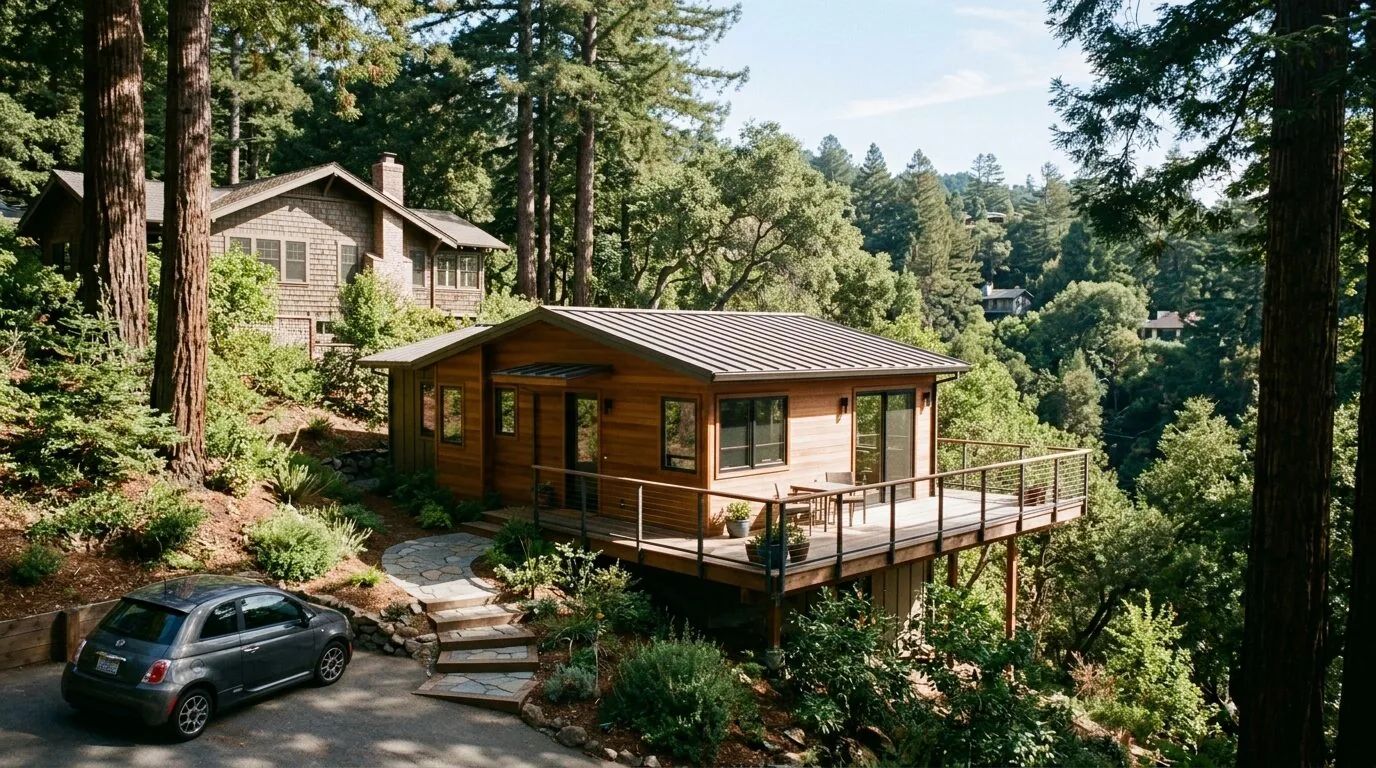
A modern wooden cabin with a large deck surrounded by dense forest and a parked car nearby
Adu in mill valley.

Should You Remodel or Rebuild in Mill Valley to Achieve Fire-Resistant Indoor-Outdoor Flow?

The primary concern for Mill Valley homeowners is often whether to remodel existing spaces or rebuild entirely to meet fire safety standards. The first question we ask is what the homeowner’s long-term goals are for the property. If the existing structure is sound but lacks fire-rated transition elements, a carefully planned remodel can often suffice, incorporating fire-resistant doors, windows, and decking materials. However, if the home’s layout is outdated or the landscape has changed significantly, rebuilding might provide a cleaner solution.

Cost considerations play a key role. A remodel that integrates fire-rated materials and updates the transition zones can typically be achieved within a moderate budget, especially if structural changes are minimal. Conversely, rebuilding offers an opportunity to reimagine the design with modern fire safety standards in mind, but at a higher investment. The decision ultimately hinges on assessing the scope, age of the home, and local permitting requirements, which can be clarified early by consulting the Mill Valley Planning & Building Department. Our experience suggests that a strategic remodel often balances safety, cost, and character preservation better than a full rebuild, especially for homes near Throckmorton Avenue where character and landscape matter.

What Are the Key Fire-Resistant Materials and Design Elements for Mill Valley Outdoor Transitions?

Choosing the right materials is crucial for fire safety and visual harmony. Our first step is understanding the fire-resistance ratings required by local codes. The National Kitchen and Bath Association’s guidance on fire-rated glazing and doors emphasizes the importance of tempered glass and metal framing, which are both durable and compliant. For outdoor flooring, ceramic tiles and fiber-reinforced composite decking are excellent options that resist ignition and withstand weathering. Interior transition zones benefit from fire-rated drywall and intumescent paints to enhance safety without disrupting aesthetics.

In Mill Valley, material selection must also consider landscape integration and climate resilience. The goal is to create a transition zone that is both beautiful and compliant, using products that resist heat and flames while maintaining the home’s character. Consulting local building codes and manufacturers’ fire safety certifications ensures that every element aligns with regional standards, making the outdoor space both inviting and protected.

How Can Mill Valley Homes Incorporate Fire Safety Without Sacrificing Aesthetic Appeal?

The challenge lies in balancing fire safety compliance with the desire for seamless, beautiful indoor-outdoor connections. Our first question is what aesthetic elements are most important to the homeowner. Many Mill Valley homes feature expansive glass doors, natural wood accents, and landscape views that define their character. We recommend selecting fire-rated bi-fold or sliding doors with minimal framing and high-quality glazing to preserve sightlines and natural light. Outdoor materials such as metal clad panels and ceramic tiles can be integrated into the design to create a cohesive look that also meets fire standards.

Incorporating landscape buffers, fire-resistant plantings, and strategically placed fencing can enhance safety without cluttering the visual flow. Our approach is to treat fire safety as an integrated part of the design process, ensuring that safety features are elegant and unobtrusive. By working within local regulations and selecting the right materials, Mill Valley homeowners can achieve a space that feels open and inviting while remaining compliant and protected.

Observed Failure Modes, How Pinterest Indoor Outdoor Flow Fire Resistant Codes Mill Valley Goes Wrong

From our project debriefs and post-occupancy reviews, 2023-2026.

Ignoring Local Fire Codes and Regulations

One common mistake in Mill Valley is assuming that standard residential codes suffice for outdoor transitions in fire-prone areas. This oversight can lead to costly delays or safety risks. The failure to verify specific local requirements often results in non-compliance, requiring rework or costly inspections. For example, neglecting to consult the Mill Valley Planning & Building Department early in the project can cause misunderstandings about permitted materials and transition zones. To avoid this, always check with local authorities and obtain written approvals before proceeding with structural or material changes. This proactive approach ensures safety and keeps the project on track.

Selecting Non-Compliance Materials

Using untreated wood or non-rated doors and windows for outdoor transitions is a frequent mistake that jeopardizes fire safety. Many homeowners and even some contractors underestimate the importance of fire-rated materials, assuming aesthetics outweigh safety. This oversight can lead to inspections failure, fines, or even unsafe conditions in the event of a fire. The American Society of Interior Designers emphasizes the importance of material compliance for safety, and local codes specify acceptable materials. Always specify products with proper fire-resistance certifications to ensure safety and compliance.

Overlooking the Landscape’s Role in Fire Safety

Many Mill Valley homes ignore landscape design as part of fire safety. Dense vegetation, mulch beds, and unmaintained plantings can increase fire risk and complicate transitions. The first question we ask is how landscape can serve as a natural barrier. Incorporating fire-resistant plantings, creating defensible space, and maintaining clear zones around structures are critical. Failing to integrate landscape considerations can undermine structural fire resistance and safety. Working with landscape architects familiar with fire-safe design ensures a harmonious balance between beauty and safety.

Underestimating Maintenance and Material Longevity

Fire-resistant materials require ongoing maintenance to retain their protective qualities. For example, untreated wood or composite decking without proper treatment can deteriorate or become combustible over time. The mistake is assuming that once installed, these materials require no further care. Regular inspections, cleaning, and reapplication of protective coatings are essential. The cost of neglecting maintenance can be significant, leading to compromised safety and the need for costly repairs. Educating homeowners about upkeep is key to long-term fire safety.

What's Going Out for 2026

  • Using untreated or non-rated outdoor wood
  • Ignoring California and local fire codes
  • Choosing materials without fire certifications
  • Overlooking landscape as a fire buffer
  • Neglecting ongoing maintenance of fire-resistant elements
  • Installing large expanses of untreated glass
  • Disregarding the importance of fire-resistant hardware
  • Failing to verify permit requirements early

What Pinterest Indoor Outdoor Flow Fire Resistant Codes Mill Valley Costs in 2026

ScopeMill Valley / Bay AreaSacramento
Basic updates with fire-rated doors and windows$20K-$45K$15K-$30K
Mid-tier outdoor transition overhaul with compliant materials$50K-$120K$40K-$80K
Complete rebuild with fire-resistant integrations and landscape buffers$200K-$500K$150K-$300K

Local permits & planning

Working Notes

What We Have Learned Doing This: Can I Have The Indoor-Outdoor Flow I See On Pinterest Without Violating Fire-Resistant Building Codes? Mill Valley

“Submit the math for any Title 24 credit calculation. The plan checker should never have to ask.”

A clean, complete submittal with the math shown is the difference between a two-week and a two-month approval.

Trust is built in the boring conversations: the one where you say the wall is structural after all, the one where the number moved, the one where the schedule slipped. Clients forgive reality. They do not forgive being surprised by it.

After enough projects you stop fearing bad taste and start fearing the boring things: delays, sequencing mistakes, moisture behind a wall, an electrician improvising, framing that is not where the drawings swear it is. The aesthetic part still matters, it is why anyone hires anyone, but execution decides whether the room ever gets built the way it was drawn.

Old houses lie, and so do new ones. Even a ten-year-old house lies the moment you assume the framing sits where the plans say. We stopped trusting old drawings, prior contractor work, and the phrase it should be fine a long time ago. The budget needs a real line for what demolition will uncover, usually 15 to 20 percent once walls start opening.

These notes come from our own can i have the indoor-outdoor flow i see on pinterest without violating fire-resistant building codes? mill valley project debriefs. Most were learned the expensive way the first time.

Sources & Professional References

This guide's positions on structure are grounded in published building-code, standards, and recognized design-authority sources, alongside Designed | Curated Interiors' verified credentials and active project files:

Frequently Asked

What are the fire-resistant codes for indoor-outdoor flow in Mill Valley?
Mill Valley follows the California Building Code, which requires fire-rated doors, windows, and transition zones for indoor-outdoor spaces.
How can I create a fire-safe indoor-outdoor transition in Mill Valley homes?
Use fire-rated doors, such as aluminum or tempered glass, and incorporate fire-resistant fencing or screens to ensure safety while maintaining aesthetic appeal.
Are there specific materials recommended for fire-resistant outdoor flooring in Mill Valley?
Yes, ceramic or fiber-reinforced composite decking are preferred for outdoor flooring due to their fire-resistant properties.
When should I consider rebuilding instead of remodeling for fire safety in Mill Valley?
Rebuilding may be advisable if the existing structure is outdated or the landscape has changed significantly, though remodeling can suffice if the current structure is sound.
Who should I consult to ensure my indoor-outdoor design complies with Mill Valley fire codes?
Consult the Mill Valley Planning & Building Department to verify permit requirements and fire safety standards.

From Pinterest Indoor Outdoor Flow Fire Resistant Codes Mill Valley to a Real Room

A trend piece is the briefing document, not the deliverable. The pages below show how we translate these principles into finished rooms across Mill Valley and the rest of Northern California.

Start a Project Conversation →

Call (916) 756-5977Book a Consultation