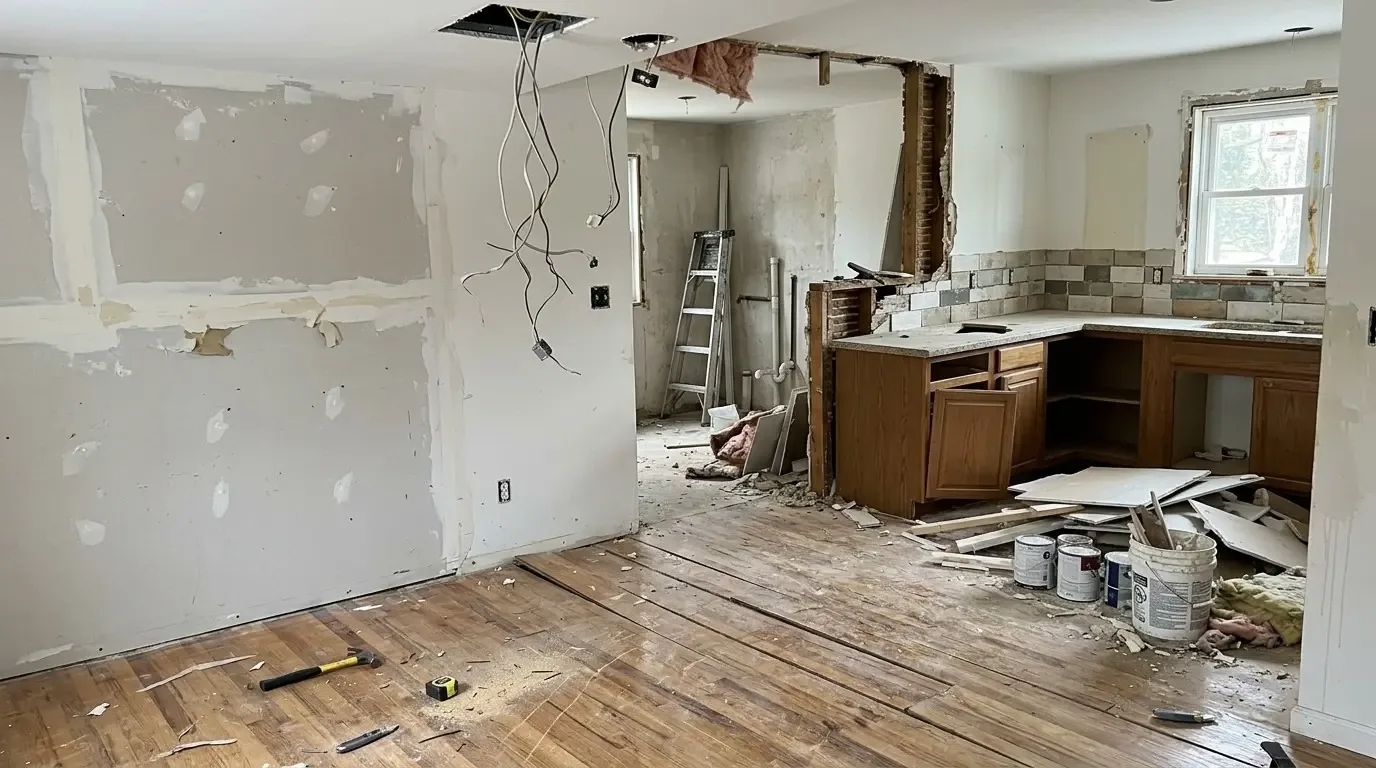
At Designed | Curated Interiors, our warm-restraint approach looks at shape as something practical, not decorative theory. This guide is built from our active project files. Line is the pencil sketch. Shape is the silhouette filling it in. Study the tile layout and the sofa arms. Walk from the front door into the kitchen and watch how the furniture silhouettes line up against each other. The designer perspective is simple: shape should make a room easier to read, easier to move through, and more comfortable to live with.
Direct Answers (Shape In Interior Design)
| What does shape mean in interior design? | Shape is simply the outline of something. Think circle, rectangle, arch, or the silhouette of a chair. |
| How do you use shape to create balance in a room? | Look at the window casing and the kitchen island before buying anything new. |
| What is the difference between geometric and organic shapes in interior design? | Squares have hard corners. Kidney bean tables do not. |
| How can I mix straight and curved shapes without making a room feel cluttered? | Stick to one dominant silhouette per room. |
Start With the Shape the Room Already Gives You
Before adding a decorative shape, look at the large ones already present. Square windows and long islands set a hard rectangular grid in East Sacramento builds. Decide if you want to fight that grid or play along. Drop a round walnut coffee table into a boxy Curtis Park living room to break up the harsh corners. Tight hallways in midtown Victorians hate giant round ottomans.
Materials change how that shape reads. Rift-sawn white oak keeps a slatted cabinet wall linear without making the room feel harsh. Honed Calacatta quartz can carry a quieter rectangular plane than a highly veined polished surface. Brushed brass catches light differently than raw blackened steel even when both pulls share the exact same square profile. Inspect the welt cord and frame curves before paying for custom curved upholstery. That chair's shape changes with the fabric. A softly rounded chair in a tightly woven linen feels lighter than a heavily sculpted bouclé chair.
The National Kitchen and Bath Association's guidance is useful here. Kitchen planning has to account for dimensions and clearances because a beautiful shape still has to leave enough room to work and walk. I apply the same thinking to shape. A beautiful oval island that pinches the working path is not a successful shape choice. In Northern California ranches and bungalows, where the footprint can be generous but built-in storage is often sparse, the cabinet runs and circulation paths need to establish the geometry before decorative curves are layered in.
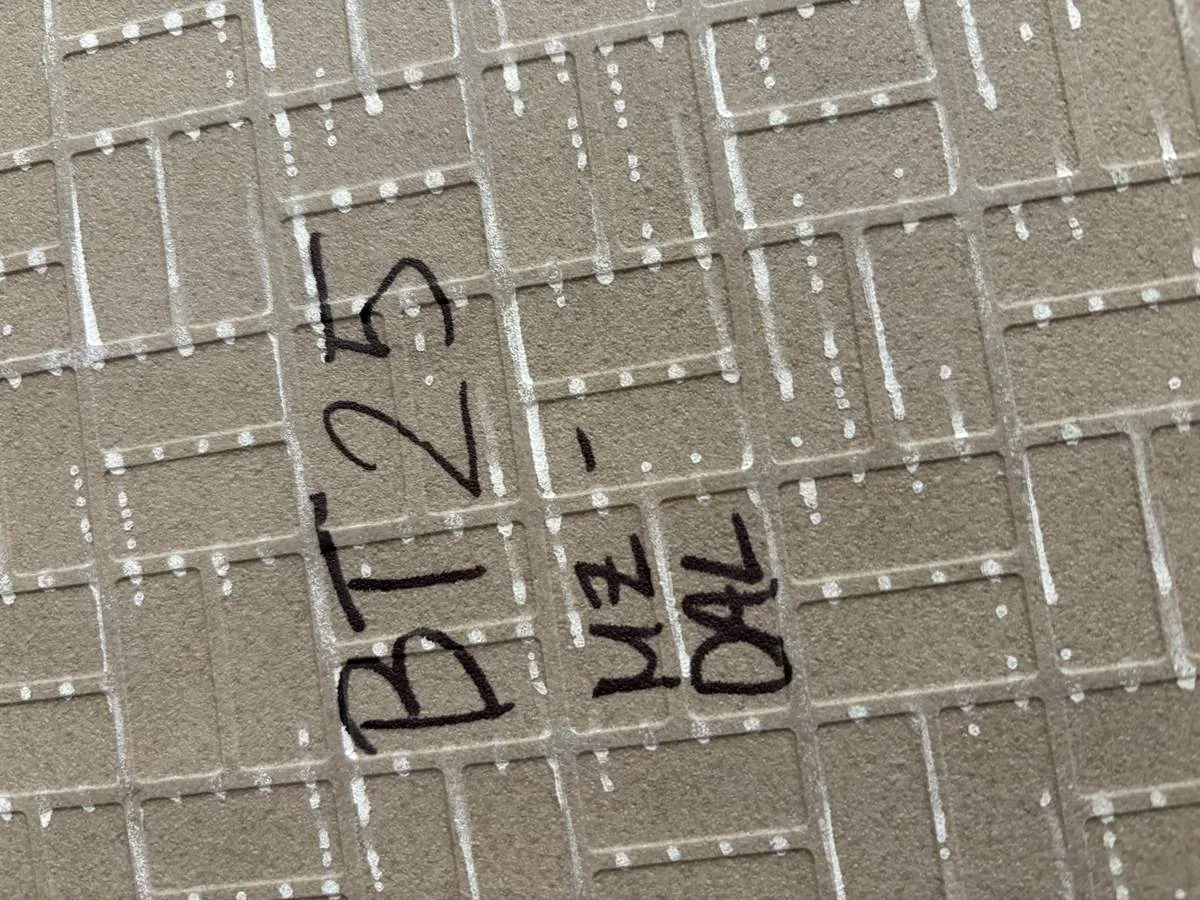
Materials and Shape
Authenticity-grade materials
- Rift-sawn white oak, calmer grain for linear cabinetry, wall slats, and furniture silhouettes.
- Quarter-sawn white oak, straighter figure when a repeated vertical geometry needs visual discipline.
- Honed quartz, quieter surface reflection so a strong countertop shape does not become visually busy.
- Calacatta quartz, useful when a restrained veining pattern needs to support a large island plane without adding another competing silhouette.
- 16-gauge 304 stainless steel, substantial for kitchen surfaces where a crisp rectangular plane needs a durable working finish.
- Solid brass with PVD finish, gives small circular or linear hardware shapes enough visual weight to register without looking flimsy.
- Brushed brass, softens strong cabinetry geometry when a warmer metal is needed.
- Unlacquered brass, develops patina, which can make repeated hardware shapes feel less mechanically identical over time.
- Linen upholstery, keeps curved furniture visually soft without relying on an oversized sculptural profile.
- Conversion varnish, a durable cabinet finish suited to clean, architectural cabinet shapes because it holds a consistent surface.
- Catalyzed lacquer, supports crisp cabinetry planes where the finish itself should stay visually quiet.
- Frameless plywood cabinetry, keeps door and drawer geometry clean because the cabinet construction does not introduce unnecessary face-frame lines.
Generic-grade tells we refuse to spec
- Oversized sculptural furniture chosen only because it photographs well
- Mixing several unrelated wood tones inside one shape family
- Glossy surfaces on every geometric plane
- Very thin stone used where a substantial edge is needed
- Decorative slat walls added without regard to the room's existing lines
- Matching every table, mirror, and light to the same circle
- Cheap faux-brass finishes repeated at eye level
- Highly patterned upholstery competing with a strong furniture silhouette
Designer Decision Matrix: Which Shape In Interior Design Approach Fits Your Home
How we actually decide: match your situation to what we would specify, and the reasoning behind it.
| Your Goal | Best Solution | Why We Recommend It |
|---|---|---|
| Small room | Use one compact rounded piece against mostly straight furniture | A controlled curve can soften the room without consuming the circulation area that several sculptural pieces would require. |
| Large open room | Repeat one strong shape at different scales | A large room needs visual anchors, and repeating a circle, oval, or rectangle prevents furniture from reading as isolated islands. |
| Low-budget refresh | Change one high-visibility shape, such as the coffee table or mirror | One substantial silhouette can alter the composition more cheaply than replacing several supporting pieces. |
| Older Sacramento home | Respect the home's existing rectangular openings and add curves through movable furniture | Older Sacramento bungalows and ranches often have architectural geometry worth keeping, while furniture can provide contrast without forcing unnecessary structural change. |
| Contemporary look | Use crisp cabinetry and one or two rounded furniture forms | The contrast keeps contemporary rooms from becoming a field of identical hard edges and makes the softer pieces read as intentional. |
| Indoor-outdoor room | Echo exterior landscape shapes with restrained organic forms indoors | Northern California's strong relationship between interior rooms and yards makes irregular greenery, stone, and rounded forms a natural bridge between inside and outside. |
| High-value remodel | Coordinate architectural openings, built-ins, and major furniture silhouettes before selecting accessories | Large fixed shapes control sightlines and circulation, so correcting them late is far more disruptive than changing a lamp or mirror. |
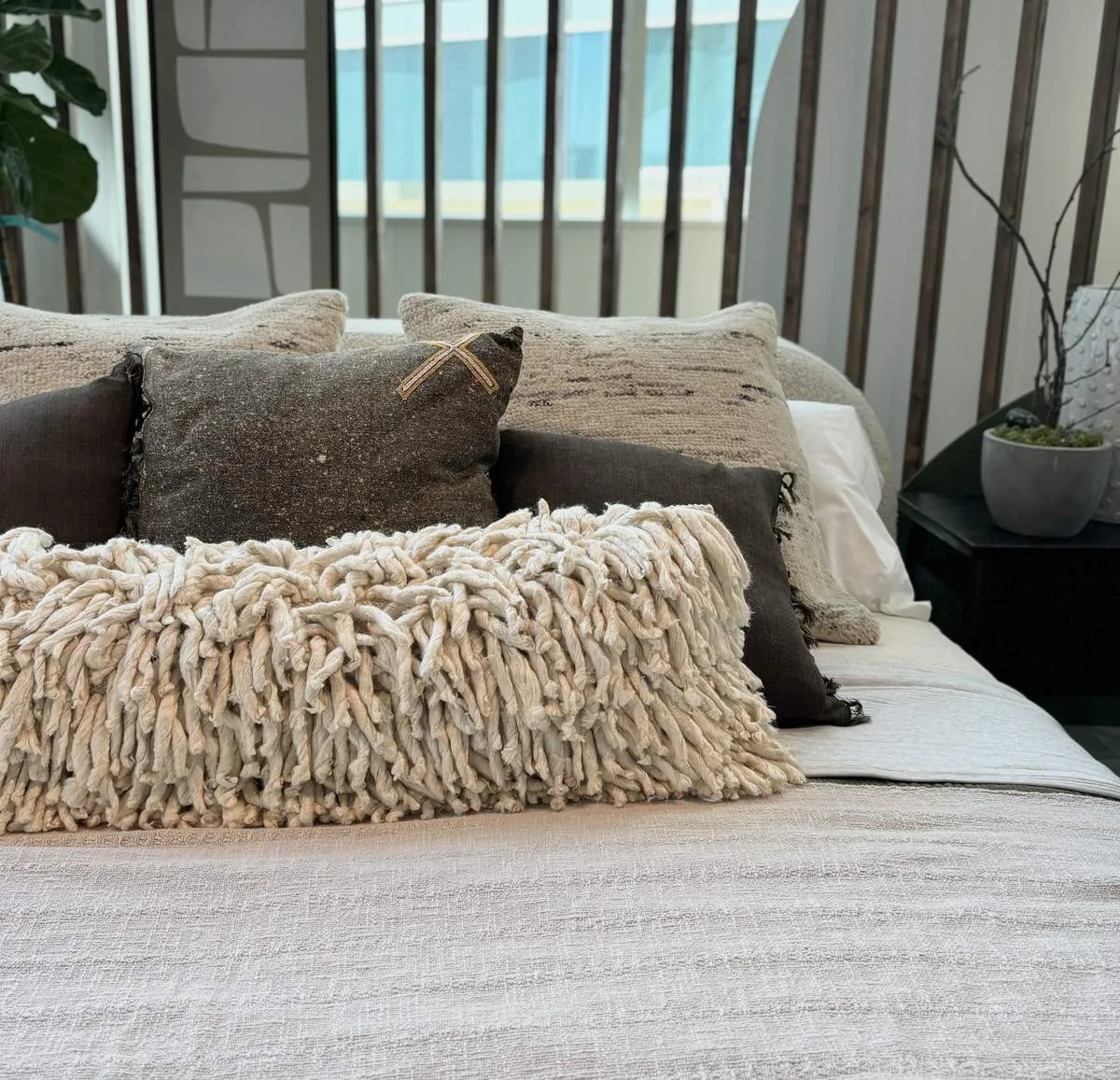
What Does Shape Actually Mean in Interior Design?
The real question is usually not "What are the design elements?" It is "What shapes should I put in this room so everything feels like it belongs together?" The first question we ask is simpler: what shapes are already doing the work? Think of shape as the flat outline you see from the front. It’s the silhouette, not the volume behind it. Look at a cabinet door from across the room and you’re looking at a rectangle. Rugs often read the same way, as does a simple mirror. Circles show up easily on a dining table. You’ll also see them in a pendant or a smaller decorative piece. Form is related but different: form describes a three-dimensional object and how it occupies space. Line is a path or directional element. Pattern is repetition or arrangement of visual motifs. Texture describes surface character.
That distinction matters because a room can have beautiful materials and still have poor shape relationships. There can be a rectangle everywhere you look in the seating area. Sofa, rug, coffee table, ottoman. Nothing is wrong with those pieces, but the room can start to feel rigid without a curve or another break in the pattern. Try a round table beside a curved chair. Your eye has somewhere else to go. The reverse can also happen. Too many curves make the room lose a clear visual structure.
The NKBA's professional focus on planning and function supports this basic principle: visual decisions still have to work with how a person uses the room. Shape is not just what the room looks like in a photograph. Shape changes the path through a room. It can close off a view to the windows or make a sofa look too large for the architecture.
How Do I Combine Straight and Curved Shapes Without Making a Mess?
Start with the dominant shape, then choose the contrast. If the architecture is strongly rectangular, keep the major built-ins and large furniture fairly straight and introduce curves at a smaller scale. A round coffee table beside a rectangular sofa is an easy example. An oval mirror above a straight console does the same thing vertically. The shapes relate because the contrast is limited and legible.
Repeat a shape and the room starts to hang together. The contrast has somewhere to land. Got a round coffee table? Pick up that curve somewhere else, perhaps in the back of a chair or the frame of a mirror. You only need one more reference for the eye to catch it. The curve can be loose. It doesn't have to trace a perfect circle. An arc or softened corner can be enough. What I avoid is collecting unrelated shapes one at a time. One unusual shape is plenty sometimes. A kidney-shaped chair beside a hexagonal table can already pull the eye in two directions. Add an arched mirror, triangular lamp, and scalloped rug without a clear reason and the room can lose its visual grammar.
For Northern California homes with strong indoor-outdoor connections, a curved sofa or rounded wood detail can pick up the softer geometry beyond the windows. That works particularly well when the room already has straight cabinetry or large rectangular windows. The architecture stays readable, while the furnishings introduce a softer counterpoint.
Should One Shape Dominate the Room?
Usually, yes. Keep some rectangles. Bring in a round table where the room needs one. It means the room benefits from a dominant shape family that gives the eye an organizing structure. Traditional rooms often have a lot of rectangles built in. Rectangular windows, panel doors, a rectangular rug, and a long sofa can make that geometry feel very strong. A round mirror or curved chair gives your eye somewhere else to go. I would then use curves as punctuation. Sculptural contemporary rooms can handle more curves. Rounded upholstery or circular lighting can carry the shape, leaving the cabinetry quiet. Check the scale first. A huge pendant changes the room more than a small round side table will. A small round side table does not carry the same visual weight as a large oval island. A full wall of rectangular cabinetry will dominate far more than a rectangular picture frame. This is why shape decisions need to happen at the room level rather than one object at a time.
For a Sacramento remodel, I also consider the architecture before changing it. If the home has good original proportions, there is little reason to manufacture unusual openings just to create shape contrast. Furniture is often the cleaner place to experiment because it can change without committing the homeowner to a structural alteration.
How Does Shape Affect Movement and Visual Balance?
Shape affects circulation whenever an object projects into a path. A round table can be easier to walk around since there’s no corner to catch you. Give it enough floor space, though, or the shape won't solve the circulation problem. Measure front to back. A chair can look narrow in a photo and still take up a surprising amount of floor space. A deep rectangular chair can push into the walking path once you account for the arms and the person sitting there. Measure the clearance with the chair pulled into its actual position. Curved furniture is not automatically space-saving.
I also look at sightlines. A tall rectangular cabinet can divide a room visually even if the walkway technically works. A lower oval table may preserve a view through the room. A curved chair back can soften a straight run of cabinetry, but a large curved sectional can create a new barrier. The right answer depends on what needs to remain visually open.
Harvard's Joint Center for Housing Studies tracks the practical realities of housing investment and remodeling, and that broader context matters here: expensive design changes should earn their place. If a shape requires moving walls, relocating doors, or rebuilding cabinetry, I want a functional reason for the change. If the same visual effect can come from a table, mirror, rug, or chair, the movable option often makes more sense.
The Mistakes That Make Shape Look Cheap or Date Fast
Matching everything is the first problem. You don't need a matching set of circles. A round coffee table can stand on its own while the mirror or lamp takes a different shape. The eye likes a small echo. A curved table paired with one curved detail is enough to make the connection without making everything match.
Ignoring scale is the second. A tiny circular side table beside a massive sectional can look accidental, while a large round table in a narrow passage can create a circulation problem. Measure the furniture footprint, not just the catalog dimensions.
Choosing novelty over architecture is the third. An unusual arch or sculptural shape can date faster than a simple rectangle or restrained curve when it is disconnected from the house. I'd rather use one well-proportioned curved chair in a room with strong Sacramento ranch geometry than add several trendy silhouettes. The windows, doors, and cabinetry already give you plenty of shape.
Common Mistakes We See: Biggest Waste: buying decorative pieces to change the room's shape before fixing the oversized furniture piece that controls the space. Biggest Regret: commissioning an unusual built-in curve that makes storage or door access worse. Hidden Cost: choosing shape after cabinetry and circulation are locked, then paying for custom pieces to force storage into leftover corners.
Observed Failure Modes, How Shape In Interior Design Goes Wrong
From our project debriefs and post-occupancy reviews, 2023-2026.
Every Piece Uses the Same Shape
A room full of rectangles can feel rigid, but a room full of circles can feel just as forced. Too much repetition is easy to spot. If the round table, mirror, pendant, and artwork all demand attention at once, there’s no clear focal point. The cure is to establish a dominant shape and then introduce contrast at a smaller scale. If the architecture and cabinetry are rectangular, one or two curved furnishings may be enough. The goal is not mathematical variety. It is a readable relationship between the large shapes and the smaller ones.
Curves Steal the Circulation
Curved furniture looks softer but can have a surprisingly large footprint. Watch the depth of a curved sofa. A large round table can change the walking route, too, sometimes leaving the same tight passage you'd get with a rectangular piece. From the entry, the furniture may look just right. Walk through it, though, and that graceful arrangement can turn into an awkward path. Before you buy, tape out the furniture footprint on the floor. Then check the walking route and make sure the doors can swing without hitting anything. This matters in older Northern California houses where additions and remodels can create rooms with generous overall area but tight connections between them.
Shape Fights the Architecture
A dramatic arch, unusual island, or sculptural built-in can look expensive and still be wrong for the house. The problem usually appears when the new shape has no relationship to the windows, doors, ceiling lines, or existing millwork. The cure is to let the architecture establish the dominant geometry, then use furniture and lighting for contrast. Sacramento bungalows and ranches often have good proportions already. Keep the original room lines where they work instead of adding a feature wall just to create a focal point.
Too Much Visual Competition
Shape competes with pattern, veining, texture, and color. A strongly curved chair upholstered in a busy pattern beside heavily veined stone and decorative tile has several things asking for attention at once. The room can feel expensive but unsettled. Give the strongest shape a quieter material or surface around it. Honed stone, calmer wood grain, and solid upholstery are useful because they let silhouette do its job without adding another loud visual signal.
Buying Before Planning the Room
Shape is easy to shop for and hard to repair after the fact. A homeowner sees a beautiful oval table, buys it, then finds that the chairs need to move farther out and the walkway no longer works. The cure is to place the actual dimensions into the room plan before ordering. This is not about making a house feel overly technical. Nobody wants to live with an expensive mistake. Measure the room first, especially before ordering a large sofa or dining table that can't easily be returned.
Treating Trend as a Requirement
Rounded furniture and arched details are current in 2026, but that does not make them appropriate everywhere. Good shapes make sense in the room. A deep sectional needs enough floor around it, and a large round table needs clear space for chairs to pull out. If a curved detail is fashionable but forces awkward furniture placement, it is not a good trade. Use the trend where it improves an existing composition rather than making the architecture conform to the trend.
What's Going Out for 2026
- Rooms where every major piece has the same silhouette
- Oversized arches added without architectural reason
- Curved furniture that blocks a primary traffic path
- Novelty tables selected before room planning
- Matching circular accessories used as a shortcut to cohesion
- Heavy sculptural forms in already crowded rooms
- Strong geometric patterns competing with strong furniture shapes
- Decorative curves that reduce usable storage
- Built-in shapes chosen only because they photograph well
- Mixing multiple unrelated shape trends in one room
What Shape In Interior Design Costs in 2026
| Scope | Typical range |
|---|---|
| Refresh scope | $3K-$15K |
| Mid-tier scope | $25K-$75K |
| Estate-scale | $125K-$300K+ |
Working Notes
What We Have Learned Doing This: shape in interior design
“Drawings lie until sledgehammers expose reality. Plaster hides structural rot, framing shifts off-grid, and subfloor heights vary wildly across decades of patches. You must verify actual conditions before ordering custom millwork. Measure every span twice. Field-verify rough framing after drywall vanishes. Skipping this step guarantees costly site modifications.”
Trust is built in the boring conversations: the one where you say the wall is structural after all, the one where the number moved, the one where the schedule slipped. Clients forgive reality. They do not forgive being surprised by it.
Specify for the next ten years, not the next photo shoot. The work that holds its value is quiet, well made, and a little bit boring on the day it is installed.
The cheapest tool on any project is a sample board and an afternoon. A small paint sample can prevent an expensive color mistake. Live with it in the room for several days. Check it in morning light, afternoon light, and after the lamps come on. Paint changes with the light around it. Decisions made under showroom lighting do not survive contact with a real house.
These notes come from our own shape in interior design project debriefs. Most were learned the expensive way the first time.
Sources & Professional References
This guide's positions on materials are grounded in published building-code, standards, and recognized design-authority sources, alongside Designed | Curated Interiors' verified credentials and active project files:
- American Society of Interior Designers (ASID): interior-design practice standards
- International Code Council (ICC): Chapter 8 Interior Finish Decorative Materials And Furnishings
- Associated General Contractors (AGC): Seattles Lynnwood Link Extension Project Named Best Construction
- NKBA, Amy Kunst Member Profile (verified credential, NKBA Committee Member)
- Featured in: Good Housekeeping (storage and space-planning expert quotes, July 2026) · Homes & Gardens (design expert quote, May 2026) · Sacramento Love (guest author, 2024)
Frequently Asked
What does shape mean in interior design?
How do you use shape to create balance in a room?
What is the difference between geometric and organic shapes in interior design?
How can I mix straight and curved shapes without making a room feel cluttered?
Should shape be considered when planning furniture, storage, and circulation?
From Shape In Interior Design to a Real Room
A trend piece is the briefing document, not the deliverable. The pages below show how we translate these principles into finished rooms across Sacramento and the rest of Northern California.
- Sacramento & Bay Area Interior Design Services How we scope, source, and deliver work end to end.
- Interior Designer Hub, Sacramento Where most of our Sacramento work lives, the regional fit explained.
- Modern Tudor Homes Heritage-architecture renovation patterns from our project files.
- Japandi Living Room Design The 2026 warm-neutral playbook applied to the living room.