
Stone walls should feel architectural. Pick the stone and lighting that fit room proportions. In 2026, strong stone interiors use one convincing material with controlled texture. This keeps the space light yet adds depth. Our guide covers choices for living rooms, kitchens, and bathrooms, how to maintain and design with stone. It also discusses cost ranges and common mistakes that make stone look cheap. The perspective is deliberately designer-led: less about adding another trend and more about deciding where stone earns its place.
Direct Answers (Stone Wall Interior Design Ideas)
| What types of natural stones are recommended for interior walls in Sacramento? | Limestone is softer in Sacramento. Slate gives darker textures. Quartzite offers dense crystals. |
| Why is it important to consider the stone material's behavior rather than its label when selecting for an interior wall? | Avoid marble's etching or sealing granite issues by choosing stone wisely. |
| How should I verify the specifications of engineered quartz before installation? | Check thickness, 2cm or 3cm affects visual heft. Edges matter. |
| What are some considerations for choosing stone in a kitchen remodel? | Granite and quartzite in kitchens? Tough and durable. Marble? It’s acid-sensitive and needs TLC. |
Make the stone wall the architecture, not the decoration
For a living room, I usually start with the wall that already has architectural authority: a fireplace wall, a long media wall, or the wall visible from the entry. Limestone gives a softer, more powdery surface than granite, while slate brings darker cleft texture and quartzite can give you a denser, more crystalline appearance. Reason matters. Why's that stone there? A full-height limestone fireplace wall makes sense because the stone reinforces the vertical mass of the fireplace. A random stone panel floating behind a sofa usually does not.
Variations shine in natural stone, no need for installers to cover them up. Granite handles wear, seal periodically. Marble? More care, acids can etch. Check slab lot and seams before start. Key step. Engineered quartz is 90-93% ground quartz, stable, no sealing needed. Specify 2cm or 3cm slab, edge profile affects presence.
Natural light in NorCal can overwhelm textured walls. I like pairing stone with oak or plaster. Materials must perform. Pretty isn't enough, as the NKBA says.
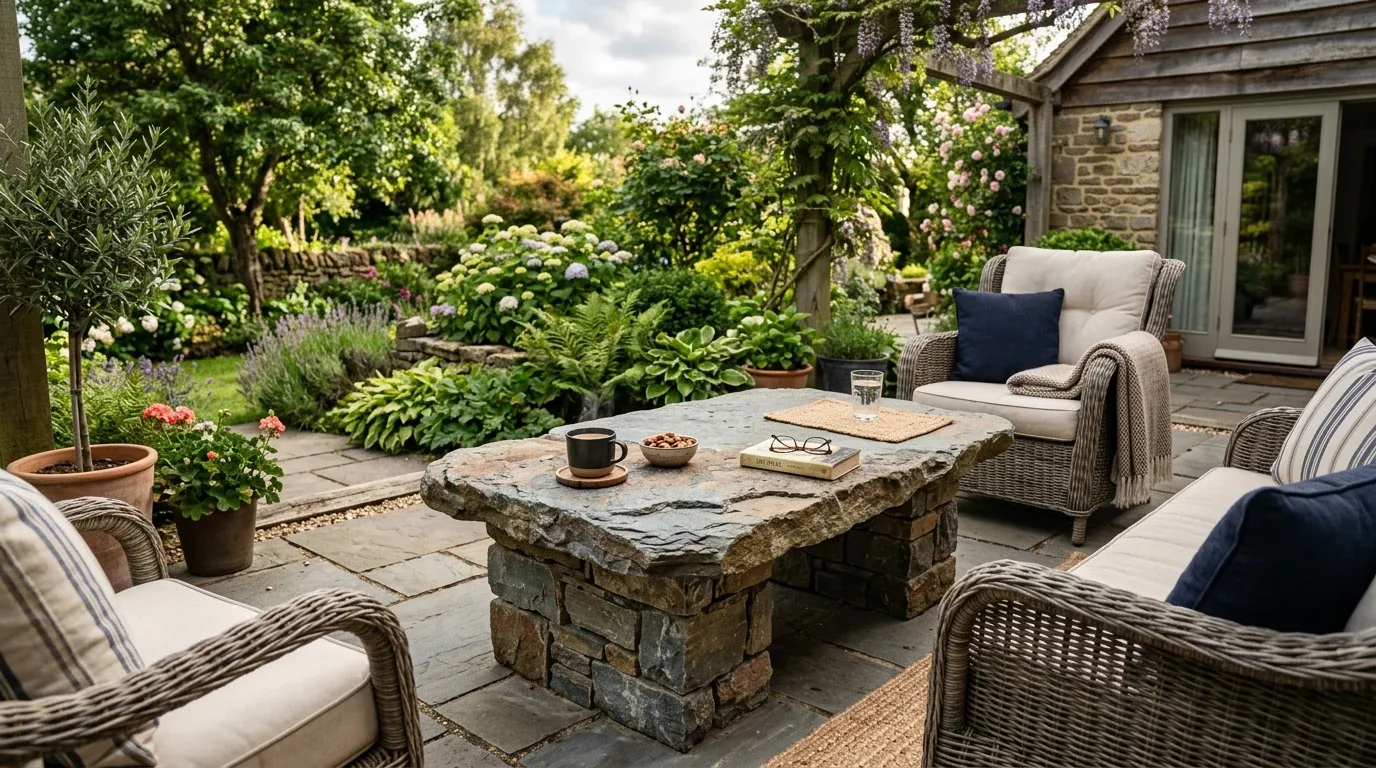
Specify stone by behavior, not by a Pinterest label
Authenticity-grade materials
- Limestone, for soft, warm walls because its quieter grain works well beside oak, plaster, and natural textiles.
- Slate, for darker accent walls because its cleft surface creates genuine texture without requiring decorative pattern.
- Granite, for durable kitchen applications because it tolerates hard use and can be periodically sealed.
- Quartzite, for a dense natural-stone look because it combines strong visual movement with durable performance.
- Marble, for controlled luxury moments because its veining is exceptional, but acids can etch the surface.
- Engineered quartz, roughly 90-93% ground quartz, for consistent slabs and no sealing, with thickness and edge profile specified.
- Travertine, for warmer, older-world interiors because its natural voids and tonal shifts reinforce relaxed architecture.
- Stacked ledgestone, for fireplace or hearth walls where irregular depth supports an architectural focal point.
- Rift-sawn white oak, as the companion material to stone because its calmer grain prevents the room from becoming visually noisy.
- Mineral plaster, beside stone rather than under it because the nearly continuous surface gives textured stone room to breathe.
Generic-grade tells we refuse to spec
- Laminate made to imitate stone grain on a lasting remodel.
- Thin 1cm stone used where a more substantial specification is appropriate.
- Perfectly repeated faux-stone panels with identical joints.
- High-contrast gray stone paired with cold gray flooring and paint.
- Tiny mosaic pieces covering an entire feature wall.
- Glossy faux-marble surfaces next to already busy natural stone.
- Unsealed porous stone in areas where cooking grease or water will regularly reach it.
- Mixed stone colors selected from separate lots without checking how they relate in the actual room.
Designer Decision Matrix: Which Stone Wall Interior Design Ideas Approach Fits Your Home
How we actually decide: match your situation to what we would specify, and the reasoning behind it.
| Your Goal | Best Solution | Why We Recommend It |
|---|---|---|
| Lowest installed cost | Use a manufactured stone veneer on one focal wall | Limiting coverage reduces substrate preparation, labor, and material waste while preserving the visual weight of a stone feature. |
| Luxury finish | Specify natural quartzite or carefully selected limestone | Natural variation gives the wall depth that repeated manufactured pieces cannot reproduce, especially under grazing light. |
| Small room | Use pale limestone or a thin-format stone on one wall | Light stone reflects more of the available light and avoids making a compact room feel visually compressed. |
| Older Sacramento home | Use stone that relates to the home's original masonry or fireplace material | Matching the architectural vocabulary makes an update feel integrated rather than like a new decorative layer pasted onto an older house. |
| Contemporary look | Choose large-format limestone or quiet quartzite with restrained joints | Fewer visual interruptions make the wall read as a single architectural plane. |
| Rental or no permanent changes | Use a removable stone-look panel system on a limited accent area | A reversible system avoids committing the room to a heavy permanent installation while still adding texture. |
| High-maintenance concern | Use engineered quartz for appropriate vertical applications where the specification allows | Its consistent surface and lack of sealing requirement reduce routine maintenance compared with porous natural stone. |
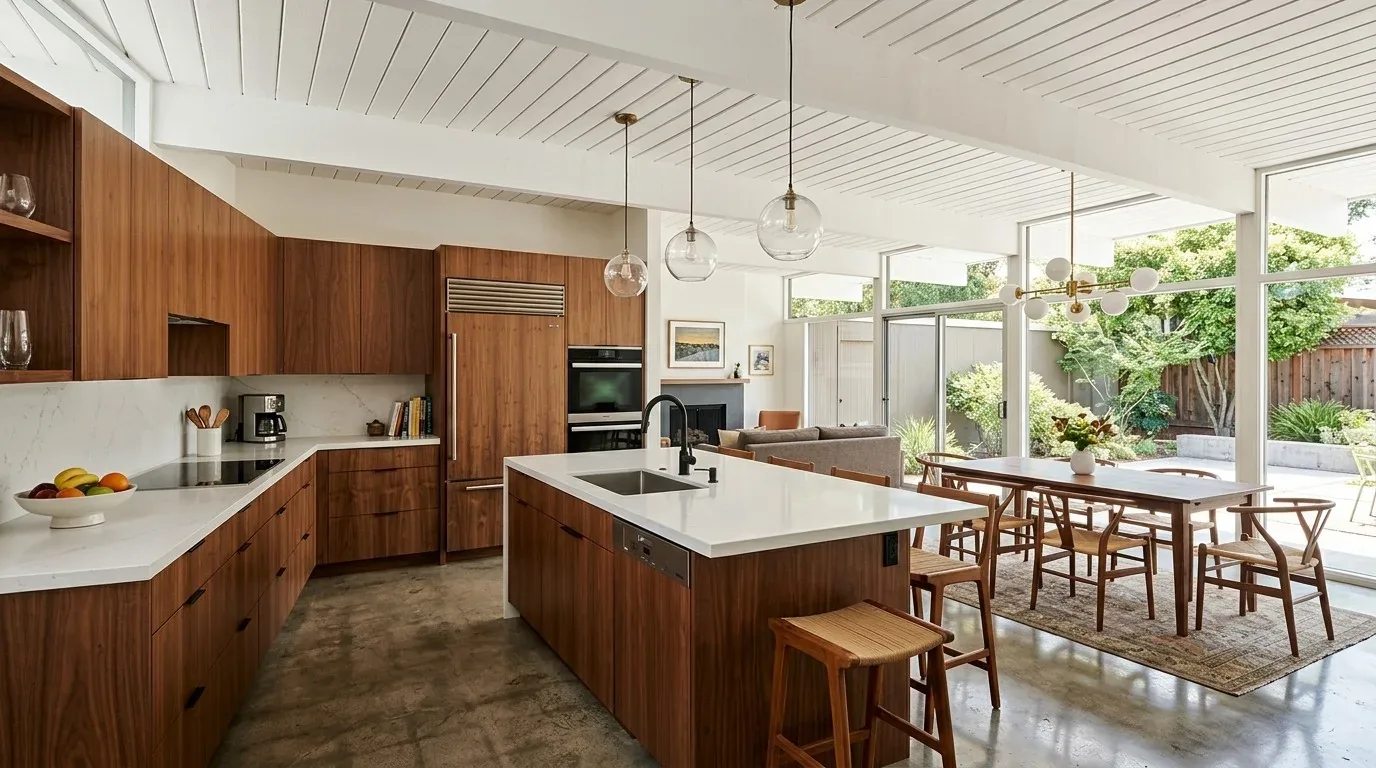
Will a stone wall make the room feel expensive or heavy?
The real question is not whether stone looks good. It is whether this particular wall can carry the visual weight. The first question we ask is: what will you see from the room's main entry point, and what will the stone be competing with? If the answer is a fireplace, a large window, or a strong piece of millwork, the stone needs to support that element rather than become another focal point.
For a Sacramento living room with a standard ceiling, I would rather see one full-height limestone fireplace wall than three partial stone walls. The continuous plane creates height and gives the eye somewhere to settle. In low ceilings, softer stone textures usually work well as deep shadows can make it feel smaller.
Stone also needs breathing room. Surround stone with subtle materials like plaster, paint, oak for better contrast. Plan finishes to handle traffic and suit furniture arrangement.
Which stone should I use in a living room, kitchen, or bathroom?
Living rooms suit dramatic stones well since it's mostly about looks here. Limestone and slate are strong choices when you want texture, while quartzite works when you want a more refined natural surface. Kitchens demand more scrutiny. Natural granite and quartzite are durable choices for appropriate applications, with periodic sealing as required. Marble can be beautiful, but it should be selected with a clear understanding that acids can etch it.
In bathrooms, I keep the visual field calmer. Restrained natural stone works better than bold stacked stone because other elements create visual complexity. The American Society of Interior Designers' focus on the relationship between materials and the people using a space is a useful lens: maintenance and touch matter as much as the photograph.
Engineered quartz needs specific slab details like thickness and edge style, not just 'quartz' labels. Engineered quartz varies a lot by slab; remember it's mostly ground quartz.
How do I get the stone look without paying for full natural stone?
There are three practical levels. Natural stone gives you authentic variation and the strongest material depth, manufactured stone veneer gives you a lower-cost route to texture, and engineered surfaces can give you a highly controlled appearance where their application is appropriate. Don't swap them casually.
- Natural stone: highest material authenticity and variation, with more attention to sealing, lot selection, and fabrication.
- Manufactured veneer: lower material weight and often lower installed cost, but the pattern must be carefully controlled so repetition does not show.
- Engineered quartz: consistent slab appearance and no sealing, with 2cm versus 3cm thickness and edge profile affecting the finished scale.
I would not use laminate or thin 1cm stone on a lasting remodel simply to hit a visual target. Cost savings often come from materials but installation still needs skilled labor. This results in poor budget planning for a wall meant to feel permanent.
How should I light a stone wall?
Check where the light falls on the stone. Side lighting from wall-mounted fixtures highlights texture. This works well with slate but can be too much for deeply cleft materials.
For a smoother limestone wall, I often prefer a softer wash because it reveals tonal variation without turning every joint into a black line. In Northern California, changing daylight makes this especially crucial.
Light changes everything. A daytime wall can shift mood with night lighting; test before you finalize.Lose the single bright ceiling light for wall lighting. Layer the light with ambient illumination and, where appropriate, concealed or adjustable sources because the stone should have dimensionality without becoming a stage backdrop.
What makes stone wall design look cheap or date quickly?
The common problem is too much information. Too many varied elements like busy stone, grout patterns, flooring styles, and lighting can overwhelm a space. The cure is subtraction.
- Biggest Waste: covering large walls with expensive stone when only the fireplace or media zone needed emphasis. The extra square footage buys visual noise rather than value.
- Biggest Regret: choosing a stone from a small sample without checking the actual slab-yard lot. Natural variation can change a wall once multiple pieces are installed. Ensure substrate preparation and handle details at ceilings, floors, cabinets, and outlets properly. The stone can be affordable while the labor around it is not.
Harvard tracks how much homeowners keep spending on fixing up their places. Go for durable over flashy. They handle foot traffic better. From our project debriefs and post-occupancy reviews, 2023-2026. The symptom is a room that feels busy before the furniture arrives. Cut down on clashing surfaces. If the stone has deep cleft texture, use quieter flooring, cabinetry, and wall color because the stone is already supplying pattern and shadow. This matters particularly in Sacramento rooms with strong daylight, where deep joints can become much more pronounced during the day. One textured wall usually has more authority than several competing surfaces. A small sample can make natural stone look calmer than it is. The failure appears after fabrication, when several slabs reveal stronger veining or a different color balance. The cure is to confirm the actual slab-yard lot and discuss seam placement before cutting. With quartzite or marble, this step is not cosmetic. It determines where the visual movement lands around fireplaces, cabinetry, outlets, and corners. A stone wall adds thickness, shadow, trim complications, and sometimes weight that the original wall was never designed to carry. Signs of improper planning are awkward baseboards, deeply recessed outlets, or cramped fireplace surrounds. Plan the finished wall before ordering materials; stone is just one part of construction. Gray stone can look sophisticated in isolation and flat when paired with gray paint, gray flooring, and cool metal. Use limestone. It adds warmth with oak, cream paint, and aged metal. Sacramento sun's intense. Try warm colors to tone down brightness. Manufactured veneer can be a sensible cost-saving choice, but it fails when installers repeat the same pieces in obvious vertical or horizontal patterns. The wall then reads as a product rather than masonry. The cure is to specify the pattern, joint behavior, corners, and termination details before installation because authenticity comes from how the pieces relate, not just from the color. Natural stone is not maintenance-free. Granite and quartzite need sealing sometimes; marble etches with acid. The cure is to choose the material according to the room's actual use. A homeowner who does not want to think about sealing should not be talked into a porous stone simply because it looks good in a showroom.Observed Failure Modes, How Stone Wall Interior Design Ideas Goes Wrong
Too Much Texture
Choosing From One Sample
Ignoring Wall Depth
Cold Gray Everywhere
Treating Veneer Like Stone
Forgetting Maintenance
What's Going Out for 2026
What Stone Wall Interior Design Ideas Costs in 2026
| Scope | Typical range |
|---|---|
| Refresh scope: limited manufactured veneer accent wall with simple preparation | $8K-$16K |
| Mid-tier scope: natural stone focal wall with substrate preparation, fabrication, and layered lighting | $20K-$40K |
| Estate-scale: multiple architectural stone walls, custom fabrication, structural coordination, and integrated lighting | $50K-$100K |
Working Notes
What We Have Learned Doing This: stone wall interior design ideas
“The slab yard lighting lies. We drive to the yard the morning of fabrication on every project.”
Approve the seam placement before fabrication, not after. A seam in the wrong spot is a five-figure conversation that a five-minute drawing would have prevented.
Most of the money that gets wasted is spent solving the wrong problem confidently. Client needs more space. But usually it's light or a sightline that's the real problem. We make the room tell us the problem before anyone signs a demolition contract.
Trust builds in those tough talks: when we realize that wall is structural, or the budget changed, or timelines shifted. Clients forgive reality. They do not forgive being surprised by it.
Specify for the next ten years, not the next photo shoot. The work that holds its value is quiet, well made, and a little bit boring on the day it is installed.
These notes come from our own stone wall interior design ideas project debriefs. Most were learned the expensive way the first time.
Sources & Professional References
This guide's positions on materials are grounded in published building-code, standards, and recognized design-authority sources, alongside Designed | Curated Interiors' verified credentials and active project files:
- American Society of Interior Designers (ASID): interior-design practice standards
- International Code Council (ICC): Chapter 8 Interior Finish Decorative Materials And Furnishings
- NKBA, Amy Kunst Member Profile (verified credential, NKBA Committee Member)
- Featured in: Good Housekeeping (storage and space-planning expert quotes, July 2026) · Homes & Gardens (design expert quote, May 2026) · Sacramento Love (guest author, 2024)
Frequently Asked
What types of natural stones are recommended for interior walls in Sacramento?
Why is it important to consider the stone material's behavior rather than its label when selecting for an interior wall?
How should I verify the specifications of engineered quartz before installation?
What are some considerations for choosing stone in a kitchen remodel?
How can I ensure that a stone wall installation doesn't become visually heavy in a Sacramento home?
What should be done before committing to a full stone wall design?
Why is it crucial to verify structural integrity before installing a stone feature wall?
From Stone Wall Interior Design Ideas to a Real Room
A trend piece is the briefing document, not the deliverable. The pages below show how we translate these principles into finished rooms across Sacramento and the rest of Northern California.
- Sacramento & Bay Area Interior Design Services How we scope, source, and deliver work end to end.
- Interior Designer Hub, Sacramento Where most of our Sacramento work lives, the regional fit explained.
- Modern Tudor Homes Heritage-architecture renovation patterns from our project files.
- Japandi Living Room Design The 2026 warm-neutral playbook applied to the living room.