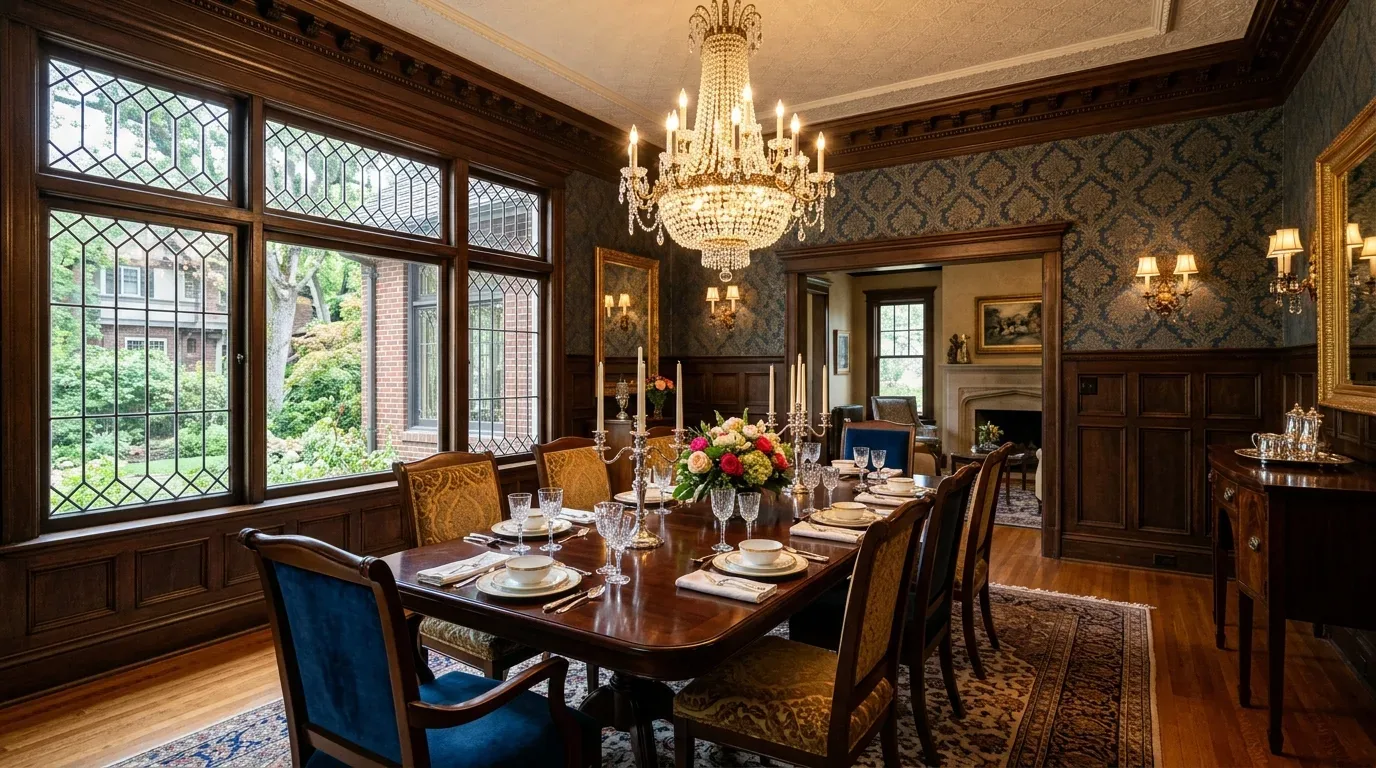
A Mill Valley estate needs more than furniture selections. You want someone who can stay with the drawings, construction decisions, custom details, and procurement once the work gets complicated. Mill Valley usually calls for restraint. I look closely at the daylight, then the stone, wood, and paint samples under that light. Proportion matters just as much, especially where a new room meets older architecture.
My approach comes from the construction drawings and finish specifications I use on current residential projects and looks at what that means in practice: how to compare designers, what full-service luxury work actually includes, which custom details justify their cost, how older Mill Valley homes can be modernized without erasing their character, and where expensive choices can go wrong. My approach is warm restraint: fewer decorative gestures, better materials, and a designer's perspective on what deserves the budget.
Direct Answers (Luxury Interior Designer Mill Valley)
| What should I look for in a luxury interior designer in Mill Valley? | Ask who stays involved after the furniture plan. Construction decisions and custom detailing can change the room before procurement even starts. |
| How does luxury interior design differ from decorating in Mill Valley? | Luxury design considers architecture, spatial planning, flow, function, and longevity before furnishings are added. |
| Which custom features are worth the cost in a Mill Valley luxury home? | Custom millwork can be worthwhile when standard cabinet dimensions create awkward filler strips or interrupt a sightline. |
| How should a luxury designer handle older Mill Valley homes? | Keep the house's character in the room. Original wood trim can set the finish direction, and an older Craftsman, Victorian, or mid-century house may need a lighter hand. Filtered garden light matters too. |
Luxury Interior Designer Mill Valley 2026 at a Glance
| Element | In | Out |
|---|---|---|
| Millwork | Quiet custom millwork | Overdecorated rooms |
| Stone | Natural stone with restraint | Busy stone patterns |
| Wood | Rift-sawn white oak | Generic oak cabinetry |
| Lighting | Integrated architectural lighting | Too many visible fixtures |
| Hardware | Hand-finished hardware | Bright mixed-metal packages |
| Connection | Indoor-outdoor continuity | Abrupt material changes |
| Service | Full-service procurement | Furnishings-only service |
| Remodeling | Character-preserving remodels | Character erased by renovation |
Start With Architecture, Then Add the Luxury
Luxury starts before the furniture. I let the house speak first. In a Mill Valley room, the roofline, windows, trim, or stair can do plenty of the visual work. That can mean rift-sawn white oak cabinetry, a honed natural stone backsplash that runs quietly into the wall, or a full-height plaster finish where another room might get another layer of decorative treatment. The expensive-looking room is often the one where fewer materials have been specified more carefully.
Across our active project specifications, I pay close attention to the hardware, too. Solid brass with a PVD finish ages differently from plated hardware, and the difference becomes obvious on a frequently used kitchen or entry door. I specify Blum or Salice based on load rating, drawer size, hinge application, and daily use under daily use, while custom millwork earns its place when standard cabinet dimensions interrupt a sightline or leave awkward filler strips.
Northern California light makes this restraint especially useful. A north-facing room in an older Mill Valley house can read completely differently from a bright room opening toward a redwood garden. I would rather adjust sheen, wood grain, stone value, and artificial light to that condition than force both rooms into the same finish package. The National Kitchen and Bath Association's resources emphasize professional planning and coordinated kitchen and bath design, which is particularly relevant when cabinetry, appliances, lighting, ventilation, and circulation all have to work together. National Kitchen and Bath Association
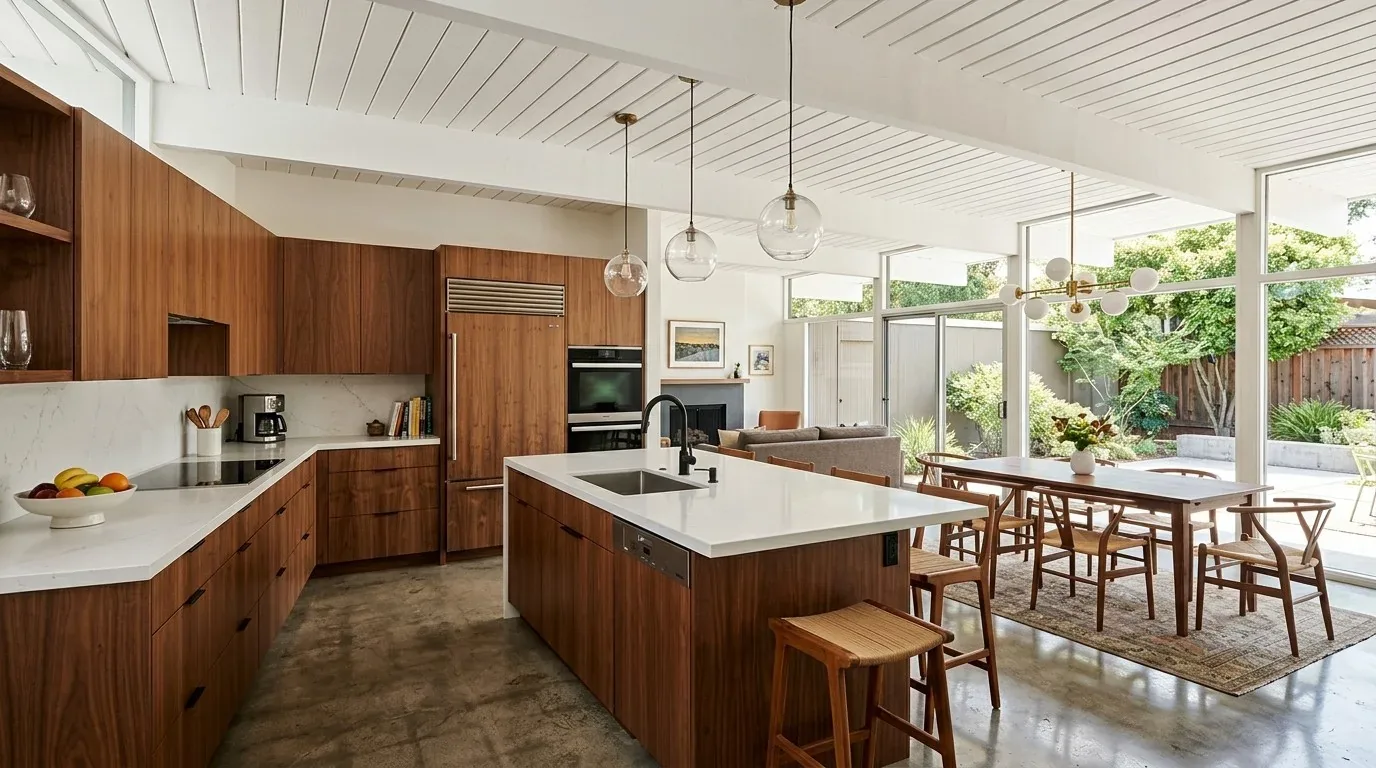
Material specifications I use in residential projects
Authenticity-grade materials
- Rift-sawn white oak, for cabinetry, floors, or slat detail because the restrained grain holds up well beside stone and plaster.
- Honed Calacatta or other quiet natural stone, for surfaces where depth and variation matter more than a dramatic pattern.
- 16-gauge 304 stainless steel, for hardworking kitchen surfaces because the heavier gauge gives a more substantial feel.
- Solid brass with PVD finish, for frequently touched hardware because the finish is more durable than inexpensive decorative plating.
- Conversion varnish, for cabinetry where a hard, furniture-quality finish is needed.
- Catalyzed lacquer, for selected millwork where a controlled sheen and durable surface matter.
- Full-height slab backsplash, where reducing grout lines makes a kitchen read calmer and more architectural.
- Dadoed and glued plywood cabinet boxes, for custom cabinetry where construction quality matters as much as the door style.
- Natural plaster, for walls where subtle texture can replace layers of applied decoration.
- Quartz in the 90 to 93 percent range, where predictable performance and a controlled visual field make sense for the application.
Generic-grade tells we refuse to spec
- Oversized decorative pendants chosen before the room layout is resolved
- Thin, low-grade stone used to imitate a substantial slab
- Laminate presented as custom millwork without a functional reason
- 1 cm stone used where a heavier edge would better suit the scale
- Mixed metals added simply to make a room look layered
- Highly patterned faux marble repeated on every surface
- Generic cabinet hardware selected only from a finish chart
- Shiny surfaces stacked together without considering Mill Valley's natural light
Designer Decision Matrix: Which Luxury Interior Designer Mill Valley Approach Fits Your Home
How we actually decide: match your situation to what we would specify, and the reasoning behind it.
| Your Goal | Best Solution | Why We Recommend It |
|---|---|---|
| High-end full-home remodel | Full-service interior architecture, procurement, and installation coordination | The largest budget leaks occur at handoffs between design, cabinetry, lighting, construction, and purchasing, so one coordinated process protects the overall composition. |
| Older Mill Valley character home | Selective preservation with custom updates | Craftsman and Victorian details can carry more visual authority than newly added decoration, especially when original proportions remain intact. |
| Contemporary hillside home | Quiet natural materials with integrated lighting | Large glazing and strong landscape views already provide visual activity, so excessive finishes compete with the view rather than improving the room. |
| Maximum custom feel | Custom millwork at sightline-critical locations | Built-ins that reach the correct wall, ceiling, and opening dimensions remove filler panels and awkward gaps that immediately reveal a stock solution. |
| Controlled renovation budget | Spend on permanent architectural elements before decorative upgrades | Cabinetry, flooring, lighting infrastructure, and properly resolved transitions are harder to replace later than furnishings and accessories. |
| Warm California luxury | Rift-sawn oak, honed stone, plaster, and restrained metalwork | These surfaces respond well to Northern California daylight and indoor-outdoor living without creating a glossy showroom effect. |
| Distinctive collected interior | Fewer custom pieces with stronger scale and provenance | A room feels collected when individual pieces have enough breathing room to register, rather than when every surface carries a decorative object. |
Why Luxury Design Needs a Mill Valley Read
Mill Valley is not a blank box waiting for a style package. Hillside construction, redwood shade, mature landscaping, and strong natural light affect finish and layout decisions, and older Craftsman, Victorian, and mid-century houses create very different design problems. A finish that looks controlled in a new Bay Area build can feel too hard in a room with original wood trim and filtered garden light.
That is why I look at the relationship between the house and its setting before deciding how much visual detail to add. Watch a dark honed stone in a shaded room. Next to warm oak, it can look terrific in strong daylight and feel much heavier where the windows don't give you much light. Pale oak changes quickly under warm artificial light. I'd put the floor sample beside the existing trim before deciding, because a floor that looks crisp in daylight can read yellow at night.
Mill Valley sits within a larger Marin design context. That matters when you're looking at how a house relates to its setting and local construction patterns. San Rafael has its own housing stock and renovation patterns, and homeowners evaluating designers may want to compare the approach rather than simply the portfolio style. Our San Rafael interior designer guide gives that neighboring perspective.
For a substantial Mill Valley remodel, the designer also needs to understand where design decisions meet permitting and construction. The City of Mill Valley's Planning & Building resources are the appropriate local starting point when a project involves regulated work, structural changes, or other permit questions: Planning & Building, Mill Valley. The American Society of Interior Designers also emphasizes professional standards and credentials, which is useful context when a homeowner is comparing firms rather than simply comparing photographs. American Society of Interior Designers
Should You Remodel or Rebuild in Mill Valley?
The real question is not whether a new house would be easier. It is whether the land, architecture, construction constraints, and qualities you already own justify preserving the house. The first question we ask is what you would lose by starting over. In Mill Valley, that can include mature redwoods, established garden relationships, original millwork, unusual room proportions, and views that are difficult to recreate.
Before calling it a remodel, I look at the structure and layout, then check the infrastructure, permitting, and original details. Sometimes the answer is selective structural work and better circulation; other times the amount of intervention makes rebuilding more sensible. Sometimes the house is fighting you. If the structure, layout, envelope, or infrastructure can't support the program without major intervention, rebuilding deserves a real look.
Do not make this decision from finish samples. Pull the floor plans, understand the structural changes, study the age of the house, and establish what the permit process will require before committing to a direction. The City of Mill Valley's Planning & Building information should be part of that early conversation when regulated construction is involved.
What Adds the Most Value in Mill Valley?
For a high-value Mill Valley home, I would start with the scope and its main cost drivers that changes how the house functions every day before adding decorative luxury. A kitchen that fixes circulation, storage, lighting, and material quality has a stronger case than a room filled with expensive accessories. Harvard's Joint Center for Housing Studies is useful here. Its remodeling research gives homeowners some context for deciding where money is going into the house rather than simply onto the surface. Joint Center for Housing Studies of Harvard University
| Project | Value Priority | Why |
|---|---|---|
| Kitchen | Very high | It combines daily use, cabinetry, lighting, appliances, and circulation, so coordinated improvements affect several functions at once. |
| Primary suite | High | Better storage, daylight, privacy, and durable finishes can improve daily living without requiring the entire house to change. |
| ADU | Project-dependent | The value depends heavily on site constraints, permitting, access, and whether the finished space solves a real household need. |
| Home office | Moderate to high | Built-in storage, acoustic control, and good lighting make the room useful for years rather than turning it into a decorative spare room. |
How to Modernize an Older Mill Valley Home Without Losing Its Character
Start with the features that give the house its identity. Don't cover up good oak just because the room feels dated. Substantial trim, unusual doors, ceiling proportions, stair details, and well-placed windows can give an older house far more character than a completely new contemporary finish package. The update can happen around them.
Older Northern California houses often accumulated changes over decades. In Sacramento homes with additions, each room was often floored in a different decade and a different thickness. Mill Valley houses can have similarly layered histories, and that is where a designer earns their fee. A new floor may need a deliberate transition rather than a forced continuous surface. New cabinetry may need to respect an original opening rather than consume it.
Modernize the parts that affect comfort and function first: lighting, storage, circulation, ventilation, finishes, and carefully selected infrastructure. Keep character where it is structurally sound and visually meaningful because removing every irregularity can make an older house feel generic faster than a restrained renovation would.
How Do You Compare a Luxury Designer Before Hiring One?
Ask for the boring details. Who coordinates the cabinetry? Who keeps the finish schedules current? Who is handling procurement when those drawings change? Pretty photographs won't answer that. Ask who handles the space plan, finish schedules, furniture orders, construction coordination, installation, and punch-list work. Someone still has to deal with the damaged table or the cabinet that arrives two inches too wide.
Then compare the type of work shown. A designer who primarily furnishes finished rooms is not necessarily the right fit for a substantial Mill Valley remodel. Look for evidence of custom cabinetry, architectural detailing, complex material coordination, and work carried from concept through installation. The National Association of the Remodeling Industry's professional resources are another useful reference when you are evaluating the remodeling side of a project. National Association of the Remodeling Industry
Finally, ask whether the aesthetic actually matches your house and your tolerance for decisions. Understated California luxury, traditional restoration, contemporary interiors, and eclectic rooms require different kinds of editing. The best fit is not the firm with the most expensive-looking photograph. It is the one whose judgment you trust when the beautiful option is not the correct option.
The Mistakes That Make a Mill Valley Home Look Cheap
- Buying the finish before solving the proportions. A beautiful stone cannot fix a badly scaled island or a ceiling fixture placed in the wrong sightline.
- Using too many luxury signals at once. Too much shine gets noisy. Brass beside marble, ornate cabinetry, dramatic lighting, and a strong patterned fabric can leave the room with nowhere for your eye to rest. Restraint makes each good material more legible.
- Hiding bad transitions. A transition strip can conceal a seam but cannot correct a height mismatch, awkward doorway, or trip hazard.
- Specifying stock dimensions in custom-looking rooms. Filler strips and inconsistent reveals are especially visible when cabinetry sits against carefully detailed architecture.
- Ignoring the landscape. Mill Valley's redwoods and filtered daylight already create texture and movement, so interiors usually benefit from a quieter material palette.
- Confusing expensive products with expensive design. Price doesn't fix a bad fit. A fixture can be expensive and still have the wrong scale, too much light, difficult maintenance, or an installation detail that makes no sense for the room.
Biggest Waste: Paying for dramatic slab stone on every surface when one well-placed natural-stone focal surface would establish the same quality with less visual noise and less material waste.
Biggest Regret: Cutting custom millwork from the budget to preserve money for decorative furnishings, then living with filler panels and poor storage for years.
Hidden Cost: Treating floor transitions as a finish detail instead of a construction decision, because correcting heights after installation can consume both schedule and budget.
Observed Failure Modes, How Luxury Interior Designer Mill Valley Goes Wrong
From our project debriefs and post-occupancy reviews, 2023-2026.
Luxury Without Architectural Discipline
The room has expensive materials but still feels ordinary because every surface is competing for attention. The symptom is a stone wall, statement lighting, brass hardware, patterned fabric, and custom cabinetry all demanding equal billing. The cure is editing. In a Mill Valley house with strong landscape views and natural light, choose one or two materials to carry the room and let the architecture do some of the work. Luxury is not a count of expensive selections. It is what happens when scale, sightlines, finish, and restraint agree.
The Portfolio Fit Is Wrong
A designer can produce beautiful rooms and still be the wrong choice for your project. If most of the portfolio stops at furniture, ask what happens once walls move. I’d want to hear how the studio handles custom millwork, construction drawings, procurement, then gets the pieces installed without leaving that work to someone else. Furniture isn’t enough here. A major remodel gets into walls, cabinetry, lighting locations, and drawings for the contractor. The warning sign is vague language about project management without examples of how decisions are coordinated. The cure is to ask who owns each handoff and what happens when a contractor, fabricator, or vendor disagrees.
Custom Everywhere, Purpose Nowhere
Custom work is valuable when stock dimensions compromise storage, sightlines, or architectural proportion. It is wasteful when the same result could be achieved with a good standard component. A long custom-fabrication list makes me pause. Each piece should have a reason, especially at this level, because custom work gets expensive quickly. Spend the fabrication money where you’ll actually feel it. That might be cabinetry on the main living-room wall, a built-in with a difficult proportion, or millwork fitted around an opening that never landed where you wanted it.
Ignoring Mill Valley Light
A finish that looked balanced in a showroom can turn muddy, cold, or overly reflective at home. Redwoods, hillsides, orientation, glazing, and filtered daylight all affect how materials read. The warning sign is a designer who specifies from photographs without studying the room at different times of day. The cure is to test substantial samples in the actual light and adjust sheen and value before ordering. Northern California daylight is part of the material palette.
Decorating Before Construction Decisions
This usually shows up as a beautiful furniture plan built around a floor plan that later changes. Then the island shifts, outlets move, ceiling fixtures need relocation, and the expensive rug no longer fits the intended circulation. The cure is sequencing. Resolve structure, room proportions, lighting locations, cabinetry, flooring, and major transitions before committing to decorative pieces. A luxury project needs the construction decisions to support the visual decisions.
Mistaking Price for Craft
A high price does not guarantee better fabrication. Look inside the cabinets. Ask about the box construction, the door finish, the drawer hardware, and how the stone edge is handled. Then find out who actually installs everything. I pay more attention to the cabinet box than the label on the proposal. Dadoed and glued plywood boxes with Blum or Salice hardware are a good start, and conversion varnish or catalyzed lacquer holds up well on finished doors. The cure is to discuss the specification, not just the allowance.
What's Going Out for 2026
- Overdecorated rooms with no visual hierarchy
- Generic luxury packages applied regardless of architecture
- 1 cm stone used where substantial detailing is required
- Laminate used as a substitute for genuinely custom millwork
- Hardware selected only by finish color
- Oversized fixtures that fight the room's proportions
- Continuous flooring forced through incompatible floor heights
- Glossy surfaces stacked against strong natural light
- Expensive furnishings purchased before construction decisions are settled
- Custom fabrication without a clear functional or architectural reason
What Luxury Interior Designer Mill Valley Costs in 2026
| Scope | Mill Valley / Bay Area | Sacramento |
|---|---|---|
| Refresh scope | $40K-$100K | $25K-$75K |
| Mid-tier scope | $150K-$400K | $75K-$200K |
| Estate-scale | $400K-$1M+ | $200K-$500K+ |
Local permits & planning
Working Notes
What We Have Learned Doing This: luxury interior designer mill valley
“Sequence matters. A missing dimension or premature material order cascades through every trade on site. Check details before anyone picks up a tool. Preventing rework keeps schedules intact.”
The cheapest tool on any project is a sample board and an afternoon. A small paint sample can prevent an expensive mistake. Test the color in the actual room and live with it through changing daylight before committing. Decisions made under showroom lighting do not survive contact with a real house.
A renovation is a dependency chain, not a list of tasks. Cabinet delivery can control the schedule long after the order is placed. A short delay at the cabinet stage can push countertop templating, finish work, and installation into later openings in each trade's calendar. By the time the schedule is well underway, those small shifts can add up to a much longer delay. Someone has to keep the handoffs from snowballing. That work rarely looks impressive, but it saves days.
Bad taste isn't what worries me after enough jobs. A delayed cabinet can hold up trim, flooring, and paint; moisture behind a wall is worse, and an electrician working from an outdated drawing can create another problem before lunch. The room still has to look good. But once construction starts, the drawings and the people building from them decide how close the finished room comes to the design.
Mill Valley conditions destroy standard wood finishes inside three years. Coastal moisture moves straight through unsealed structural framing if vapor barriers fail behind the drywall. Detail every exterior wall assembly with continuous exterior insulation alongside a smart vapor retarder on the warm side. Otherwise, interstitial condensation rots studs before the client notices peeling paint near the baseboards. Seal ductwork running through unconditioned crawlspaces completely. Rigid mastic prevents mold spores from circulating throughout the living zones. Specification choices demand strict adherence to regional microclimates.
For ZIP-level housing-stock and household-income data behind this analysis, see our Sacramento & Bay Area housing market data.
Sources & Professional References
This guide's positions on materials are grounded in published building-code, standards, and recognized design-authority sources, alongside Designed | Curated Interiors' verified credentials and active project files:
- American Society of Interior Designers (ASID): interior-design practice standards
- International Code Council (ICC): Chapter 8 Interior Finish Decorative Materials And Furnishings
- Planning & Building, Mill Valley (Marin County) building permit portal
- NKBA, Amy Kunst Member Profile (verified credential, NKBA Committee Member)
- Featured in: Good Housekeeping (storage and space-planning expert quotes, July 2026) · Homes & Gardens (design expert quote, May 2026) · Sacramento Love (guest author, 2024)
Frequently Asked
What should I look for in a luxury interior designer in Mill Valley?
How does luxury interior design differ from decorating in Mill Valley?
Which custom features are worth the cost in a Mill Valley luxury home?
How should a luxury designer handle older Mill Valley homes?
When should permitting be considered for a luxury interior design project in Mill Valley?
From Luxury Interior Designer Mill Valley to a Real Room
A trend piece is the briefing document, not the deliverable. The pages below show how we translate these principles into finished rooms across Mill Valley and the rest of Northern California.
- Sacramento & Bay Area Interior Design Services How we scope, source, and deliver work end to end.
- Interior Designer Hub, Mill Valley Where most of our Mill Valley work lives, the regional fit explained.
- Mill Valley Interior Design: Navigating Permits, Codes & Regulations Related cluster piece referenced from the Mill Valley Interior Design: Navigating Permits, Codes & Regulations build files.
- Can I Have The Indoor-Outdoor Flow I See On Pinterest Without Violating Fire-Resistant Building Codes? Mill Valley Related cluster piece referenced from the Can I Have The Indoor-Outdoor Flow I See On Pinterest Without Violating Fire-Resistant Building Co
- Mill Valley Wui Steep Hillside Coastal Foundation Interior Design Related cluster piece referenced from the Mill Valley Wui Steep Hillside Coastal Foundation Interior Design build files.